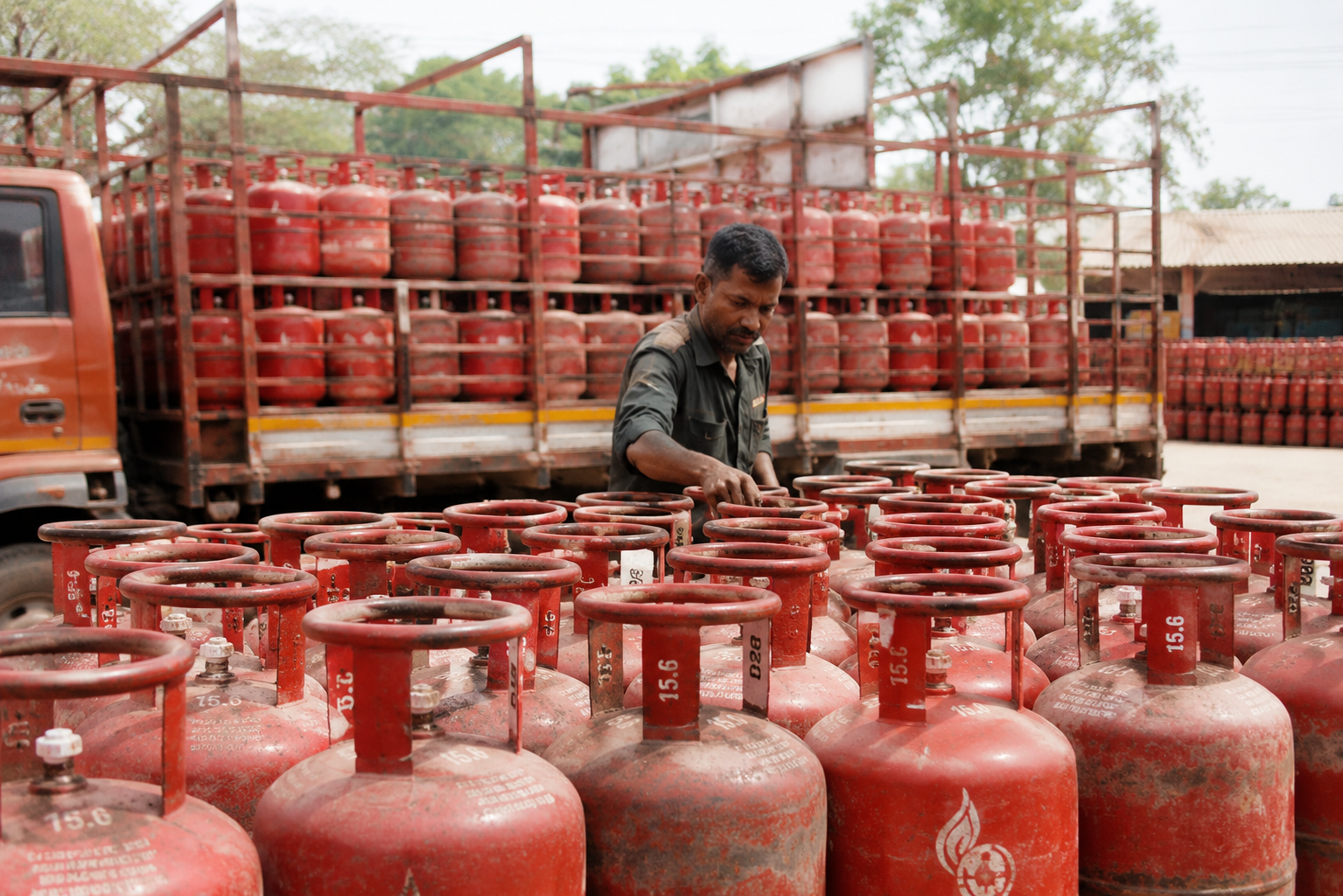
India is asking oil companies to produce more cooking gas at home as the conflict in the Middle East puts pressure on one of the country’s most important LPG supply routes.
The government has set new production targets for refineries and upstream companies, with a combined maximum of 63,810 tonnes of LPG a day. The move is intended to strengthen domestic availability and reduce the immediate impact of disruptions to overseas supplies.
The concern is closely linked to the Strait of Hormuz, through which around 90 per cent of India’s LPG imports normally pass. Disruptions in the region have made shipping more difficult and increased the importance of supplies produced within India.
India uses LPG on a massive scale. The country consumed around 33.2 million tonnes during 2025–26, while domestic production was about 13.1 million tonnes. The difference was largely covered through imports.
That gap explains why the government is trying to squeeze more output from existing facilities rather than waiting for international supplies to become more predictable.
Domestic LPG production had already increased from roughly 36,000 tonnes a day before the disruption to as much as 54,000 tonnes a day, according to industry reports. The latest targets are intended to push production further where refinery capacity allows.
Reliance Industries has received the largest production allocation among refiners, with its older refinery expected to produce up to 18,000 tonnes a day. Other major producers have also been given individual targets. Companies have been asked to strengthen storage and transportation arrangements so that additional LPG can reach the distribution network.
For most households, the issue is much simpler than the numbers suggest. A cooking-gas cylinder is part of an ordinary weekly routine. The problem becomes visible only when deliveries are delayed, supplies become tighter or people have to wait longer for a refill.
The government is therefore trying to create more room between a disruption overseas and a shortage at home.
India is also looking at alternative sources of LPG, including higher imports from the United States, as it works to reduce its dependence on supplies travelling through vulnerable routes.
The new production targets will not remove India’s dependence on imports overnight. But they offer a practical response to a problem that has moved from international shipping lanes into the country’s energy planning.
For now, the priority is straightforward: keep LPG moving, keep supplies stable and make sure a conflict thousands of kilometres away does not become a problem inside Indian kitchens.