



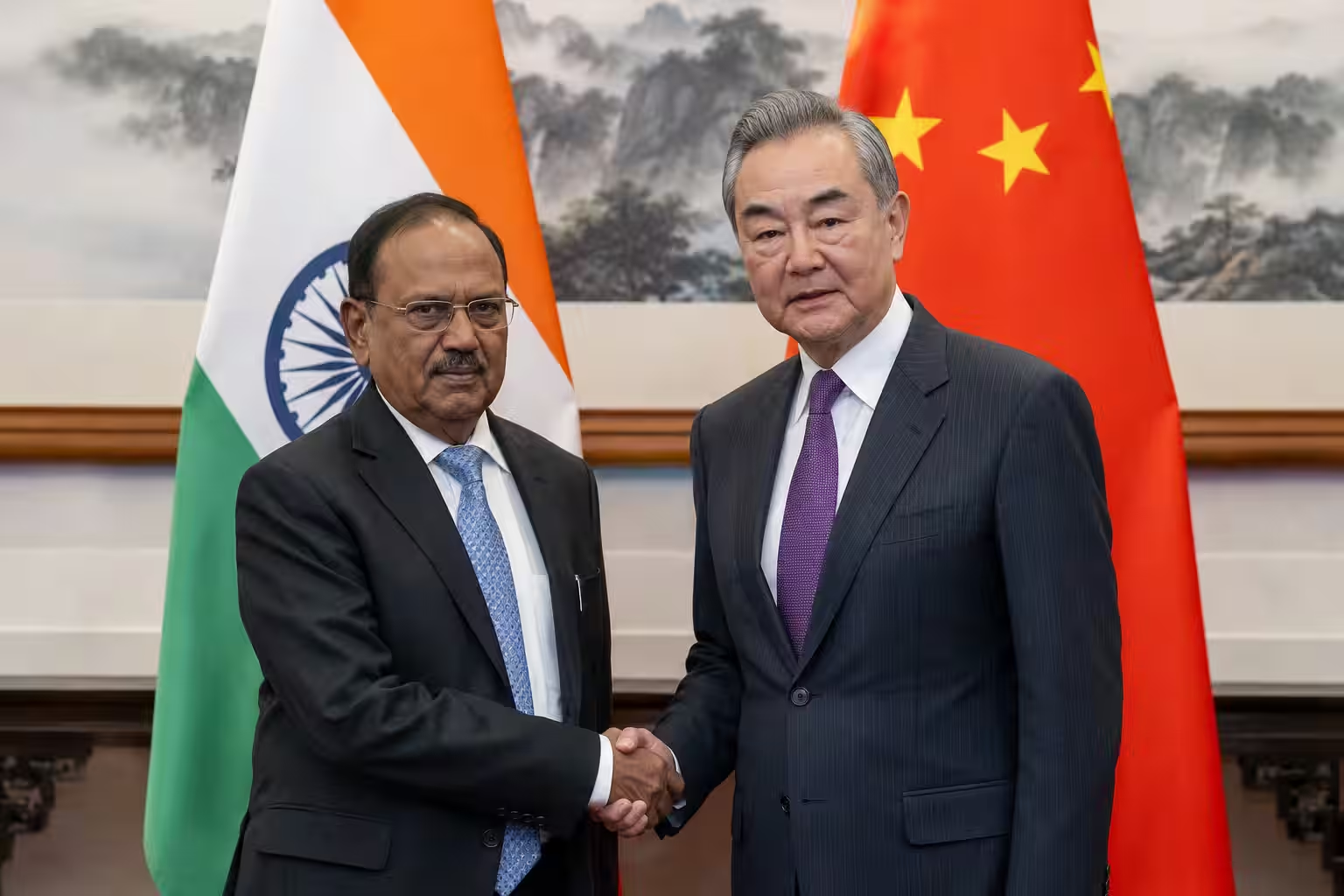
India and China have resumed high-level talks on their long-running boundary dispute, with National Security Adviser Ajit Doval meeting Chinese Foreign Minister Wang Yi in Beijing on Tuesday as the two countries continue efforts to keep tensions along the border under control.
The meeting is the 25th round of talks between the two Special Representatives on the boundary question. Doval and Wang, who hold the respective positions for India and China, discussed the border issue as well as ways to improve relations between the two countries.
Before the talks with Wang, Doval met Chinese Vice President Han Zheng in Beijing. According to the Indian Embassy, the two sides discussed maintaining peace and tranquillity in the border areas and improving bilateral relations across economic, political and multilateral areas.
The talks come after years of tension between New Delhi and Beijing following the 2020 Galwan Valley clash and the military stand-off in eastern Ladakh. Both countries have since taken steps to reduce tensions and restore some stability along the disputed frontier, although the larger boundary dispute remains unresolved.
The Special Representatives mechanism has been in place since 2003 and is the main channel through which India and China conduct negotiations on the boundary question. The two sides held the 24th round of talks in August last year, when they exchanged views on the dispute and agreed to continue working towards maintaining peace along the border.
The latest meeting is also taking place at an important point in the wider relationship.
Chinese President Xi Jinping is expected to travel to New Delhi for the BRICS summit scheduled for September 12 and 13. Beijing has not yet formally confirmed his participation, but the possibility of a visit has added attention to the current diplomatic engagement between the two countries.
A meeting between Prime Minister Narendra Modi and Xi during the summit, if it takes place, could provide another opportunity for the two sides to discuss the broader relationship. The two leaders last met in August 2025 on the sidelines of the Shanghai Cooperation Organisation summit in Tianjin.
For now, the border remains the central issue.
India and China continue to have differences over their competing territorial claims, including areas along the Arunachal Pradesh frontier. At the same time, both governments have an interest in preventing those differences from again turning into a prolonged military confrontation.
The latest talks are therefore less about resolving the entire dispute in one meeting and more about keeping communication open while the two sides work through a difficult relationship.
The discussions also cover bilateral, regional and international issues, giving both governments a channel to address concerns beyond the border itself. Chinese officials have described the Special Representatives mechanism as an important platform for communication between the two countries.
Whether the latest round produces a concrete breakthrough on the boundary remains to be seen.
For India and China, however, keeping the dialogue going is itself an important part of managing a relationship that has become more complicated since 2020.