




Bengaluru: Bengaluru-based space startup Pixxel has raised $100 million in a Series C funding round as it prepares to expand its satellite network and build a larger Earth intelligence business.
The round was led by Singapore-based Temasek and UK-based Seraphim. 360 ONE Asset and IMM Investment joined as new investors while existing backers including Radical Ventures and growX Ventures also participated. Pixxel said the latest investment takes its total funding to $195 million.
Pixxel became known for its work in hyperspectral imaging. Its satellites can capture information across many different wavelengths, allowing the company to detect details that may not be visible in normal satellite images. The technology can be useful in areas such as agriculture, environmental monitoring and mineral exploration.
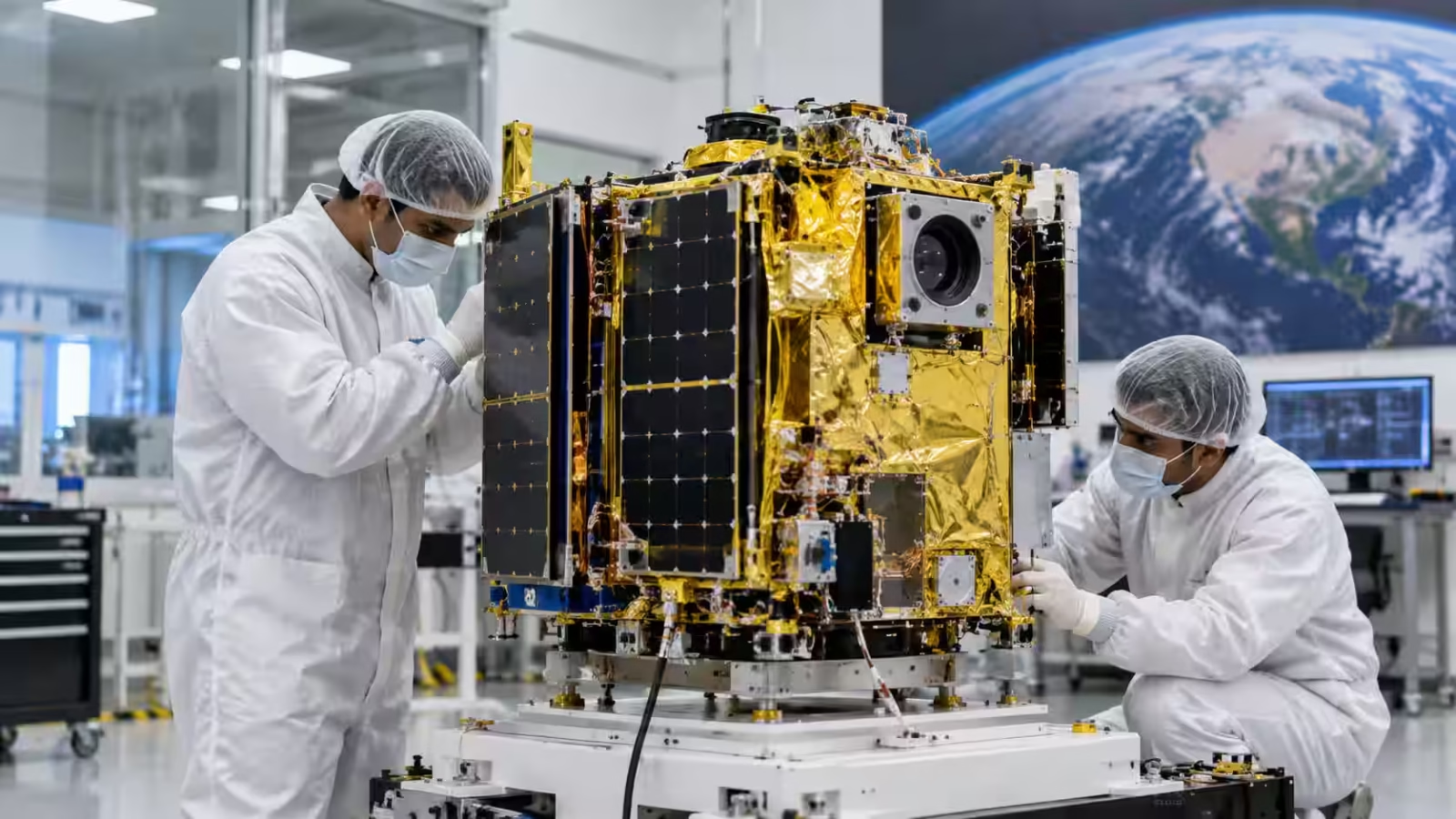
The company is now planning a much larger satellite network. Pixxel’s upcoming Honeybee constellation is expected to begin launching in 2027. The new satellites are planned to combine several types of sensors including hyperspectral, shortwave infrared, synthetic aperture radar and high-resolution optical imaging.
Pixxel is also developing Aurora, its Earth intelligence platform. The company wants to combine data from different satellite sensors and turn it into information that can be used by governments and businesses rather than simply providing them with raw images.
The startup said it has already deployed six Firefly satellites over the past two years. It is also working on projects involving NASA and the US National Reconnaissance Office. Another major project is India’s first public-private Earth observation constellation, where Pixxel has been selected to lead the development of 12 satellites through the country’s private space-sector framework.
The new investment matters beyond Pixxel itself. A stronger Indian private space industry means more companies developing satellites, sensors, software and other space technologies inside the country. That can create skilled jobs and help build expertise that India will need as its space economy grows.
There is also a practical side to the technology. Better Earth observation can give India more detailed information for farming, water management, disaster response, infrastructure planning and environmental monitoring.
During floods, cyclones or other disasters, faster satellite data can help authorities understand what has changed on the ground and where help may be needed.
A larger domestic space industry can also reduce dependence on foreign companies for some types of satellite data and technology. It gives Indian companies a chance to develop systems for the country’s own needs while also competing in the international market.
The funding comes as India’s private space sector continues to expand after government reforms opened more activities to private companies. For Pixxel, however, raising the money is only the beginning. The company now has to build more satellites, launch them successfully and turn the data they collect into services that customers actually need.
That will be the real test of this investment. If Pixxel can scale its technology successfully, the benefit will not stop with one Bengaluru startup. It could strengthen India’s wider space ecosystem and give the country another company capable of competing in a rapidly growing global space market.