
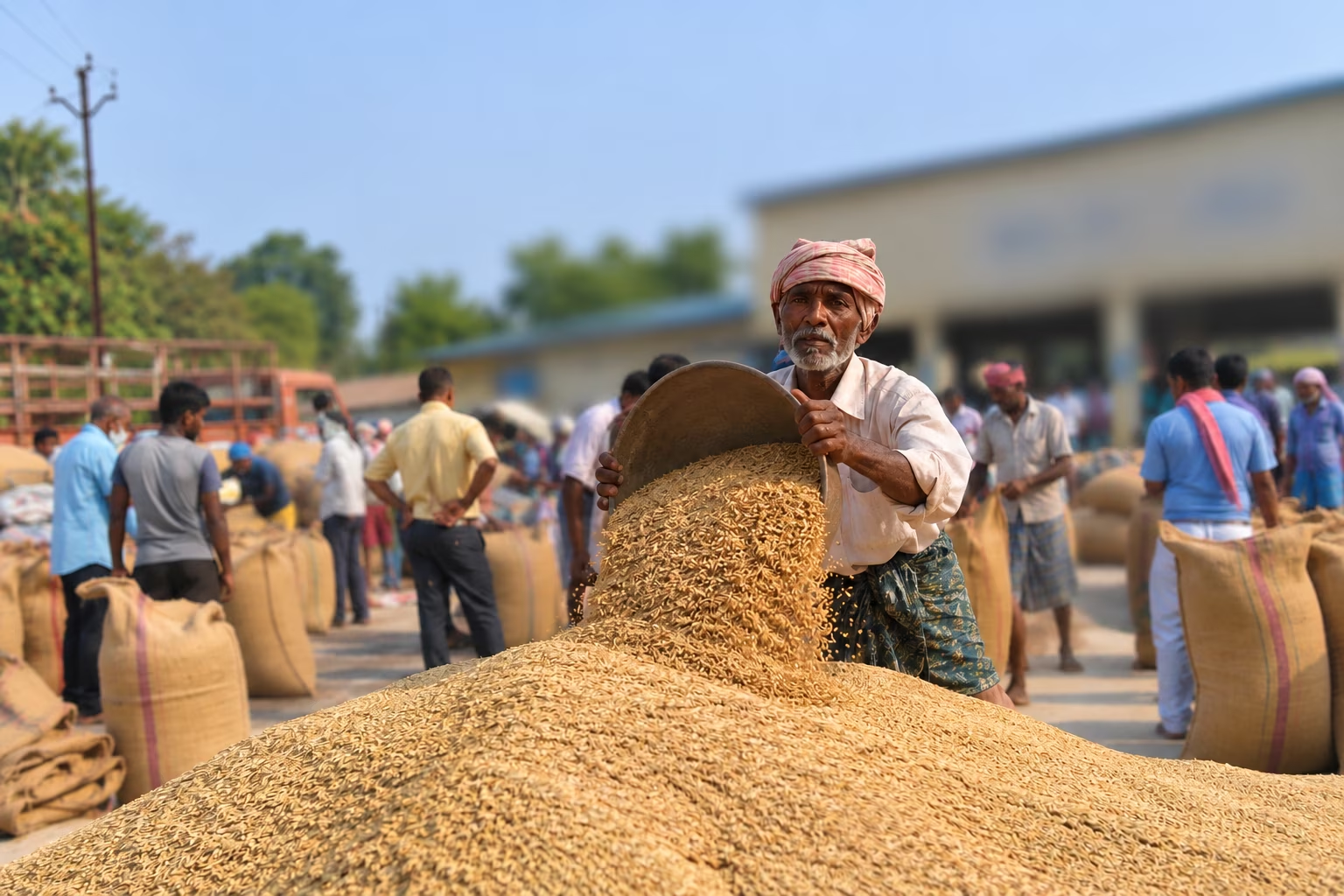
Bargarh’s paddy procurement season ended with protests over missing tokens and unsold harvests. As Odisha prepares for the next kharif season, farmers’ concerns over access to procurement remain important, particularly for cultivators whose land records or registration status have prevented them from selling their produce through the government system.
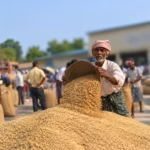
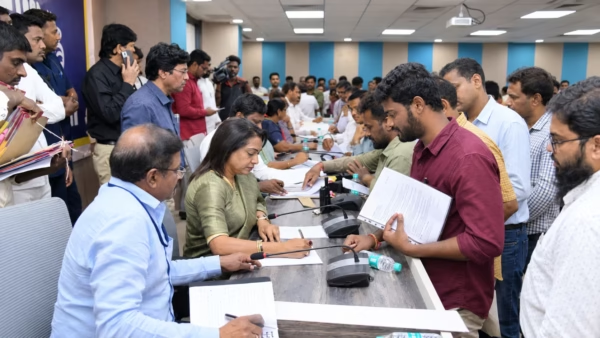
On March 5, farmers associated with the Sahuratikra market yard under Atabira brought bags of paddy to the Bargarh Collectorate to protest delays in procurement. When they returned the following morning, 15 bags had reportedly disappeared from the premises. The farmers lodged a complaint with Bargarh Town police, seeking an investigation into the missing produce.
The protest reflected a grievance among cultivators who said their harvested paddy had remained unsold because they had not received the necessary tokens. For farmers who have already paid for cultivation and harvesting, being unable to sell their crop can create financial pressure even when procurement is progressing elsewhere in the district.
The issue surfaced again on May 19, when members of the Sanjukta Krushak Sangathan protested outside the Collector’s office. They alleged that some farmers had not received procurement tokens, while others had been allotted quantities below what they expected to sell. The protest highlighted the importance of token allocation and the quantity approved for sale.
In late June, farmers again gathered outside the District Registrar of Cooperative Societies office as the procurement deadline approached. They demanded tokens and the purchase of paddy that remained unsold. The state extended the procurement deadline from June 30 to July 3, 2026, and had also allowed district Collectors to extend token validity by up to 15 days in eligible cases. The final number of Bargarh farmers who completed sales under those extensions has not been established here.
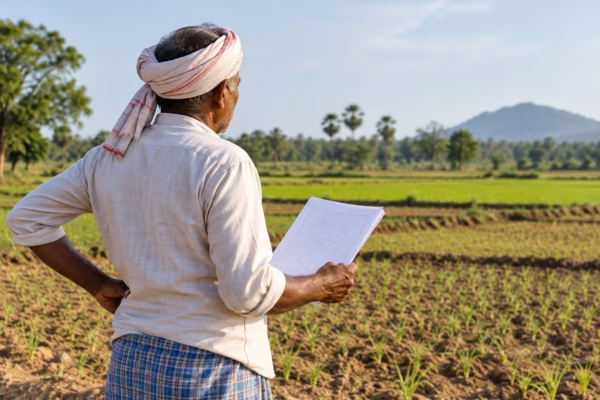
The concerns continued into the preparations for the new season. On August 22, farmers in Bhubaneswarpur village under Jharbandh block protested over the non-issuance of tokens for paddy cultivated on Aat-category land. Their grievance raises a practical question for the next procurement cycle: how will eligible cultivators whose land classification or records create obstacles be able to participate?
Odisha’s statewide procurement figures show the scale of the operation. On September 5, Chief Minister Mohan Charan Majhi said the state had procured 77.48 lakh metric tonnes of paddy from 18.84 lakh farmers during the 2025–26 kharif season. He also reported that ₹5,663.84 crore had been paid as input assistance.
Separately, Food Supplies and Consumer Welfare Minister Krushna Chandra Patra said on February 25 that more than ₹17,000 crore had been transferred to farmers and that payments were being processed within 48 hours of procurement. He also said Bargarh and Sambalpur had completed nearly 95 per cent of their procurement at that point.
These statewide payment figures do not resolve every complaint raised in Bargarh. Payment after purchase and access to procurement are different stages. A farmer who has not received a token cannot benefit from a payment system that begins after paddy has been purchased. Token allocation, the quantity accepted, lifting of purchased paddy and bank payment therefore need to be assessed separately.
For the 2026–27 kharif season, the Union government has set the minimum support price at ₹2,441 per quintal for common paddy and ₹2,461 for Grade A. Under Odisha’s Samrudha Krushak Yojana, the state has announced a total return of ₹3,100 per quintal through the central MSP and state input assistance.
Registration for the new season was initially scheduled to close on August 31, but the government extended the deadline to September 7 after requests from farmers affected by heavy rain, flooding and technical difficulties. Food Supplies Minister Patra said the extension was granted in response to farmers’ requests. On September 7, Minister Pradeep Bal Samant said the deadline would not be extended further.
The opposition questioned the timing and administration of the registration process. BJD leader Sanjay Das Burma said registration had begun 18 days later than scheduled and sought a 20-day extension. The Congress also called for technical problems affecting registration to be resolved.
By September 6–7, statewide registrations had reached a reported record of 21.42 lakh farmers, compared with 19.67 lakh in the previous year. Bargarh had recorded around 75,000 registrations earlier in the drive, but a final district-wise total has not been established here.
Farmers register through designated cooperative societies and complete Aadhaar e-KYC. Sharecroppers must provide the landowner’s consent letter, with the landowner present for e-KYC under the stated registration rules. Registered farmers also select a preferred month and fortnight for selling their paddy through the token process.
The Utkal has sought a response from the Bargarh district administration on the earlier protests, the final district registration figures and the number of farmers whose sales remained incomplete after the deadline extensions. The response will be added if received.
Next season will test whether eligible cultivators can register, receive tokens and sell their produce within the procurement window. The most useful measure will be the number of eligible farmers who receive tokens, complete their sales and receive payment within the prescribed period—not simply the total quantity procured across the district.