



A cracked screen or a battery that no longer holds a charge is usually enough to make people start thinking about a new phone. For many modern smartphones, repairing one small part is not always simple.
Fairphone is trying to make that decision a little less final.
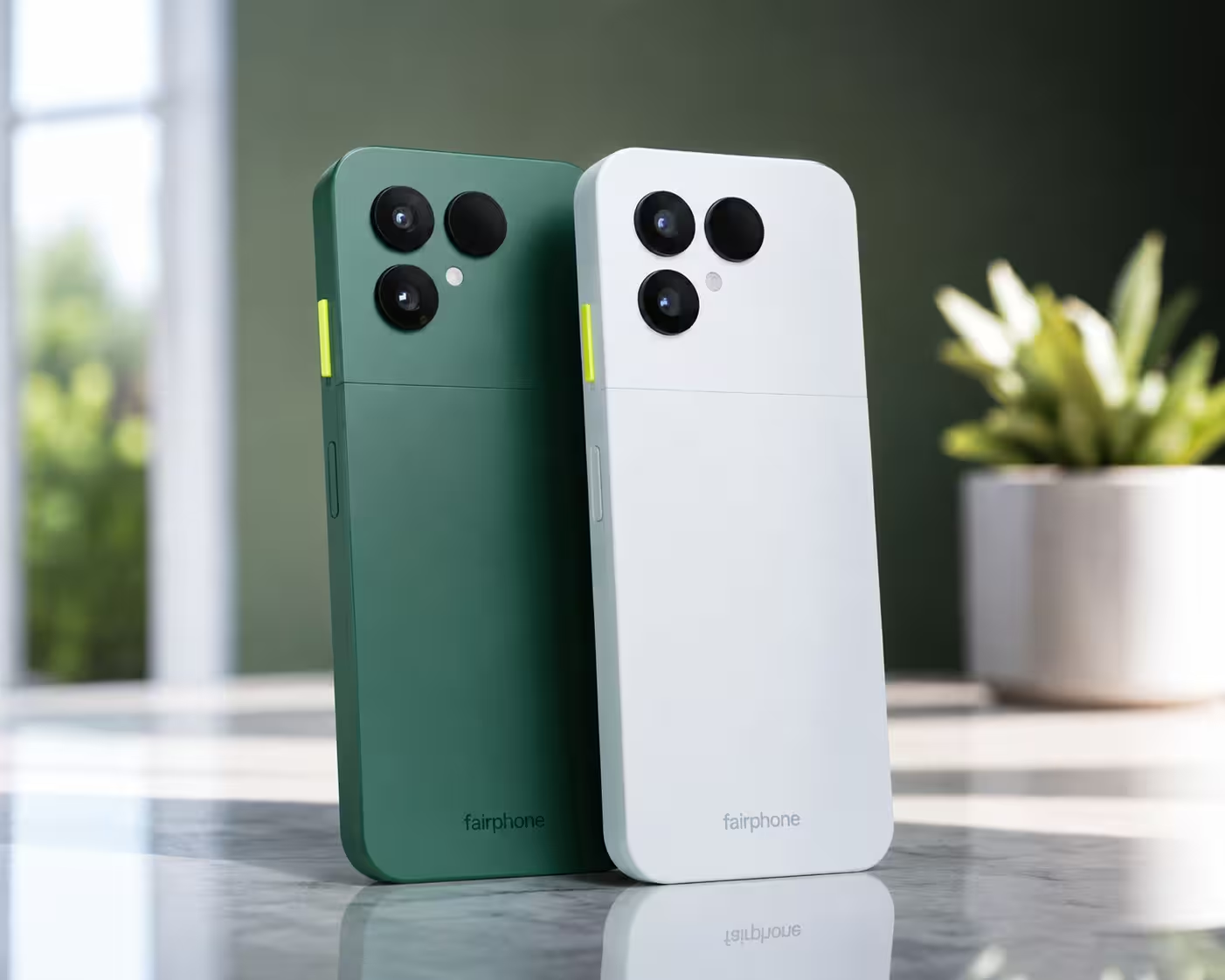
The Dutch company has launched the Fairphone Gen 6+ in the US, bringing an updated version of its repair-focused smartphone to the market. The phone was announced on August 18 and continues Fairphone’s long-running focus on repairability, longer software support and more responsible sourcing.
What stands out about the device is not simply what is inside it. It is what happens when something eventually stops working.
Fairphone says 12 components can be replaced, including the battery, display, cameras and USB-C port. The rear panel can be opened with screws, and the company says users can replace parts with a standard Torx screwdriver. For a smartphone industry that has increasingly moved towards tightly sealed devices, that is a noticeably different approach.
The phone itself is not built as a novelty device. It uses Qualcomm’s Snapdragon 7s Gen 4 processor, has 12GB of RAM and 256GB of storage, and features a 6.31-inch 120Hz OLED display. It ships with Android 16, while Fairphone has promised software support into the early 2030s.
There is another option for people who are more concerned about what their phone does with their data. Murena offers the device with /e/OS, an Android-based operating system designed to reduce dependence on Google’s services and give users greater control over privacy and tracking.
But the more interesting question is why a phone like this exists in the first place.
A smartphone can become unusable long before its basic hardware is truly finished. A battery loses capacity. A charging port develops a problem. A screen breaks. Sometimes a perfectly capable phone ends up being replaced because repairing one component is too difficult or expensive.
Fairphone’s answer is simple: make those parts easier to replace and keep the phone in use for longer.
That approach also connects to a much bigger problem. Millions of electronic devices are discarded every year, and smartphones are part of that growing stream of electronic waste. Keeping a device working for another year or two does not solve the problem on its own, but it can reduce how quickly another phone has to be manufactured and purchased.
There are compromises, too. The Gen 6+ is not aimed at competing directly with the most powerful flagship phones, and a repairable design can involve trade-offs that highly sealed devices avoid.
That is what makes this more than another phone launch.
Fairphone is testing whether people will value something that the smartphone market rarely puts at the centre of its pitch: how long a device can remain useful after the day it is bought.
The Gen 6+ does not change the direction of the entire industry. But it keeps an alternative idea alive that when one part of a smartphone fails, the whole phone does not necessarily have to become disposable.