




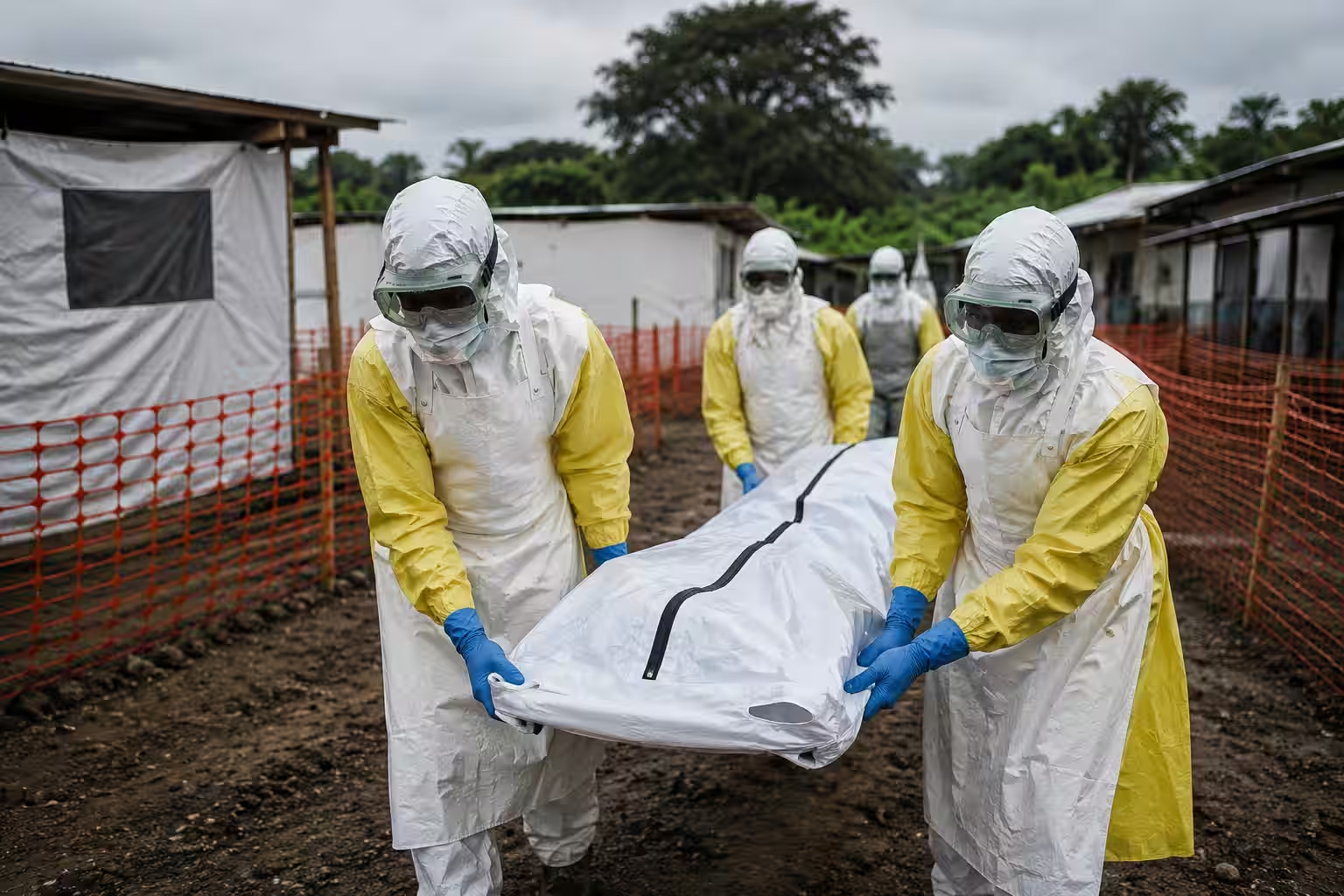
The Ebola outbreak in the Democratic Republic of Congo has now passed 5,200 reported cases, with the number of deaths continuing to rise as health teams struggle to contain transmission across several provinces.
More than 100 days after the outbreak was officially declared, the situation remains serious. The World Health Organization says the outbreak has become the largest Ebola outbreak ever recorded in the country, surpassing the previous record set during the 2018–2020 epidemic.
Government figures reported by the Associated Press put the number of confirmed cases at 5,514 and deaths at 2,642 as of Saturday. More than 300 deaths were recorded during the latest week alone, one of the highest weekly death tolls since the outbreak began.
The outbreak is being caused by the Bundibugyo virus, a relatively rare type of Ebola. It began in Ituri province and has since spread to several other provinces, including North Kivu, South Kivu, Haut-Uélé and Tshopo.
The spread has been particularly difficult to track because many newly identified patients had no known connection to previously recorded cases. That makes one of the most important tools in an Ebola response tracing people who may have been exposed considerably harder.
The situation is also unfolding in areas affected by armed conflict, population displacement and limited access to healthcare. Health workers have faced attacks and other difficulties while trying to reach communities and identify new cases. The WHO has warned that the combination of insecurity, population movement and gaps in surveillance is increasing the risk of further transmission.
There is some movement on vaccines, although it comes with an important limitation.
More than 16,000 doses of the Ervebo Ebola vaccine have reached Congo, and another 70,000 doses are expected to be provided. Ervebo has been used successfully against the Zaire strain of Ebola in previous outbreaks, but it is not licensed specifically for the Bundibugyo virus. Researchers are therefore studying whether it can provide protection against the strain responsible for the current outbreak.
That means the immediate response still depends heavily on familiar public-health measures: finding cases quickly, isolating patients, tracing contacts, providing treatment and protecting healthcare workers.
The challenge is that the outbreak is moving faster than many of those systems can respond.
The US Centers for Disease Control and Prevention has described the outbreak as spreading substantially faster than previous Ebola outbreaks and said it has already become the second-largest Ebola outbreak on record globally.
For people outside the affected region, the news can sound distant. But health authorities are watching the situation closely because people continue to cross borders for work, trade, family and other reasons.
Uganda, which also recorded cases linked to the outbreak, declared its own outbreak over in July after going 42 days without a new confirmed locally transmitted case.
The WHO has said the Congo outbreak can still be brought under control, but that will require considerably more resources. The agency estimated last week that only about 60% of the $115 million needed for the response had been secured.
For now, health authorities are facing a race against transmission. Every new case that is identified quickly gives response teams a better chance of finding contacts and breaking the chain of infection.
More than three months into the outbreak, that remains the central challenge in Congo: finding the virus before it finds the next person.