





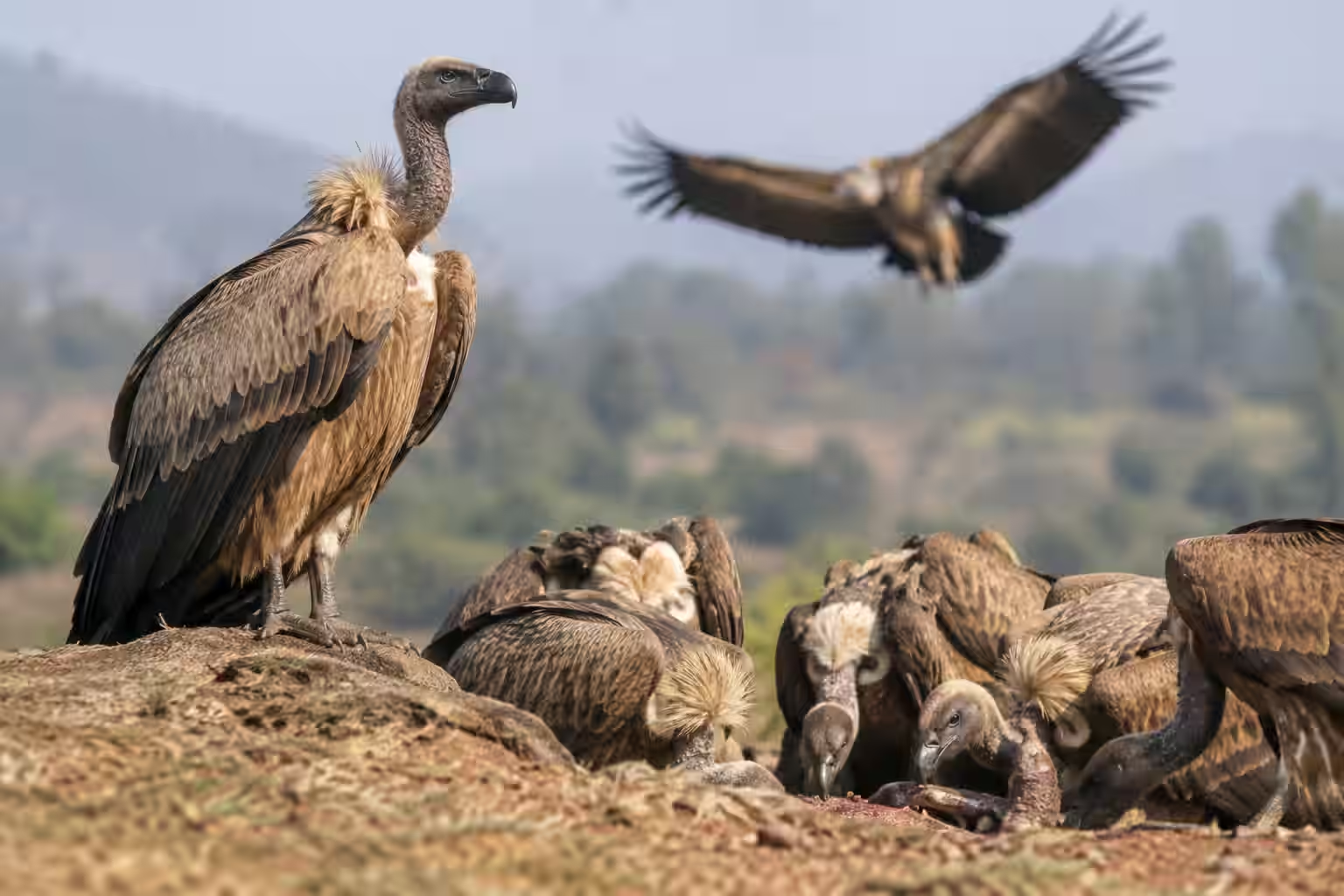
India is trying to bring its vultures back from one of the worst population crashes seen among the country’s birds.
The scale of the decline is still difficult to ignore. Vultures once played a common role across India’s countryside, feeding on dead animals and quickly clearing carcasses from the landscape. Then their numbers collapsed, mainly because of veterinary drugs that proved deadly when the birds fed on treated animals.
Years after the crisis first became clear, conservation work is now entering another phase. The focus is not only on protecting the vultures that remain but also on breeding them in captivity and gradually returning them to the wild.
The latest push was highlighted on International Vulture Awareness Day when the Environment Ministry held a national workshop in Panchkula under the theme “From Crisis to Recovery – Conserving India’s Vultures”. Environment Minister Bhupender Yadav called for more Vulture Safe Zones and stronger technical support for conservation programmes.
The need for that work is clear from the numbers. A national assessment by the Wildlife Institute of India in 2025 recorded 2,410 nests belonging to four critically endangered resident vulture species across 216 sites in 17 states.
Of those nests, 1,994 were active. The survey covered the Indian Vulture, White-rumped Vulture, Slender-billed Vulture and Red-headed Vulture.
The Indian Vulture had the largest number of recorded nests with 1,379. The White-rumped Vulture followed with 945 nests.
Those figures offer some reason for hope, but they also show how far the birds have fallen.
The collapse began becoming severe in the 1990s. The main culprit was diclofenac, an anti-inflammatory drug widely used to treat cattle. Vultures feeding on the carcasses of animals that had received the drug could suffer fatal kidney failure.
The drug was eventually banned for veterinary use in India and across the region. That helped slow the decline, but stopping the collapse did not mean the vultures suddenly recovered.
Other veterinary painkillers have also remained a concern. Conservation scientists have warned about drugs including aceclofenac, ketoprofen and nimesulide, while a shortage of safe food, poisoning, electrocution and loss of nesting sites continue to create problems.
This is where Vulture Safe Zones have become important.
The idea is simple. Areas where vultures feed and breed need to remain free from harmful veterinary drugs so that birds released into the wild are not exposed to the same threat that caused the original collapse.
Captive breeding is now giving conservation teams another way to increase their numbers.
At the Jatayu Conservation Breeding Centre in 2025–26, 356 vultures were housed and 35 chicks were bred. The centre also released or contributed 87 vultures for reintroduction programmes and transferred another 90 birds to other breeding institutions.
The numbers may look small when compared with the scale of the historic decline, but each successful breeding season matters because these birds reproduce slowly and their populations cannot recover overnight.
The Wildlife Institute of India’s assessment also shows why scientists continue to monitor them closely. The survey found 1,029 active Indian Vulture nests and 890 active White-rumped Vulture nests. Researchers are using such surveys to understand where the remaining breeding populations are holding on and whether conservation measures are beginning to make a difference.
Vultures may not attract the same attention as colourful or more familiar birds, but their role in the environment is hard to replace.
They can consume animal carcasses quickly and help prevent them from remaining exposed in the open. That reduces the chance of disease spreading through the environment and keeps nutrients moving through the food chain.
Their disappearance therefore created a problem that went beyond the birds themselves.
India’s conservation effort has now moved from trying to stop that collapse to something more difficult: rebuilding wild populations.
That means keeping dangerous drugs out of the food chain, protecting nesting areas, improving monitoring and making sure captive-bred birds have safe places to return to.
There is no quick fix.
The recovery of a species that lost most of its population over a relatively short period will take years. But the breeding centres, field surveys and Vulture Safe Zones are giving conservation teams a way forward.
The vultures are still far from safe. Their numbers remain much lower than they were before the crisis began.
But after years of watching them disappear, India is now trying to make sure that the next generation sees them in the wild again.