




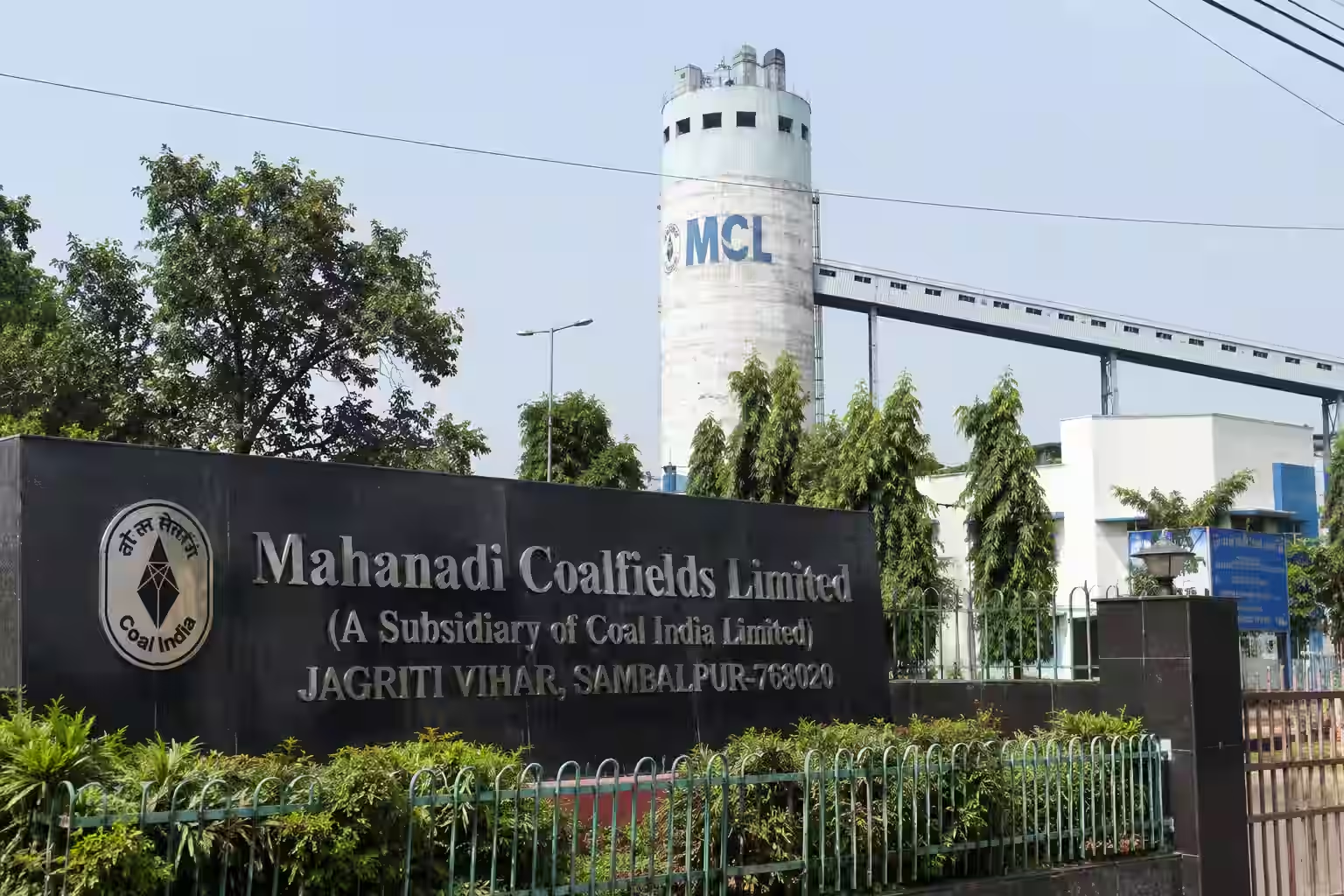
Sambalpur: A major Odisha company is now moving closer to the stock market. Mahanadi Coalfields Limited (MCL), the coal-producing giant with its operations rooted in Odisha, has filed its Draft Red Herring Prospectus (DRHP) with the Securities and Exchange Board of India (SEBI) for a proposed initial public offering.
The proposed IPO will see Coal India Limited, MCL’s parent company, offer up to 66,18,36,300 equity shares, representing a 10% stake in the company. The DRHP is dated September 1, 2026, and the filing was disclosed by Coal India on September 2. The proposed shares are to have a face value of ₹2 each.
For MCL itself, there is an important detail in this proposed sale: the company will not receive the IPO money.
The entire issue is structured as an Offer for Sale, or OFS, meaning Coal India will sell part of its existing holding. The proceeds from the sale will therefore go to Coal India rather than MCL.
The move puts one of Odisha’s most important industrial companies in line for a public listing. MCL is the largest coal-producing subsidiary of Coal India and operates mainly through the Talcher and Ib Valley coalfields in Odisha.
In FY2026, it produced 218.31 million tonnes of coal, accounting for about 22.4% of India’s total non-coking coal production and around 28% of Coal India’s overall production.
Those numbers give some idea of the scale of the company that is now heading toward the markets. MCL’s mines feed coal to power utilities and other industrial consumers, including cement and sponge iron manufacturers.
Its operations are closely tied to the energy supply chain, while thousands of workers and a large network of contractors and businesses depend on mining activity across Odisha’s coal belt.
The company also has a substantial resource base. Its audited coal reserves stood at about 9,840.31 million tonnes as of April 1, 2026, according to the draft documents, which would support production for roughly 45 years at its FY2026 production level. The Talcher and Ib Valley coalfields together have estimated coal resources of around 106.76 billion tonnes.
Financially, MCL remains a major profit-generating arm of Coal India, although its latest annual numbers showed some pressure.
For the financial year ended March 2026, the company reported a net profit of about ₹10,678 crore, while revenue stood at around ₹30,550 crore. In the June 2026 quarter, revenue from operations rose to about ₹8,034 crore, while net profit was around ₹2,399 crore.
The proposed listing is also part of a larger plan by Coal India to unlock value from its subsidiaries. Coal India has already taken two of its subsidiaries to the stock exchanges this year, with Bharat Coking Coal Limited and Central Mine Planning & Design Institute Limited completing their listings. MCL would become the next major subsidiary to take that route.
For investors, however, the IPO is still some distance away. The DRHP filing is an important step, but the issue remains subject to regulatory approvals and market conditions.
The final offer details, including the price band and issue dates, will come later in the process. The proposed shares are expected to be listed on both the BSE and NSE.
The filing has already caught the attention of the stock market. Coal India’s shares moved higher on Wednesday after the MCL IPO development, with the stock closing at ₹416.70 on the NSE, up 3.76% from the previous close.
For Odisha, the significance goes beyond the IPO itself. Mahanadi Coalfields is deeply connected to the state’s industrial economy, particularly in Angul, Jharsuguda and the wider coal-producing belt.
Bringing such a large Odisha-based public sector company closer to the stock market marks another important step in the changing relationship between the state’s traditional coal economy and India’s capital markets.
The next stage will be closely watched. Once approvals and other formalities are completed, investors will get a chance to put a market value on one of Odisha’s biggest and most profitable coal businesses a company whose mines have long been a crucial part of India’s power story.