



A major flood and landslide disaster in the Himalayan region has left communities in Nepal facing a difficult rescue operation, with more than 150 people reported dead and hundreds still missing.
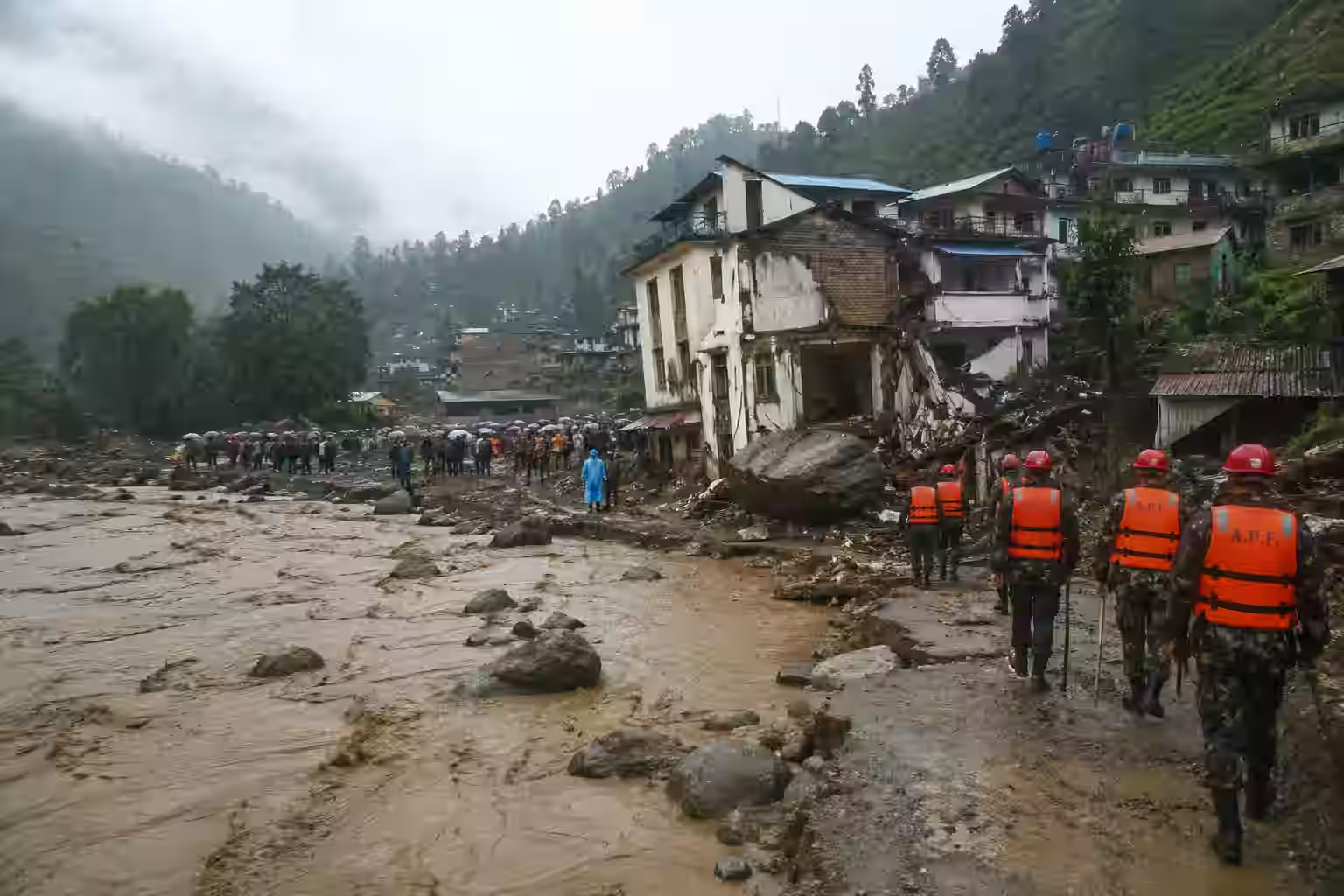
The disaster struck in the Nepal-Tibet border region after heavy rainfall triggered flash floods and landslides. Several villages and settlements have been badly affected, while roads and other routes used by rescue teams have also been damaged.
The situation has also become a matter of concern in India, with more than 140 Indians reported missing in connection with the disaster.
Indian authorities are working with the Nepalese side to gather information about those who may still be stranded or missing. Families in several parts of India are waiting for updates as officials continue efforts to establish the whereabouts of their relatives.
The scale of the disaster has made the rescue operation difficult.
Floodwater has swept through populated areas, while landslides have blocked roads and disrupted communication. In some locations, rescue teams have had to work through damaged roads and difficult mountain terrain to reach affected communities.
Nepalese authorities have been carrying out search and rescue operations, while emergency teams continue to assess the damage.
India has also offered assistance to Nepal as the neighbouring country deals with the aftermath.
For families with relatives who were travelling in Nepal, however, the situation is much more personal.
Many people travel to Nepal for tourism, pilgrimage and other reasons, and the Himalayan country is particularly popular with Indian visitors. The sudden disaster has therefore created uncertainty for families who have not been able to contact their relatives.
Authorities are working to verify reports of missing people, and officials have been urging families to rely on confirmed information rather than unverified reports circulating on social media.
The disaster has also highlighted the risks faced by communities living in mountainous areas during periods of intense rainfall. Flash floods can develop very quickly, leaving residents with little time to move to safer ground. Landslides can make the situation even more dangerous by cutting off roads and isolating communities.
For rescue workers, the priority now is reaching people who may still be trapped or stranded and providing emergency assistance to those who have lost homes or been cut off from basic services.
For the families waiting for news, the immediate priority is much simpler: knowing whether their loved ones are safe.
As rescue operations continue, authorities on both sides of the border are expected to keep working to identify those missing and bring more information to their families.
The full extent of the damage will become clearer as rescue teams reach more affected areas.
For now, the focus remains on the people still waiting to be found and the families waiting for answers.