

A political protest is meant to put pressure on those in power. But when that pressure falls on people trying to reach work, travel home or get medical treatment, the method deserves scrutiny.
Odisha’s October 8 bandh raises a question that goes beyond party politics: can opposition parties challenge government decisions without making ordinary citizens pay the price?
The INDIA bloc called the 12-hour shutdown over four demands: withdrawal of the Mines and Minerals (Development and Regulation) Amendment Act, 2026; action against Chief Election Commissioner Gyanesh Kumar over alleged irregularities in the Special Intensive Revision (SIR) of electoral rolls; the resignation of School and Mass Education Minister Nityananda Gond over alleged textbook errors; and relief for flood-affected people. Odisha Pradesh Congress Committee president Bhakta Charan Das announced the bandh and said the alliance would ensure it was observed peacefully.
These are issues that deserve public scrutiny. Electoral rolls must be accurate, children need reliable textbooks, and flood-affected families need appropriate assistance. The mining amendment also raises questions about regulation and Odisha’s interests. Whether the opposition’s allegations are correct must be established through evidence, but political parties have every right to raise concerns and demand answers.
The SIR controversy is particularly important because electoral-roll errors can affect a citizen’s ability to vote. Opposition parties have alleged irregularities and demanded the Chief Election Commissioner’s resignation.
The Election Commission should address specific complaints transparently, while parties should present evidence and help affected voters use the available correction procedures.
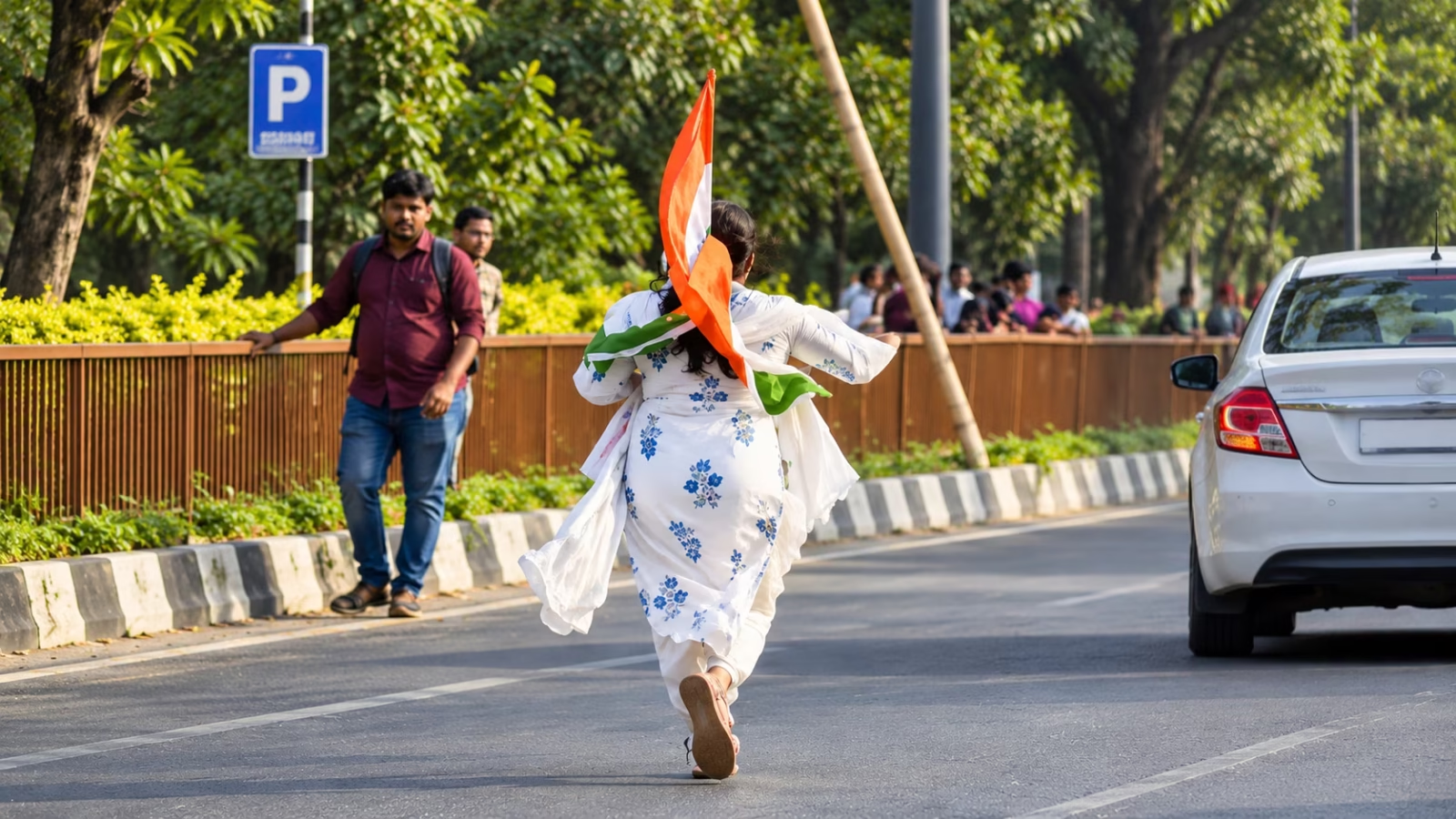
The question is whether a statewide shutdown was the most effective way to pursue these demands. The impact of the bandh varied across Odisha. Argus reported that traffic in Bhubaneswar remained largely unaffected, while disruption was more pronounced in parts of Sundargarh, Kalahandi and Nayagarh. The Press Trust of India also reported road blockades, stopped vehicles and transport disruption in several districts.
Some reported incidents raised more serious concerns than traffic delays. In Sundargarh, bandh supporters allegedly blocked two ambulances and a hearse carrying bodies near Rani Bagicha and Bijay Pattnayak Chowk, according to Argus. The vehicles were reportedly forced to turn back. The allegation needs to be treated as such, but if confirmed, obstructing vehicles carrying patients or bodies raises serious questions about how the protest was enforced.
Doctors also faced disruption. The New Indian Express reported that eye specialist Dr Akhay Kumar Panda was stopped on his way to work. “The protesters cannot stop doctors from attending work during a strike,” he said.
Police also took more than 100 protesters into preventive custody in Bhubaneswar, according to the same newspaper’s reporting on the bandh.
For a daily-wage worker, missing a shift can mean losing a day’s income. A small shopkeeper may struggle to recover lost sales, while a student may miss an important appointment. When public transport is interrupted, people with fewer resources often have the least flexibility to find another way to their destination.
The organisers and the BJP offered sharply different assessments of the shutdown. Das claimed the bandh had succeeded and received public support. BJP spokesperson Anil Biswal, by contrast, said the bandh had been rejected by the public and accused Congress and Left workers of intimidating people at some locations. These are competing political claims; the reported incidents of disruption need to be assessed individually rather than used to generalise about every protester or every citizen.
A bandh can attract attention, but the important question is what happens after it ends. The reports available so far do not establish that the shutdown secured a government commitment on any of the four demands. The opposition should explain what concrete steps it will pursue next, while the government should respond to specific and credible concerns instead of allowing the issues to disappear from public discussion.
There are less disruptive ways to keep pressure on the authorities. Parties can publish evidence, organise peaceful marches and public meetings, raise questions in the Assembly and help affected people file complaints. Where there are valid legal grounds, they can seek judicial review. Campaigns about textbook errors can identify disputed passages, while complaints about flood relief can be documented and submitted to the departments responsible.
These methods are not guaranteed to succeed, and peaceful protest remains an important democratic right. But organisers should consider whether a statewide shutdown is proportionate to the problem and whether it is likely to produce a result beyond a day of disruption. Citizens should be free to support a bandh, oppose it or continue their lawful activities without intimidation.
The police and administration must protect peaceful demonstrations while responding to credible reports of obstruction or threats. Organisers, too, should make clear that emergency services must remain accessible and that commuters and businesses must not be coerced. Those expectations should apply regardless of which party calls a bandh.
The next measure of this agitation will be whether the opposition can turn its demands into specific, verifiable action and whether the government answers the concerns raised. A political shutdown may put an issue in the headlines, but its value ultimately depends on what changes afterwards.
Protest should make it harder for those in power to ignore a problem. It should not make it harder for ordinary people to reach a hospital, earn a living or carry out their daily responsibilities.