



Bhubaneswar, Odisha: Odisha has renewed its focus on the safety of sanitation workers, with the state government announcing a “Mission Zero” aimed at preventing deaths and reducing the risks involved in hazardous sanitation work.
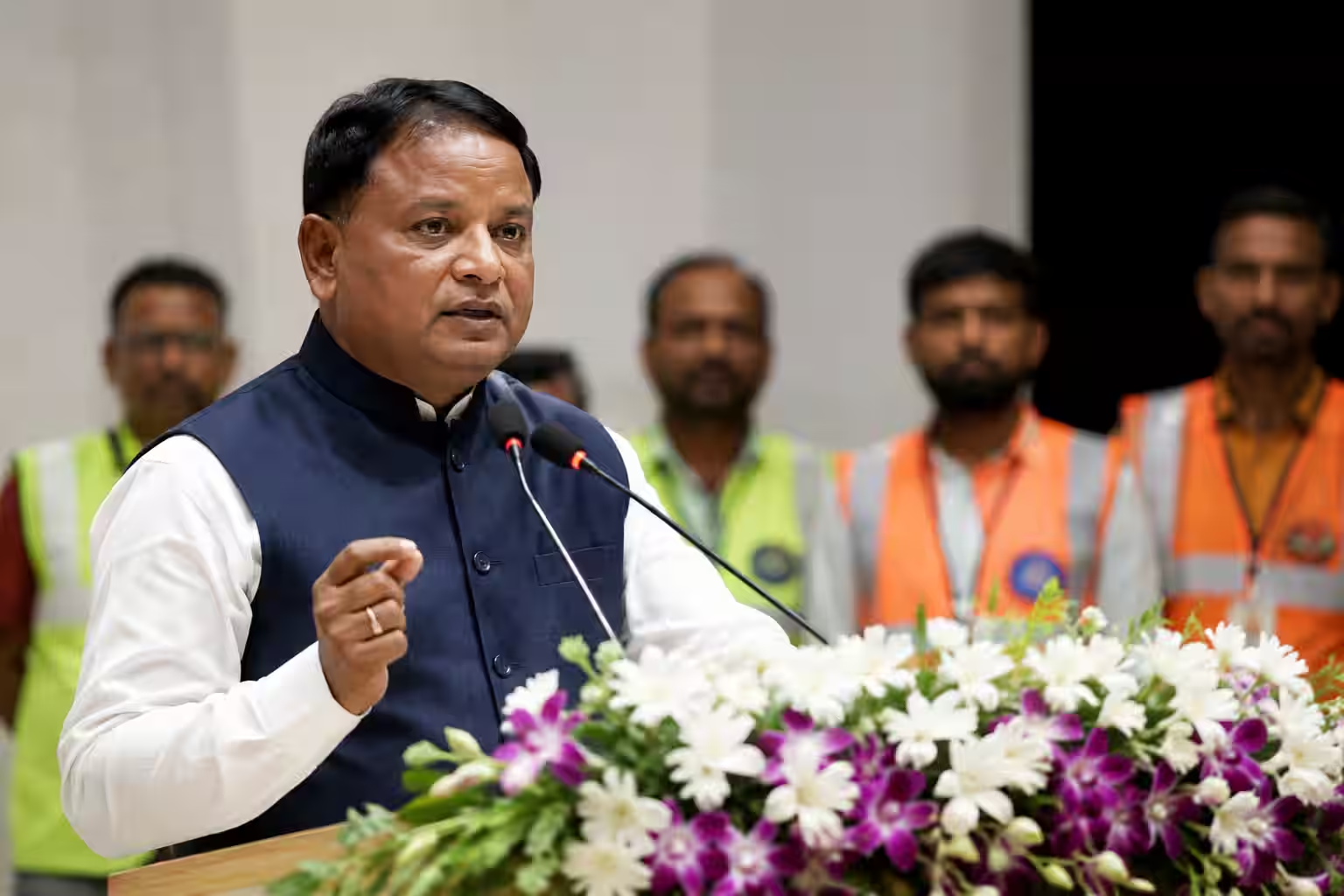
The announcement was made at the second National GARIMA Conclave in Bhubaneswar, where Chief Minister Mohan Charan Majhi spoke about the need to make sanitation work safer through modern equipment, protective gear, training and greater use of machines.
For workers who spend their days cleaning drains, sewage systems and other difficult spaces, safety is not an abstract policy issue. The work can expose them to poisonous gases, infections and serious injuries, particularly when they are required to enter confined spaces.
That is the problem the government says Mission Zero is intended to address.
The focus is on reducing the need for people to carry out dangerous tasks manually and using technology wherever possible. The GARIMA programme has already identified and trained more than 10,000 sanitation workers across 115 urban local bodies in Odisha, according to details presented at the conclave.
The government has also highlighted financial and social-security measures for workers and their families. These include insurance support and assistance for families of sanitation workers who die while on duty.
The larger question now is how consistently these measures reach the workers themselves.
A machine can replace a dangerous manual task only when it is actually available. Protective equipment matters only when workers receive it and are trained to use it. And safety rules have meaning only when they are followed at the worksite.
That makes implementation the most important part of Mission Zero.
The Bhubaneswar conclave brought together government officials, urban local bodies, experts and representatives connected with sanitation work to discuss ways of making the sector safer.
Odisha has put a clear target on the table: no sanitation worker should lose their life while doing a job that keeps cities functioning.
The challenge now is turning that target into something workers can see and feel in their everyday work.