





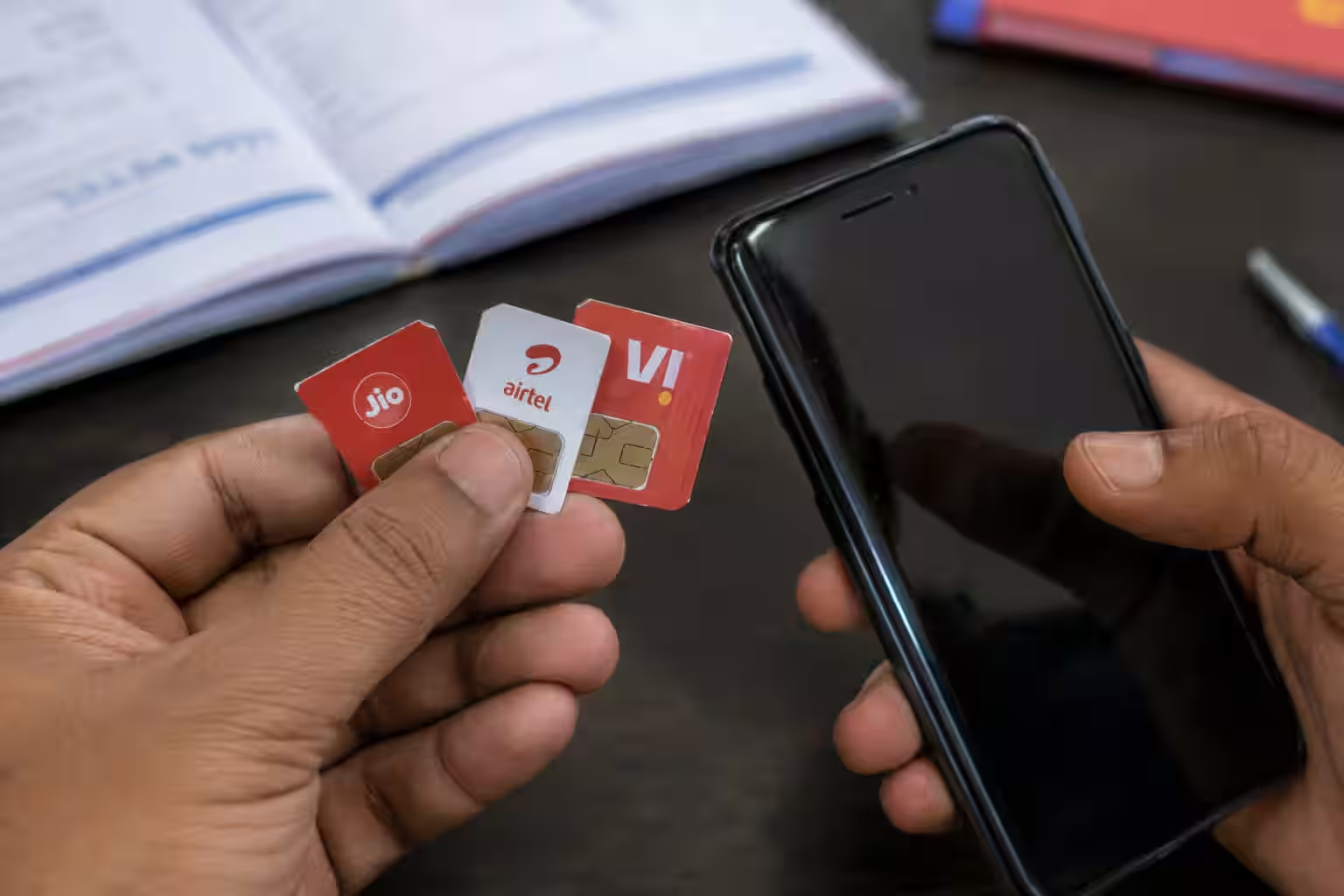
New Delhi, India: For most people carrying a mobile phone in India, August 24 will probably pass without much notice. There is no new nationwide requirement to replace an existing SIM card, and people with one or two numbers are not suddenly being asked to give them up.
What changes is the way the government wants telecom companies to deal with people who already have a large number of mobile connections registered in their name.
From August 24, operators will be required to stop issuing another mobile connection to subscribers who have already reached the permitted limit of nine connections in most parts of India. The limit is lower in Jammu and Kashmir, Assam and the North-Eastern states.
The nine-SIM limit itself is not new. What is changing is the enforcement.
Until now, a person could potentially have connections with different operators or in different telecom circles, making it harder for companies to get a complete picture of how many numbers were registered to the same identity.
The Department of Telecommunications is now requiring operators to check that information before issuing additional connections. The government plans to use its Digital Intelligence Platform, which brings together subscriber information from different telecom companies.
That matters because a mobile number is no longer just a way to make a phone call.
It can be connected to a bank account, UPI payments, government services, social-media accounts and password recovery. If a SIM is fraudulently obtained using someone else’s identity, the consequences can extend far beyond unwanted calls.
There is another problem that is less obvious.
People sometimes stop using a number without formally disconnecting it. Someone may have an old work SIM, a number used during travel or a connection they simply forgot about. Over the years, those unused numbers can remain associated with their identity.
The new enforcement makes knowing what is registered in your name more important.
The government is also moving towards more immediate verification. The system will initially rely on post-facto checks, while telecom operators have been directed to move towards real-time verification by November 30.
For ordinary users, therefore, the practical message is fairly simple: having a normal number of active connections should not cause any disruption.
The bigger change is happening behind the scenes.
Telecom companies will have to identify a subscriber’s existing connections across operators before issuing another SIM. That should make it harder to create large numbers of mobile identities under one person’s name, particularly where those connections could later be misused.
But enforcement will only work if the information held by operators is accurate.
A genuine customer should not be prevented from getting a legitimate connection because an old or fraudulent number remains incorrectly linked to their identity. How effectively the new system handles those cases will become clear as it begins operating.
India has more than a billion mobile connections. Managing that enormous network is no longer only a question of telecom capacity. It is also a question of identity, fraud prevention and digital security.
From August 24, the government is tightening one part of that system.
For most users, it will happen quietly. But for telecom companies, the way they identify and verify the person behind every new mobile connection is about to become considerably more important.