




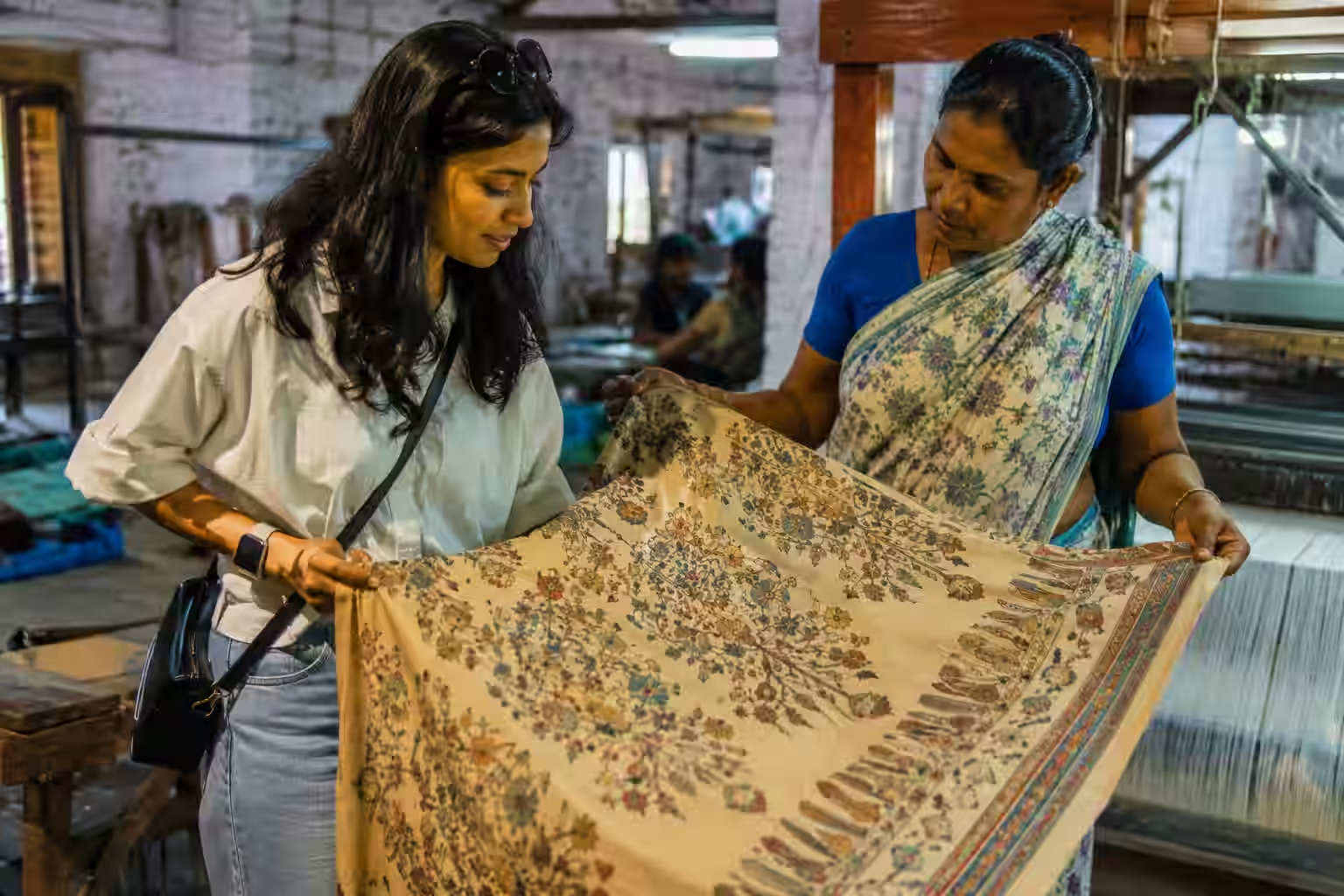
For a long time, traditional Indian crafts were something many people grew up seeing at home. A handwoven sari might belong to a mother or grandmother, while a particular embroidery or craft could be recognised simply by the region it came from.
For younger Indians today, the introduction can be quite different. They may first come across a traditional weave on Instagram, at a design exhibition or while browsing an online store.
That change is slowly giving old crafts a new place in everyday life.
Handloom, in particular, is being picked up by younger consumers who are looking for clothing that feels distinctive and has a story behind it. Designers and independent labels are also giving traditional fabrics a contemporary look, rather than treating them only as ceremonial wear.
Recent reporting has noted renewed interest among young Indians, with social media and newer fashion brands helping handloom reach audiences that may not have traditionally bought it.
There is a practical reason this matters. India’s handloom sector supports millions of people. The Fourth All India Handloom Census recorded 35.22 lakh handloom weavers and allied workers, with women making up more than 72% of that workforce. Much of the sector is closely connected to rural and household-based livelihoods.
The biggest change, perhaps, is that the market is no longer limited by geography.
A weaver does not necessarily have to depend only on a local shop or a buyer who happens to visit the area. The government’s Indiahandmade platform, launched in 2023, is one example of how artisans and weavers are being connected with customers online. The platform includes handloom and handicraft products, including GI-tagged and One District One Product items.
The government has also been openly trying to make Indian textiles more relevant to younger and urban consumers. Its Swadeshi Campaign, launched in 2025, specifically aimed to increase domestic consumption and position handloom and handicrafts as products associated with style, heritage and contemporary life.
But popularity alone will not keep a craft alive.
A handwoven textile takes time and skill to produce, and it cannot always compete with factory-made clothing on price. If consumers want handmade products but are unwilling to pay for the labour behind them, the people who actually keep these traditions alive may continue to struggle.
That is why the current interest among younger buyers is worth watching. The appeal is not necessarily about choosing traditional clothing over modern fashion. Increasingly, the two are being mixed. A traditional textile can be worn with a modern outfit, while an old weaving technique can be used in a design that looks completely contemporary.
India’s crafts have survived for generations because they have adapted. The challenge now is to make sure that adaptation continues to benefit the people who make them.
If younger consumers keep buying, wearing and talking about these products not simply during a festival or a social-media trend traditional crafts may have a stronger future than they did a few years ago.
The craft does not have to remain exactly as it was to survive. It simply needs a reason for the next generation to choose it.