



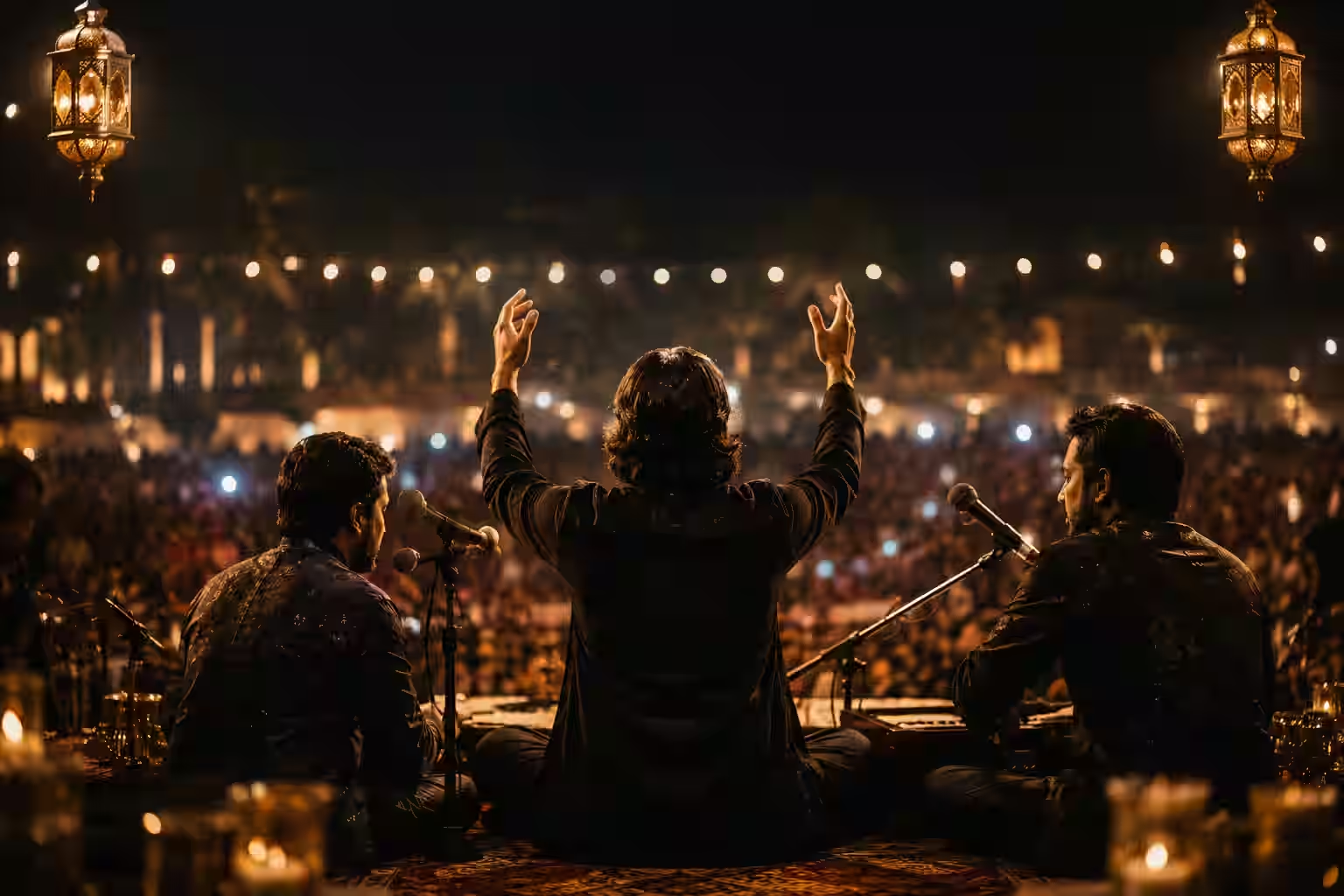
Bengaluru: Qawwali, a musical tradition often associated with devotional poetry, powerful vocals and communal singing, is finding a growing audience in Bengaluru. The latest event bringing the form to the city is Sukoon Wali Qawwali, scheduled for September 12 at Phoenix Marketcity in Mahadevapura.
The concert is listed as an open-air performance at the mall’s courtyard, with the programme scheduled to begin at 6 pm. Tickets are currently listed from ₹499, and the event is open to all age groups.
The Bengaluru programme is being presented as part of the Sukoon Bharat Tour 2026. The organisers describe the September performance as the Bengaluru homecoming of the group and the concluding event of its current tour.
Rather than taking place in a conventional auditorium, the concert will be held in an open space inside one of Bengaluru’s major shopping destinations. That setting reflects how traditional and Sufi-influenced music is increasingly appearing in contemporary cultural spaces, where audiences may experience it alongside the city’s usual entertainment and nightlife.
Sukoon Wali Qawwali has its roots in Bengaluru. The group was formed around informal gatherings involving qawwali, Sufi music and shayari before moving into public performances.
The group began with a small gathering at the BTM Layout home of its founder, Chandan. Its first private performance drew around 50 people, and the encouraging response led the group to take its qawwali performances to public venues, where they later attracted much larger audiences.
The same report said the group had performed nearly 70 shows within a year, with audiences particularly strong among people in their 20s and 30s. That growing interest is notable in a city where live qawwali performances have traditionally been less frequent than concerts featuring mainstream film, rock or Western music.
Qawwali itself has a much longer history.
The musical form is deeply connected with Sufi traditions and is traditionally performed in spiritual settings such as dargahs and during Urs gatherings. In recent years, however, qawwali has also found space in concert halls, cultural institutions, clubs and other contemporary venues.
That change does not necessarily mean the traditional form is disappearing.
Instead, it shows how the music is reaching people through different settings.
The Indian Music Experience Museum has previously presented qawwali performances in Bengaluru, with curator and director Preema John noting that the city has audiences for both spiritually rooted performances and contemporary presentations of the tradition.
The September 12 event is expected to follow the group’s familiar approach of combining live qawwali with Sufi music and poetry.
The organisers have listed the programme as a three-hour experience, although another event listing gives a longer overall venue duration. The main ticketing listing specifies 6 pm as the start time and three hours as the event duration.
The event will take place at Phoenix Marketcity, ITPL Main Road, Devasandra Industrial Estate, Mahadevapura, Bengaluru.
For Bengaluru’s music scene, the event is interesting for a reason beyond the concert itself.
The city has a large young and culturally diverse audience, and events such as this show how older musical traditions can find new listeners without being limited to their traditional venues.
For qawwali performers, that can mean reaching people who may not regularly attend a dargah or a traditional mehfil but are willing to spend an evening listening to the same musical tradition in a different setting.
For the audience, it offers a chance to experience qawwali as a live performance rather than only through recordings, films or online videos.
Sukoon Wali Qawwali is scheduled for September 12 at Phoenix Marketcity, with entry listed from ₹499. The event is open to all age groups, according to the ticketing information currently available.
As Bengaluru continues to make room for different forms of live music, the event will also be another example of how traditional Indian music is adapting to the city’s changing cultural spaces.