


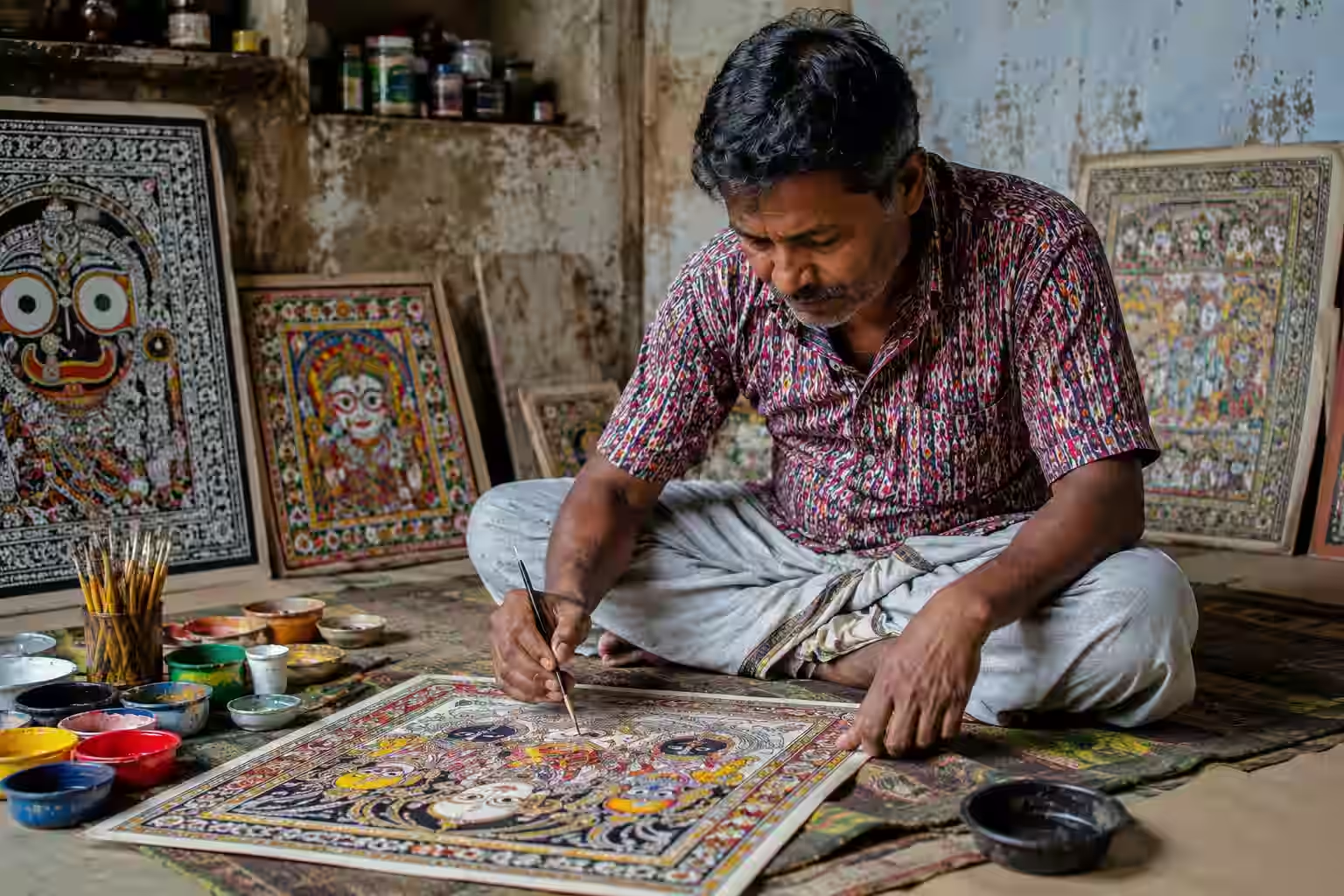
In Raghurajpur and nearby villages of Puri district, Pattachitra is still made largely by hand, just as it has been for generations.
Artists prepare the surface, make or prepare colours and then work carefully on the painting with fine brushes. The subjects are closely connected with Odisha’s religious and cultural traditions, particularly the Jagannath tradition and stories from Hindu mythology.
Raghurajpur-Dandasahi is officially recognised by the Odisha government as a craft cluster for Pattachitra and palm-leaf engraving. Pattachitra is also practised in several other parts of Puri district.
The work requires patience. A finished painting may look simple from a distance, but the detailed borders, figures and patterns are all built up by the artist.
The colours are another important part of the traditional process. Odisha’s district export plan describes Pattachitra as an art form in which natural colours are used and the paintings are made using traditional methods.
For many families involved in the craft, however, Pattachitra is not only about tradition. It is also a livelihood.
An Odisha government district export plan estimates that around 1,200 handicraft artisans are engaged in Pattachitra in the Puri region. The government has supported artisans through programmes such as Guru-Shishya training, master-craftsman training, craft village programmes and design development initiatives.
The state’s handicrafts department also lists Pattachitra among the major crafts of Puri district, which has 37 recognised craft clusters and more than 19,000 artisans across different crafts.
Over the years, Pattachitra has also moved beyond traditional paintings.
The artwork can now be seen on different handmade products, allowing artisans to reach customers looking for home décor, souvenirs and gifts. For artists, this wider market can create additional opportunities to earn from their skills.
At the same time, the changing market brings its own challenges.
Traditional work takes time, while buyers often want products at different price points and in different styles. Artists therefore have to find a balance between keeping the traditional character of Pattachitra and making products that people are willing to buy today.
That balance is becoming increasingly important for the younger generation.
If a craft can provide a dependable income, young members of artisan families have more reason to learn and continue it. If the income is uncertain, traditional skills can become harder to pass on.
Odisha has a long record of recognising Pattachitra artists. The state handicrafts department’s records include several Pattachitra artists among its state-level awardees and Shilp Guru awardees, including artists from Raghurajpur.
But awards and recognition are only one part of keeping the craft alive.
The everyday market matters just as much.
When a customer buys a handmade Pattachitra, the money supports more than the finished painting. It supports the time spent learning the technique, preparing the materials and producing the work by hand.
That is especially important as handmade crafts compete with mass-produced products that can be made much faster and sold at lower prices.
For Pattachitra, the answer may not be to keep the art completely unchanged. Artists have always worked with the materials and markets available to them.
The challenge is to allow the craft to develop without losing the traditional techniques and stories that make it distinctly Odia.
That work is already continuing in the villages where Pattachitra is practised.
Artists are still teaching younger members of their families. Training programmes continue, and government-supported craft clusters are helping maintain the wider artisan network.
The future of Pattachitra will ultimately depend on whether the craft can remain both culturally meaningful and economically viable.
For now, the paintings continue to leave the workshops of Puri and reach buyers far beyond Odisha.
And behind every finished painting is an artisan whose work keeps one of the state’s oldest artistic traditions moving into its next generation.