



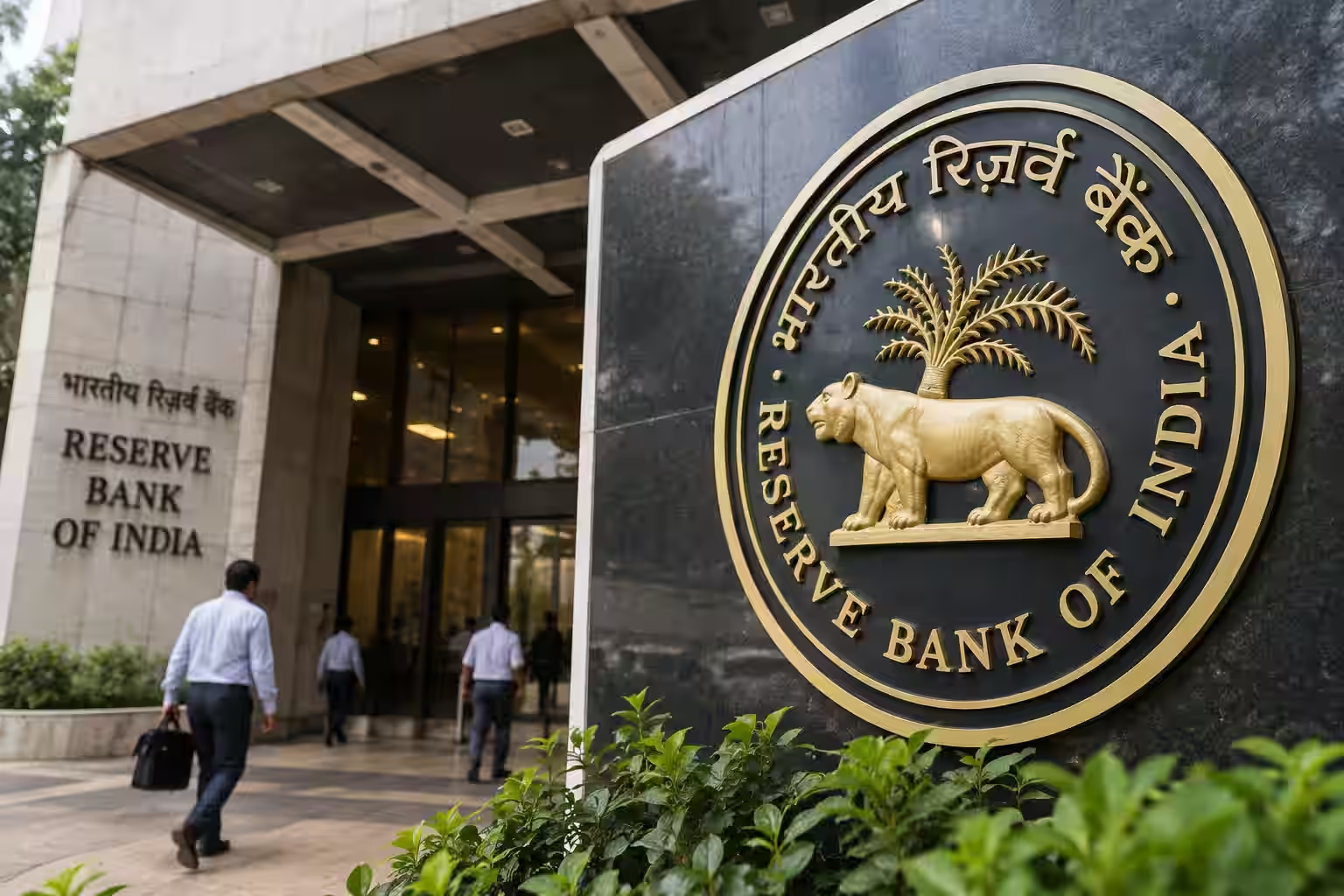
The Reserve Bank of India is preparing to absorb a large part of the surplus cash sitting with banks as excess liquidity in the financial system climbs to unusually high levels.
The central bank will conduct a 30-day Variable Rate Reverse Repo (VRRR) auction for a notified amount of ₹7 lakh crore on September 7. The auction will be held between 9:30 am and 10:00 am, with the funds scheduled to be reversed on October 7.
The move comes at a time when surplus liquidity in the banking system has risen to around ₹10.32 lakh crore as of September 3. The RBI has been using shorter-duration operations in recent weeks, but the latest 30-day auction is a much larger and longer operation aimed at managing the excess cash in the system.
The ₹7 lakh crore figure is the amount notified for the auction. It does not mean the RBI will necessarily absorb the entire amount. The actual amount will depend on how much banks bid and choose to park with the central bank.
The timing is significant. On September 4, two three-day VRRR auctions absorbed a combined ₹6.02 lakh crore from banks against a total notified amount of ₹8.5 lakh crore. The response showed that banks were willing to place a substantial portion of their surplus funds with the RBI, even as liquidity remained unusually high.
The recent surge in liquidity has been linked to large foreign-currency inflows and the RBI’s measures to mobilise overseas funds. Those inflows, followed by rupee liquidity entering the banking system through foreign-exchange operations, have left banks with considerably more cash than they immediately need.
For the RBI, the concern is not that banks have too much money in an absolute sense. The issue is how that surplus affects short-term financial conditions.
When excess cash becomes abundant, overnight money-market rates can come under downward pressure. The central bank therefore uses liquidity operations to keep short-term rates aligned with its broader monetary policy stance.
The latest VRRR operation gives banks another way to manage that surplus without permanently removing the money from the financial system.
Under the arrangement, banks will place funds with the RBI for the auction period and receive interest on the amount. The funds are scheduled to return on October 7. The RBI has also allowed participating banks to seek premature reversal, including partial reversal, subject to the conditions laid down for the operation.
That flexibility is important because banks’ liquidity requirements can change during the month. A bank that suddenly needs funds does not necessarily have to wait until October 7 to access the money placed through the VRRR auction.
The RBI’s recent operations show how quickly the liquidity position has changed. The central bank has been conducting a series of VRRR auctions since August as surplus funds accumulated in the banking system.
The size of Monday’s operation is what has drawn attention. At ₹7 lakh crore, it is substantially larger than the short-duration operations conducted in recent weeks and will test how much of the banking system’s surplus liquidity banks are willing to park with the RBI for a longer period.
For ordinary bank customers, the move does not mean ₹7 lakh crore is being taken away from the economy. The operation is a temporary liquidity-management tool. It is designed to influence the amount of cash available in the banking system and the conditions under which banks lend and borrow from one another.
The impact on borrowers and depositors will therefore depend less on the headline size of the auction and more on how banks respond to it. If banks place a large portion of their surplus funds with the RBI, the amount of readily available liquidity in the system could fall significantly from recent highs.
The September 7 auction will provide the clearest indication yet of how much of the surplus cash banks are prepared to lock away for 30 days.
For the RBI, the immediate task is to keep the liquidity surplus from pushing short-term market rates away from the intended monetary policy stance. For banks, the decision will come down to a familiar question: how much cash can they afford to keep parked with the central bank while still meeting their own funding needs?
That balance will determine how much of the ₹7 lakh crore actually gets absorbed.