



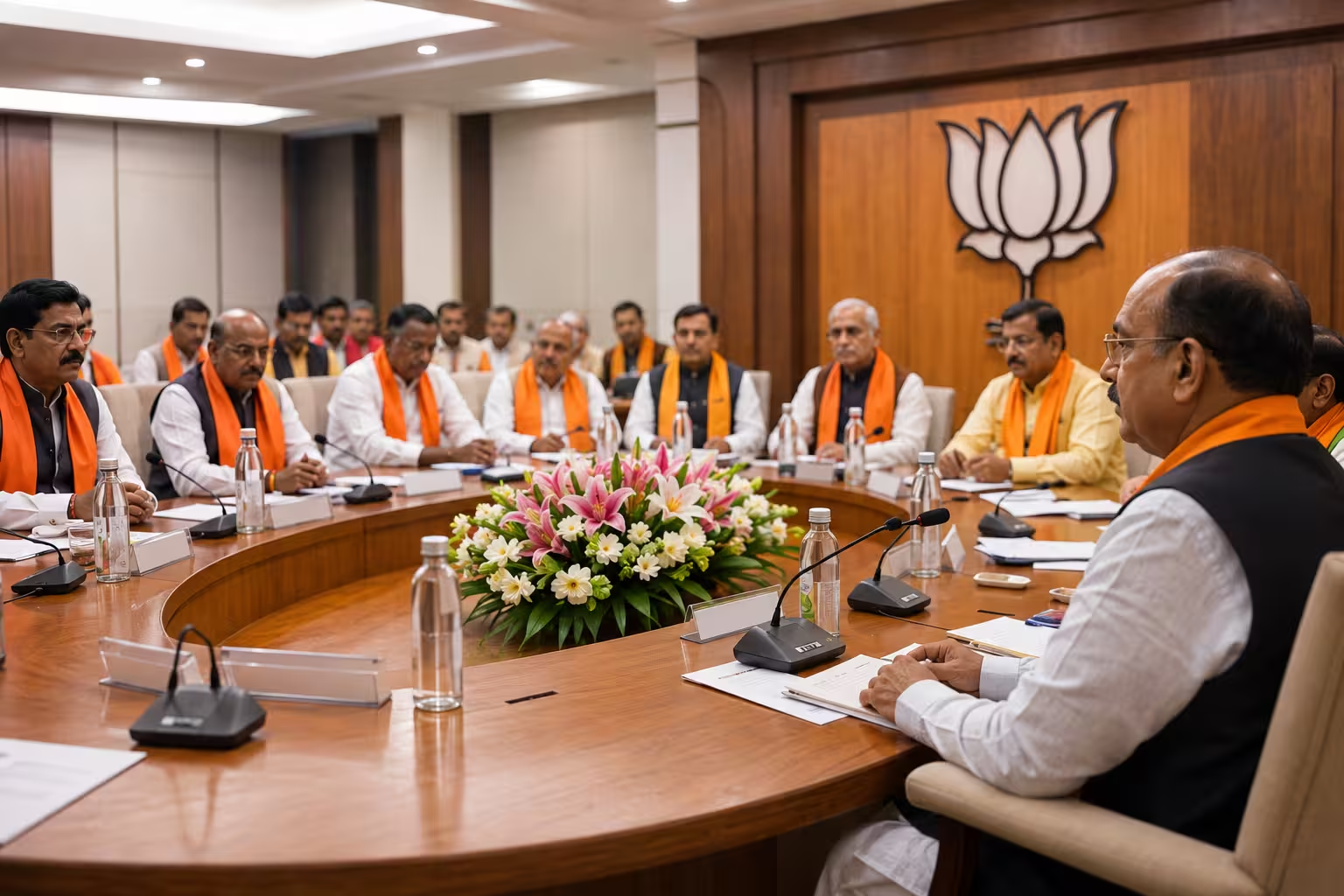
New Delhi, India: The Bharatiya Janata Party’s newly appointed national office-bearers met for the first time on Saturday under party president Nitin Nabin, beginning a new phase of organisational planning as the party looks ahead to upcoming Assembly elections and its longer-term political strategy.
The meeting at the BJP headquarters in New Delhi focused on preparations for the upcoming state polls, strengthening the party’s grassroots organisation and communicating government initiatives to voters, according to party sources. More meetings with state presidents, state in-charges and chief ministers of BJP-ruled states are also scheduled.
The new national team was announced earlier this week and has 65 office-bearers, including 51 new faces. The reshuffle is one of the party’s largest organisational changes in more than a decade, with the previous major exercise of this scale taking place in 2015 under then BJP president Amit Shah.
The new structure includes 13 national vice presidents and eight national general secretaries. Former Rajasthan chief minister Vasundhara Raje Scindia and former RSS functionary Ram Madhav are among the vice presidents, while former Union minister Smriti Irani has been appointed a national general secretary.
B L Santhosh has been retained as national general secretary (Organisation), while Vinod Tawde and Sunil Bansal continue as general secretaries. Union minister Piyush Goyal has returned as the party’s national treasurer, a position he previously held before joining the Union Cabinet.
The new team also includes 12 women and six leaders from minority communities, according to the party’s organisational announcement. Changes have also been made to some of the BJP’s affiliated and communication structures. Deepak Mhaskey has been appointed to head the party’s IT department, replacing Amit Malviya, while Hemang Joshi has taken charge of the Yuva Morcha.
The timing of the organisational overhaul is significant. State elections will require the national leadership to coordinate with state units while translating national issues and government programmes into local campaigns.
For a party with a large and geographically spread organisation, that process depends heavily on communication between the central leadership and workers at the grassroots.
Saturday’s meeting therefore marks more than the first formal gathering of the new office-bearers. It is the beginning of assigning responsibilities and establishing how the reshaped national organisation will operate on the ground.
The BJP will now have to turn the organisational changes into an effective election structure, while keeping its national leadership, state units and grassroots workers aligned.
For Nabin, who took over as BJP president earlier this year, the new team will also be an early test of his organisational leadership as the party enters another important electoral cycle.