



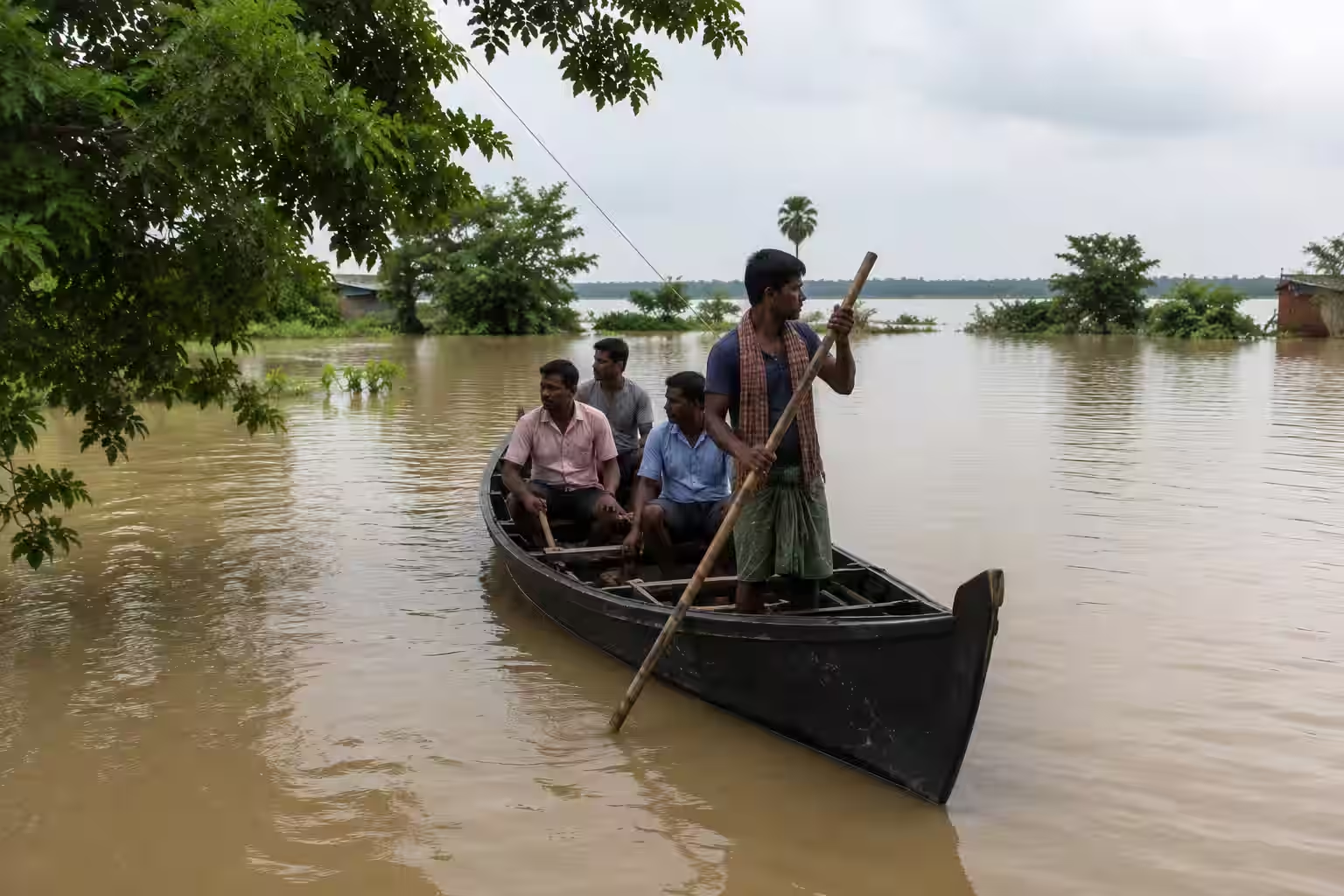
Balasore: The Subarnarekha is rising again, and in parts of Balasore, the water is moving faster than people can prepare for it. Villages in Baliapal, Jaleswar and Bhograi are facing fresh inundation, roads have gone under water and several pockets have been cut off as the river climbed well above its danger mark on Wednesday.
At Rajghat, the Subarnarekha was flowing at 11.54 metres around 9 am, more than a metre above the danger level of 10.36 metres. The rise followed heavy rain in the river’s upper catchment in Jharkhand and the release of excess water through 13 gates of the Galudih Barrage.
For families living close to the river, this is not simply another rise in a river gauge. It means watching water enter roads, fields and homes again after earlier flooding had barely begun to recede.
The latest surge has affected around 100 additional villages, with road connectivity disrupted in several areas. In the worst-hit pockets, residents are relying on boats and relief teams to move through stretches that were recently ordinary village roads.
The fresh flooding is also the third major instance this year in the Subarnarekha basin, adding to the exhaustion of communities that have already spent days dealing with floodwater.
The picture is uneven across northern Odisha. In parts of Mayurbhanj, the Budhabalanga has begun to fall and many of the nearly 5,000 people who had taken shelter in relief camps have started returning home.
But further south, Jajpur remains under pressure from the Brahmani, with 62 villages still inundated. Schools and Anganwadi centres in affected areas were closed for a day as waterlogging continued.
The Baitarani is also keeping Bhadrak on alert. At Akhuapada, the river was flowing at 18.20 metres, just below its danger level of 18.33 metres. Authorities in Bhandaripokhari, Dhamnagar, Chandbali and Tihidi are watching the situation closely because even a relatively small rise can quickly worsen conditions in low-lying villages.
Behind the latest rise is a weather system that has been moving across eastern India. The India Meteorological Department said the well-marked low-pressure area over Gangetic West Bengal and adjoining Jharkhand was positioned over western Jharkhand and nearby areas early Wednesday.
The system was expected to move west-northwestwards, while Odisha remained likely to receive light to moderate rain in most places and heavy rain at isolated locations.
That forecast matters along the Subarnarekha because the danger does not end when rain stops falling over Balasore. Water from upstream catchments can continue arriving hours later, keeping the river high and leaving already flooded villages with little room to absorb another surge.
For people living along the river, the immediate question is no longer whether the Subarnarekha will cross the danger mark. It already has. The question now is how far the water will spread, how long it will stay and whether families who have only just returned home will once again have to leave with what they can carry.
The river is still high, the roads are still under water in several pockets, and northern Odisha is watching the next few hours closely.