





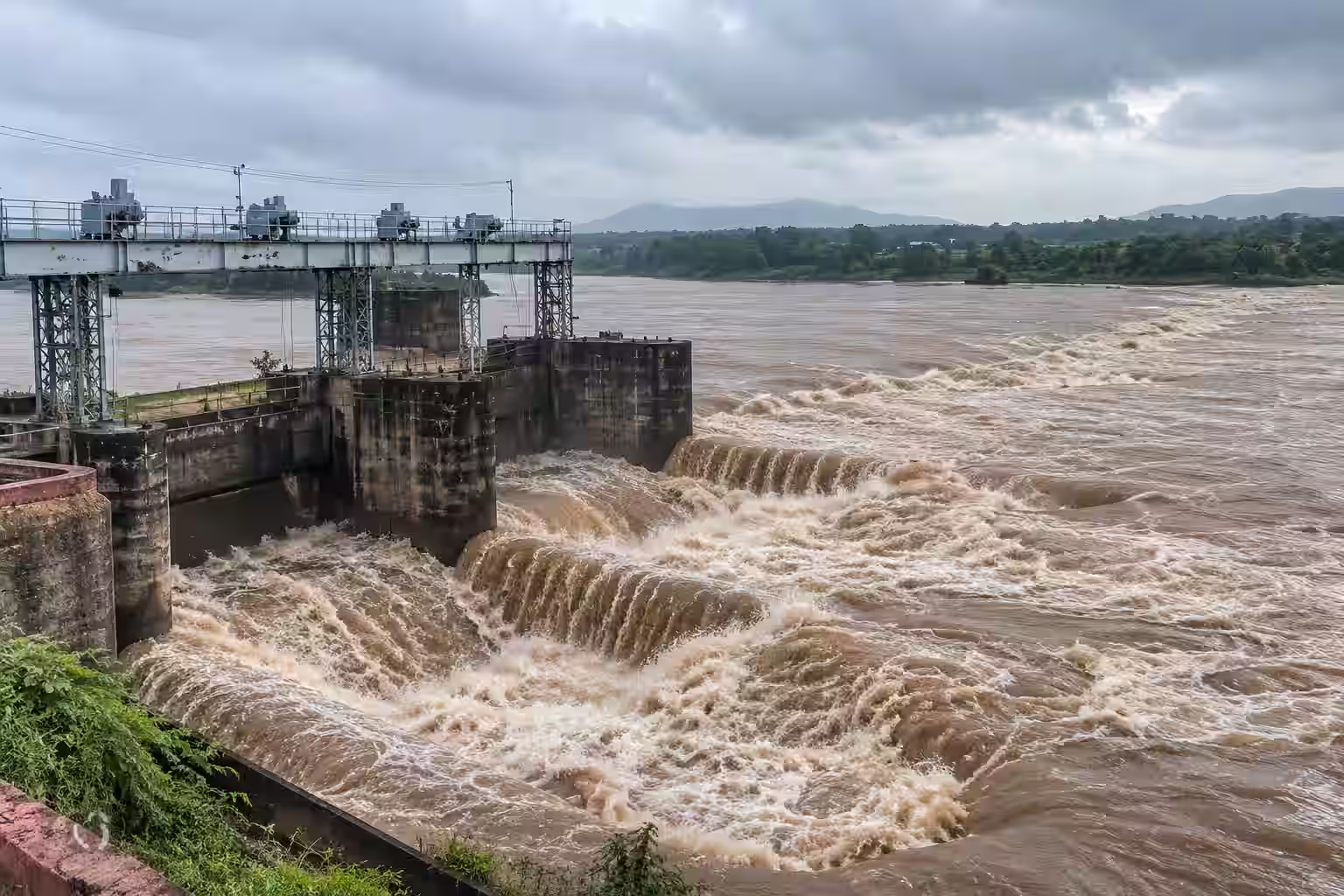
Cuttack: Odisha is dealing with another round of flooding, with more than one lakh people affected across Mayurbhanj, Balasore and Jajpur as river levels begin to fall but several villages remain cut off.
It is the fifth major flood episode to hit the state in less than two months. This time, the worst-affected areas are in northern Odisha, where the Subarnarekha, Baitarani and their tributaries have pushed water into villages, roads and low-lying settlements.
The situation was showing signs of improvement on Friday, September 4, as water levels in most major rivers started coming down. The Subarnarekha, which had remained above the danger mark at Rajghat in Balasore, had fallen to around 9.6 metres against the danger level of 10.36 metres. Even so, the fall in the river level has not meant an immediate return to normal life for people living in the flooded areas.
In Balasore, the scale of the latest flooding remains visible across the affected blocks. More than 35,740 people from 214 villages had been evacuated and moved to 72 relief shelters. Several pockets of Baliapal and Bhograi were still surrounded by water, with road connectivity disrupted and families unable to move freely between villages.
For residents who have already gone through repeated spells of flooding this monsoon, the latest water has brought another round of disruption. Houses, local roads, drinking-water sources and agricultural land have all been affected in different pockets. Even where floodwater is receding, mud and stagnant water are making movement difficult.
Mayurbhanj is facing a similar situation. Residents of 97 villages and two wards of Baripada municipality have been affected, with 29 relief camps operating and more than 10,500 people staying there. Officials have also reported damage to more than 100 houses in the district.
Jajpur has been dealing with flooding from the Baitarani river system and its tributaries. Sixty-two villages in Dasarathpur block remained inundated after a breach in the Kani river near Patana. Some residents have continued to stay on embankments and other raised areas while officials work on restoration.
The Kani breach is another reminder of how quickly the situation can change in the low-lying areas. Even when the main river begins to recede, water can remain trapped in villages and agricultural fields for days.
The state government has deployed 47 response teams across the affected districts. The deployment includes 21 ODRAF teams, four NDRF teams and 22 Fire and Emergency Services teams. Balasore has 12 ODRAF teams, four NDRF teams and nine Fire and Emergency Services teams working in affected areas. Mayurbhanj has six ODRAF and 13 Fire and Emergency Services teams, while three ODRAF teams have been deployed in Jajpur.
The Subarnarekha remains the main concern in Balasore, although its level is now moving in the right direction. The river had risen well above the danger mark during the latest spell before beginning its fall.
The Baitarani system has also been closely watched because several tributaries, including the Salandi and Kani, have contributed to flooding in low-lying areas.
The latest flood comes after a difficult monsoon season for Odisha. The state has already faced several major episodes of flooding this year, affecting different river systems at different times. Communities that were still recovering from earlier inundation have had little time to completely restore damaged roads, homes and farmland before another spell of water arrived.
That repeated cycle is becoming one of the biggest problems for residents.
A village may be technically out of immediate danger once a river drops below its warning level, but that does not mean the damage disappears with the water. Roads remain muddy or broken, tube wells can stay submerged, crops can be lost and families may need days before they can safely return home.
In some areas, the immediate challenge is no longer rescue but access.
Residents in marooned villages still need drinking water, food and other essentials, while authorities have to keep checking roads and embankments as the water recedes. Officials are also expected to assess damage to houses, crops and public infrastructure once conditions become safer.
The broader weather situation is being watched closely as well. Odisha has experienced repeated spells of heavy rainfall this monsoon, and another spell of rain could slow the recovery in places where the ground is already saturated and drainage remains poor.
For now, the direction of the rivers offers some relief. The state government has said the overall flood situation is improving and remains under control.
But in the villages where water is still standing around homes and roads, the flood is not over simply because the river has started to fall.
The next few days will be about getting people home, restoring connectivity and finding out how much has been left behind by Odisha’s fifth flood wave of the season.