
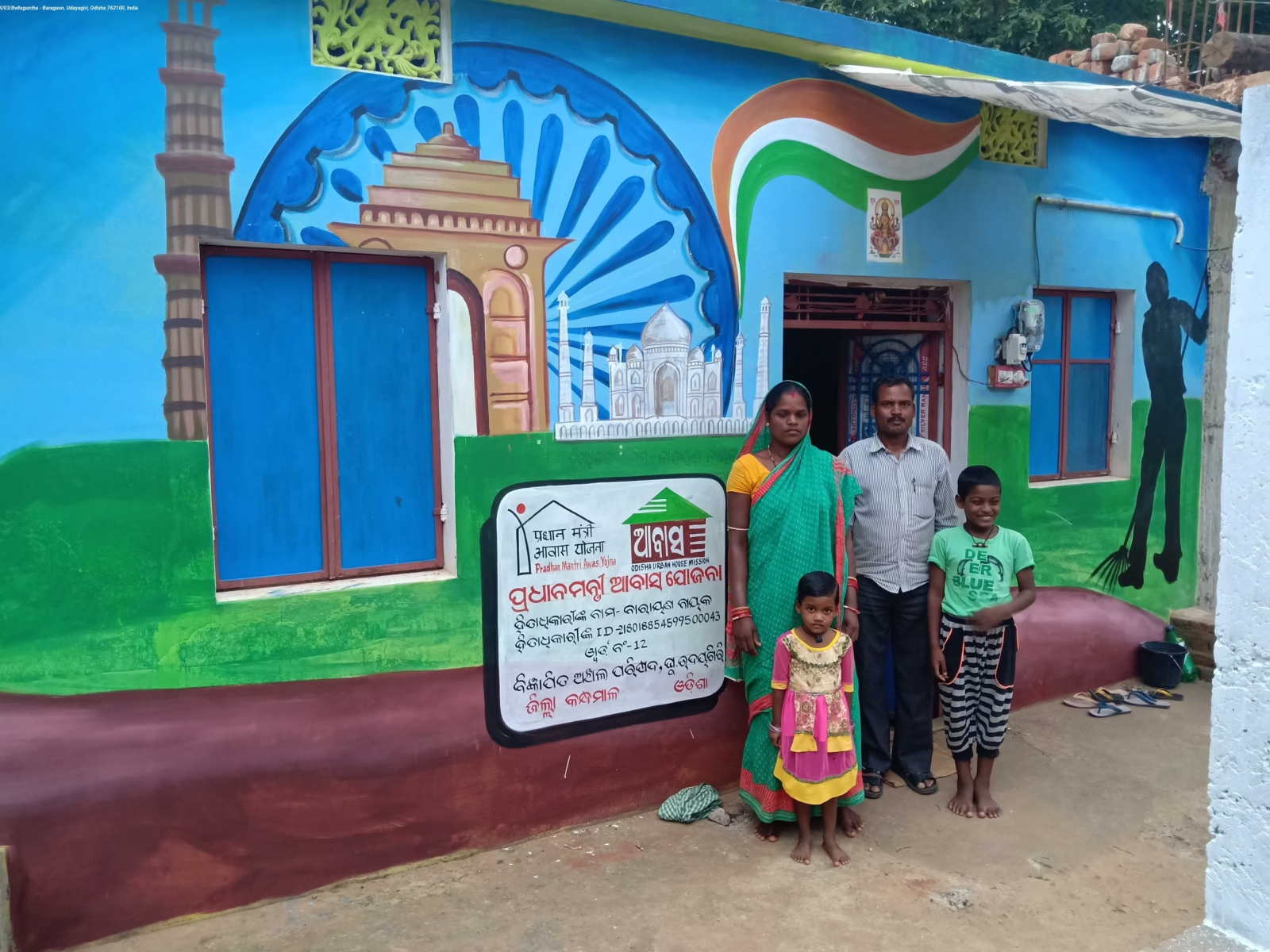
Bhubaneswar: Odisha has received national recognition for its performance under the Pradhan Mantri Awas Yojana–Urban (PMAY-U) 2.0, with the state securing the top position in reported house completions during a year-long period and earning a special award for housing reforms.
As of May 2026, Odisha had 24,625 houses sanctioned under PMAY-U 2.0 and ranked first nationally in house completions between March 2025 and March 2026, according to a UNI report published on May 8. The state received further recognition on October 5 at the PMAY-Urban Awards 2026 for undertaking the highest number of reforms under the scheme.
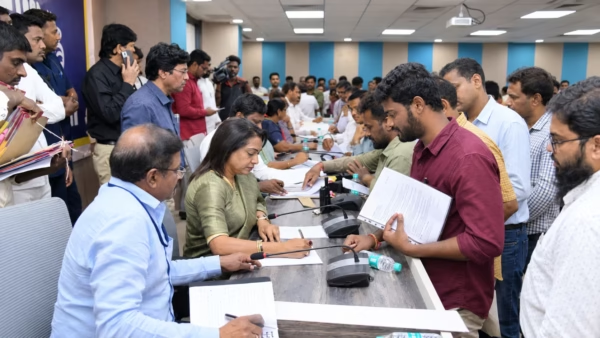
Housing and Urban Development Minister Krushna Chandra Mahapatra said Odisha received a Special Recognition Award for its reform efforts under PMAY-U 2.0. Chief Minister Mohan Charan Majhi also expressed happiness over the achievement in a post on X, welcoming the recognition of the state’s efforts to improve affordable housing delivery. The development brought attention to the work being undertaken by the state’s housing department and urban local bodies to help eligible families access housing assistance.
The two achievements reflect different aspects of the programme. The completion ranking concerns the implementation of approved housing projects, while the award recognises reforms introduced to improve the scheme’s delivery. Together, they place Odisha’s urban housing programme among the initiatives receiving national attention.
PMAY-U 2.0 was launched by the Union government to help one crore additional eligible urban poor and middle-income families construct, purchase or rent affordable homes. The programme took effect on September 1, 2024, and is scheduled to run for five years, until 2029.
The scheme covers different housing needs. Eligible families who own suitable land can seek assistance to construct a house, while others may qualify for support through affordable housing projects or interest subsidies on home loans. The programme also includes affordable rental housing for eligible groups such as urban migrants, industrial workers and working women.
For Odisha, the challenge extends beyond securing approvals. A sanctioned house still has to pass through construction and verification before the intended beneficiary can receive the full benefit. The number of houses completed, the time taken to finish them and the quality of construction are therefore important measures of progress.
The figure of 24,625 houses sanctioned in Odisha, reported in May, provides a snapshot of the state’s position at that time. It should not be interpreted as the number of houses completed or handed over to families. Sanctions, construction progress and completed homes are separate stages, and each provides a different picture of implementation.
The scheme is intended to benefit eligible urban households belonging to the Economically Weaker Section, Low Income Group and Middle Income Group categories, subject to prescribed conditions. Applicants generally must not own a pucca house anywhere in India, and eligibility is assessed under the rules governing the relevant component.
The programme also gives priority to vulnerable groups, including widows, single women, senior citizens, persons with disabilities, transgender people, members of Scheduled Castes and Scheduled Tribes, minorities and other eligible disadvantaged households.
Applicants can seek information through the official PMAY-U 2.0 portal, Common Service Centres or their respective urban local bodies. The documents and conditions required depend on the type of assistance sought. Approval is subject to eligibility checks and verification by the relevant authorities.
For households living in inadequate accommodation or struggling to afford a home, effective implementation can make a substantial difference. A completed house offers greater housing security, but the long-term benefit also depends on access to water, sanitation, electricity, roads and essential public services. Location matters, too, particularly for families who need to reach workplaces, schools and healthcare facilities.
Odisha’s award recognises its reported reform efforts, but the broader test will be whether those changes make the process easier for eligible households and help approved projects reach completion without unnecessary delays. Transparent beneficiary selection, proper monitoring and timely construction will remain important as the programme continues.
The state’s progress under PMAY-U 2.0 marks a significant milestone in its urban housing efforts. Sustaining that performance will depend on ensuring that government approvals and administrative reforms translate into completed homes for families who need them.