




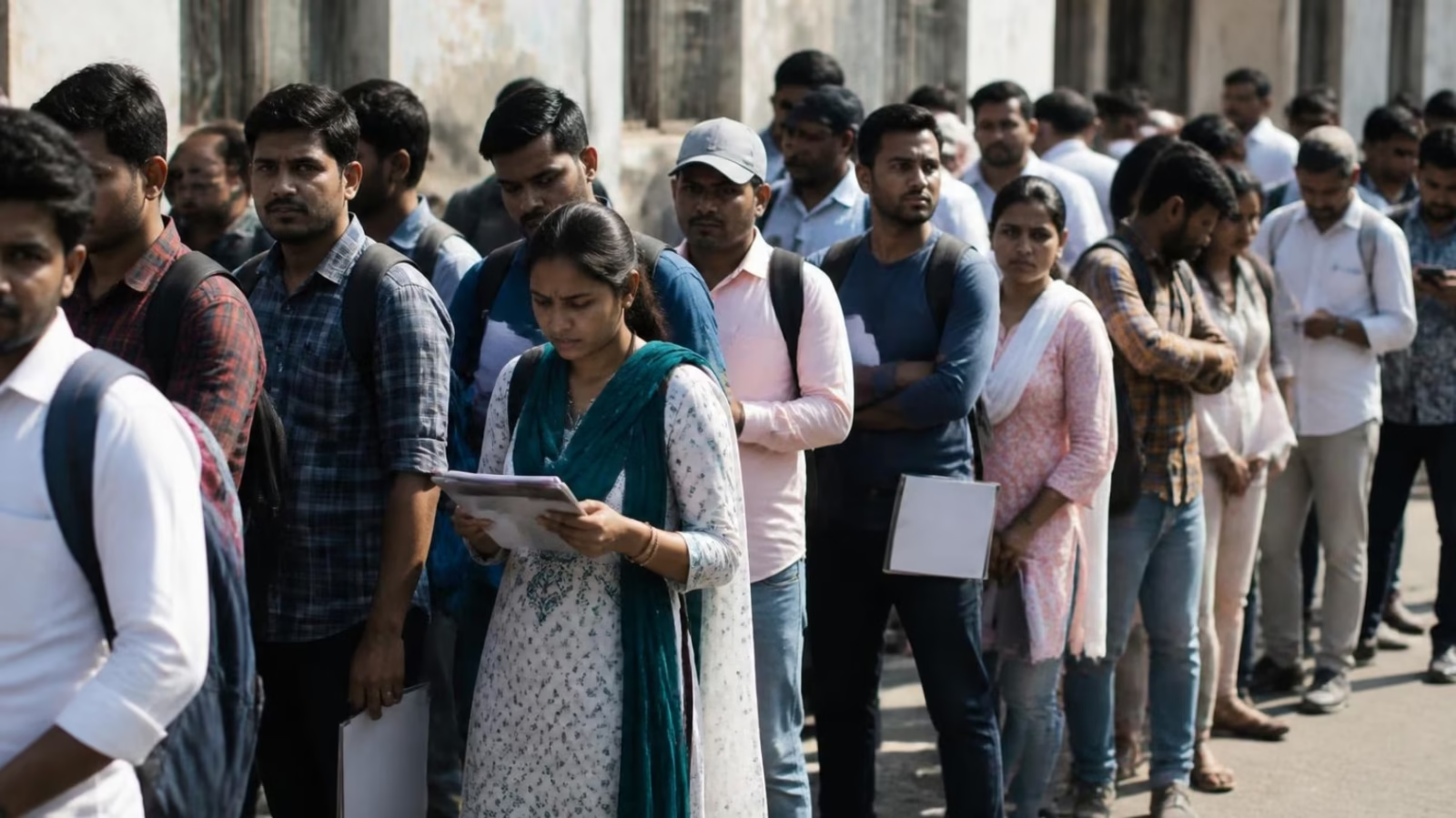
Bhubaneswar: Odisha has once again announced investment proposals worth thousands of crores, along with the promise of creating employment opportunities for lakhs of people. The figures are large enough to attract attention, but for young people searching for work, the real question is not how much investment has been announced. It is how many jobs will actually be created, when those jobs will become available and whether people from Odisha will be able to benefit from them.
During Chief Minister Mohan Charan Majhi’s investment outreach in the United Arab Emirates, Odisha secured proposed investments worth ₹2,43,162 crore through eight Memoranda of Understanding and 16 investment intents, according to reports published after the visit. The proposals were projected to create 6,18,725 direct and indirect employment opportunities, with additional jobs expected during the construction phase of the projects.
The figures were reported by several publications, including The Times of India on September 11, 2026, and The Economic Times in a PTI report published on September 12. The reported investment figure refers to proposed projects and agreements, not money that has already been invested or jobs that have already been created.
That difference matters because Odisha has heard similar promises before. Investment announcements create expectations, particularly among young people and families who believe that new industries could provide stable employment close to home. But an announcement is only the beginning. The real test comes later, when projects receive approvals, land is acquired, construction begins, factories become operational and companies start hiring workers.
The September 9 announcement of 14 projects is a separate set of figures from the broader UAE outreach total. The Chief Minister’s Office said the projects involving the International Holding Company and the Adani Group represented an estimated investment of ₹2,10,500 crore and employment potential of approximately 8,68,200. The figure was also reported by The Tribune and other outlets. These are proposed projects, and their employment potential should not be understood as jobs already available to people in Odisha.
The distinction is important because large numbers can easily create the impression that employment problems are close to being solved. A proposal worth ₹2 lakh crore or more may sound like a major economic transformation, but it does not automatically tell us how many local people will be hired, how many years the projects will take to become operational or what kind of wages workers will receive.
I am not against investment. Odisha needs industries, private businesses, infrastructure and opportunities for people who want to build their lives in the state. The state has natural resources, a long coastline, a growing urban population and a large number of educated young people. Attracting investment can support economic growth, but the success of that effort should be measured through actual outcomes rather than announcements alone.
As a graduate, I understand the employment problem personally. I came to Bengaluru in search of work because finding a suitable opportunity in Odisha was difficult. The issue was not simply the absence of any job. The problem was finding work that offered reasonable pay and enough stability to manage everyday expenses.
Living in a city such as Bengaluru comes with its own pressure. Rent, food, transport and other basic expenses consume a significant part of a person’s income. Even when someone finds employment, surviving in a large city can be difficult, particularly for a young graduate who is starting without strong financial support. Yet many people still leave Odisha because they believe that remaining at home will give them fewer opportunities.
I have seen people from my native place who hold graduate and postgraduate degrees continue to search for work. Some move to Bengaluru and other parts of Karnataka. Others travel to Pune, Mumbai and different cities in Maharashtra, while many look towards Gujarat and other industrial regions. They leave their families, familiar surroundings and local support systems because they need to earn.
That difference matters to people like me.
For many young people, migration is not a lifestyle choice or an exciting opportunity to explore another city. It is often a practical decision taken after repeated searches for work, limited income opportunities and uncertainty about the future. A person may want to remain close to their parents, support their family and build a career in their own state, but those choices become difficult when suitable employment is not available.
This is why the employment figures attached to Odisha’s investment announcements deserve closer attention. The government has referred to direct and indirect employment potential, while construction activity is expected to create additional opportunities. These categories are not the same. Permanent jobs inside an operational factory are different from temporary construction work, and indirect employment depends on the businesses and services that develop around a project.
There is nothing wrong with counting these different forms of employment, but the numbers must be presented clearly. People need to know how many jobs are expected to be permanent, what qualifications will be required, where the projects will be located and whether recruitment will begin locally. They also need information about wages, working conditions and the kind of training companies will provide.
A large project may generate employment, but that does not mean every graduate will qualify for a position. Some industries require specialised technical skills, while others may depend on experienced workers. If the government wants local young people to benefit, skill development must be connected directly to the requirements of the companies entering Odisha.
Training programmes should not remain separate from the employment process. The government and companies should explain what skills will be needed, how many people will be trained, when recruitment will begin and whether those who complete the training will receive genuine opportunities. Young people should not be asked to spend years collecting certificates without knowing whether those qualifications will help them secure a job.
The location of projects also matters. Investment concentrated in a few industrial areas may create employment in those districts, but it may not immediately help graduates and job seekers from other parts of Odisha. The government should publish clear information about project locations, expected timelines and the number of local employment opportunities connected to each investment.
This would make it easier for people to understand whether the announced projects are likely to affect their communities. A young person from a rural district should not have to depend only on broad investment figures to know whether a new industrial project could create an opportunity for them.
The government should also publish regular updates on the progress of the projects announced during the UAE outreach. Such updates should explain which agreements have moved into detailed planning, which projects have received necessary approvals, which have started construction and which have begun recruitment. A public project-tracking system could bring greater clarity to the process and help people distinguish between an investment proposal and an operating business.
This is not an unreasonable demand. When the government announces investment figures and employment projections, people deserve to know how those promises are progressing. Regular updates would also help identify delays and allow the public to understand whether a project is facing land, environmental, financial or administrative difficulties.
The September 9 announcement involving the International Holding Company and the Adani Group also requires careful follow-up. The projects reportedly cover areas including critical minerals, metallurgy, coal-to-chemicals, port-based special economic zones and industrial infrastructure. These sectors could have strategic importance for Odisha, but their value to ordinary citizens will depend on implementation and the employment opportunities that eventually emerge.
The same applies to the wider UAE investment proposals. Reports have referred to projects involving areas such as green energy, data centres, steel and downstream industries, fertiliser and chemicals, ship repair and other sectors. These announcements indicate the range of industries being discussed, but the public still needs project-specific information rather than only a combined investment total.
Odisha has experienced investment announcements in the past, including proposals made during earlier investment summits. Some projects have progressed, while others have faced delays or remained at different stages of development. This history makes it necessary to evaluate new announcements carefully without assuming that every proposal will be implemented exactly as originally presented.
The Chief Minister has stated that the government’s priority is to convert investment commitments into projects and jobs. That is the central issue. Attracting investors is an important part of economic planning, but the government’s responsibility does not end when an agreement is signed. It must continue through implementation, monitoring, recruitment and the creation of working conditions that allow people to build stable lives.
For Odisha’s educated youth, the question is not whether the state can announce large investment figures. The question is whether those investments will create enough meaningful opportunities for people who are currently studying, preparing for competitive examinations, searching for private-sector employment or leaving the state for work.
A job should not be measured only by the number attached to an announcement. It should also be measured by whether a worker can earn a stable income, support a family, access basic services and live with dignity. Employment that forces people to remain financially insecure will not fully address the problem, even if the total number of jobs appears impressive.
Odisha needs growth that reaches beyond official events and investment summits. It needs industries that operate on the ground, businesses that hire consistently, training programmes linked to actual vacancies and a system that allows young people to track opportunities without relying on personal contacts.
The state cannot stop every person from moving to another part of India for work, nor should migration itself be treated as a failure. People should have the freedom to work wherever they choose. But leaving should be a choice rather than the only practical option for a graduate who wants to earn a decent living.
The investment announcements from the UAE may create opportunities if the proposed projects move forward. The figures deserve attention, but they also require scrutiny. The government must show how many commitments become operational projects, how many jobs are created, how many people from Odisha are recruited and whether the employment offered provides enough income and stability.
As of now the announcements represent potential. The people waiting for work need results, Odisha’s young people should not have to leave to earn a living.