




Five gates in Odisha’s Upper Indravati reservoir system are reportedly non-functional, raising questions about maintenance and the preparedness of the project to manage rising water during periods of heavy rainfall.
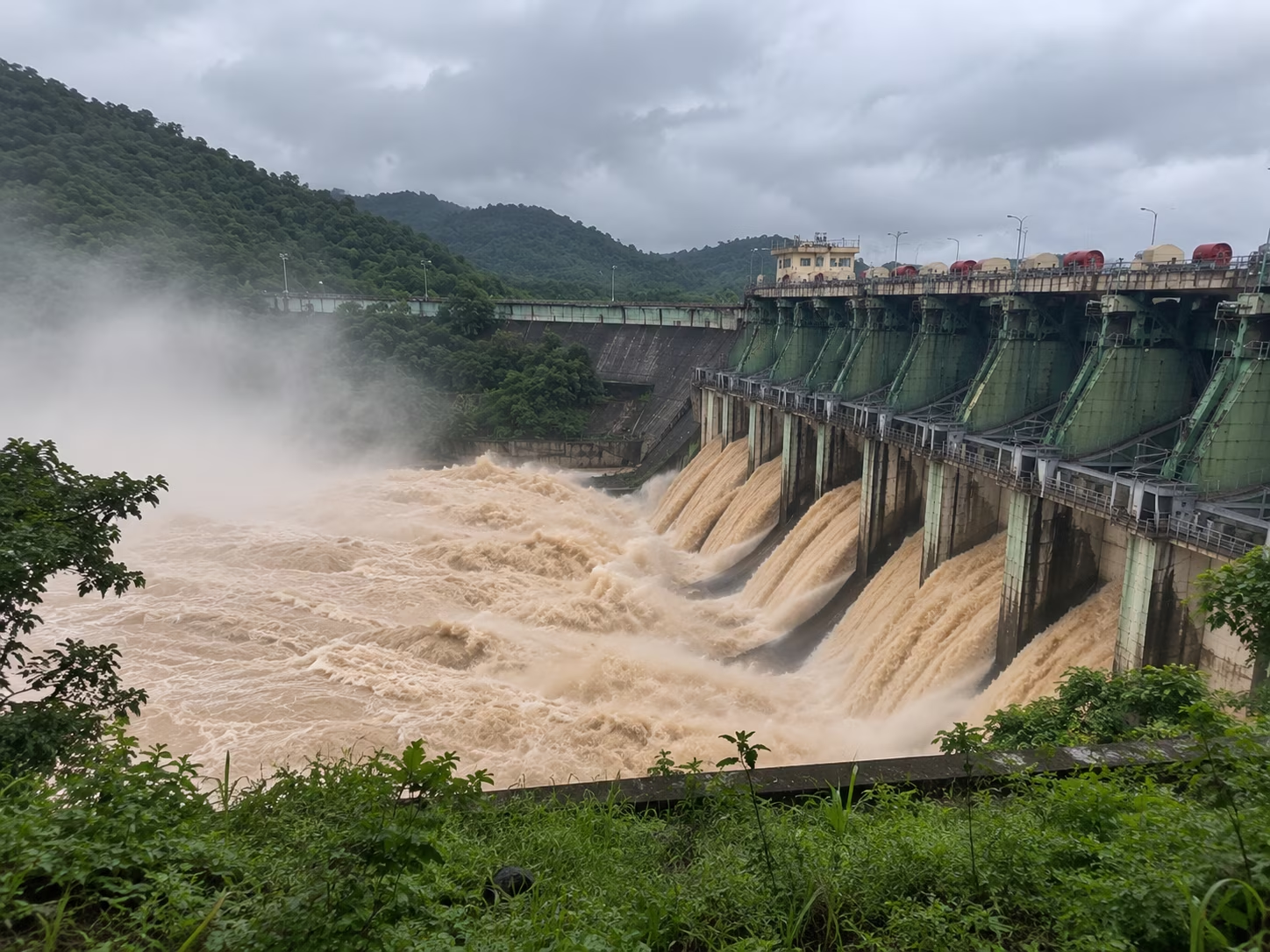
Three of the seven gates at the main Indravati dam gates 3, 4 and 5 are reported to be out of operation. At Muran dam, two of its five gates, gates 3 and 4, are also reportedly non-functional. The concern comes as the reservoir level has been reported at 641.650 metres, close to the full-reservoir level of 642 metres.
The Upper Indravati project is a major multipurpose water and power project. OHPC’s project information lists the main Indravati dam with seven radial gates, each 15 metres wide and 12.5 metres high. The full-reservoir level is 642 metres, while the maximum water level is 643 metres.
The reported condition of five gates, however, should not automatically be taken as evidence that the dam is currently unsafe or facing an immediate risk of failure. The available information does not establish such a finding.
The more immediate question is about operational flexibility: if heavy rainfall causes the reservoir level to rise quickly, how effectively can water be regulated when some gates are unavailable?
That question becomes important because the Upper Indravati project consists of several structures, including the Indravati, Muran, Podagada and Kapur dams. The system is designed to manage water for irrigation and power generation across the region.
Recent rainfall has already required controlled releases from different parts of the system. In September, reports said five gates were opened across the Upper Indravati system — two at Muran and three at Podagada — as water levels increased. A separate report later recorded three gates being opened at the main Indravati dam to release excess water.
The distinction matters. The five gates opened in that September operation were not five gates of the main Indravati dam. They were spread across Muran and Podagada, which are separate structures within the Upper Indravati project.
Earlier in September, officials had also conducted a mock drill as the Indravati reservoir level continued to rise. During the exercise, gate No. 4 of the main reservoir was opened by two feet for about 40 minutes to test preparedness for a possible controlled release. Officials said gates would be opened if the reservoir approached the specified level.
The project has a major role beyond flood management. OHPC lists four generating units at Mukhiguda with a combined installed capacity of 600 MW. The project also supplies water through its irrigation network to areas of Kalahandi and forms part of Odisha’s wider irrigation and power infrastructure.
That means the reservoir has to be managed through different conditions. During dry periods, water must be retained for irrigation and power generation. During heavy rainfall, operators need sufficient control over inflows and releases to keep the reservoir within its operating limits.
The condition of the gates therefore becomes an important maintenance issue.
The latest report quoted Indravati Dam Executive Engineer Sushant Kumar Patnaik as saying that responsibility for repair and maintenance of the gates had been assigned to the Odisha Works Department. However, he said the formal handover had not yet taken place.
That leaves a practical question for the authorities: what is the present repair status of gates 3, 4 and 5 at Indravati and gates 3 and 4 at Muran, and when can they be returned to service?
Another issue raised in the latest report concerns sedimentation.
The Indravati reservoir has been holding water since the project was completed in 1998. Over decades, soil and silt can accumulate in reservoirs and affect available storage. The report said a Central survey team inspected the reservoir and dam in 2024 and recommended reducing the water-holding capacity from 1,485 million cubic metres to 1,453 million cubic metres. It further reported that the recommendation had not been implemented.
Those figures need to be treated carefully because storage figures can refer to different technical categories. The Central Water Commission’s dam records list 1,485 million cubic metres as the gross storage figure for the Upper Indravati system, while OHPC’s current project information separately lists gross storage at about 2,300 million cubic metres and live storage at about 1,435.5 million cubic metres.
The numbers should therefore not be directly compared without referring to the underlying technical assessment and the definitions used for each storage measurement.
The important issue for safety and operations is whether the current storage capacity, spillway arrangements, gate condition and operating procedures meet the project’s approved requirements.
There is also no basis in the information currently available to describe the situation as an imminent dam-failure threat. The reported concern is about non-functional gates, maintenance and the project’s preparedness to manage water under changing conditions.
For people living downstream, that distinction matters. A reservoir can operate safely while individual components are undergoing repair, provided the remaining infrastructure and operating procedures are adequate for the expected conditions. But that adequacy needs to be assessed by engineers and communicated clearly.
The Upper Indravati system has downstream areas in Nabarangpur and neighbouring districts. When gates are opened, water moves through the Indravati river and downstream areas, making timely warnings and coordination with local administrations important.
The current issue therefore calls for technical clarity rather than speculation. Authorities need to make the operational status of each gate clear, explain the repair schedule and provide the latest assessment of the reservoir’s storage and safety condition.
Indravati is a critical part of Odisha’s irrigation and power infrastructure. Its four generating units provide 600 MW of installed hydropower capacity, while the reservoir and canal system support irrigation in drought-prone areas.
Five non-functional gates do not, by themselves, prove that the reservoir is unsafe. But they do raise a legitimate question about preparedness that should be answered before the next period of heavy rainfall puts additional pressure on the system.
When the water rises again, will every part of the Indravati system needed to control it be ready?