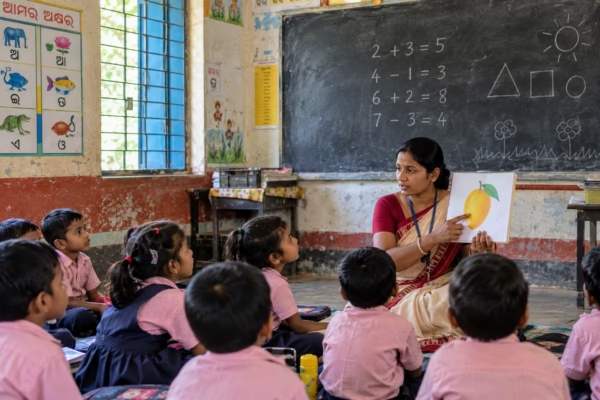





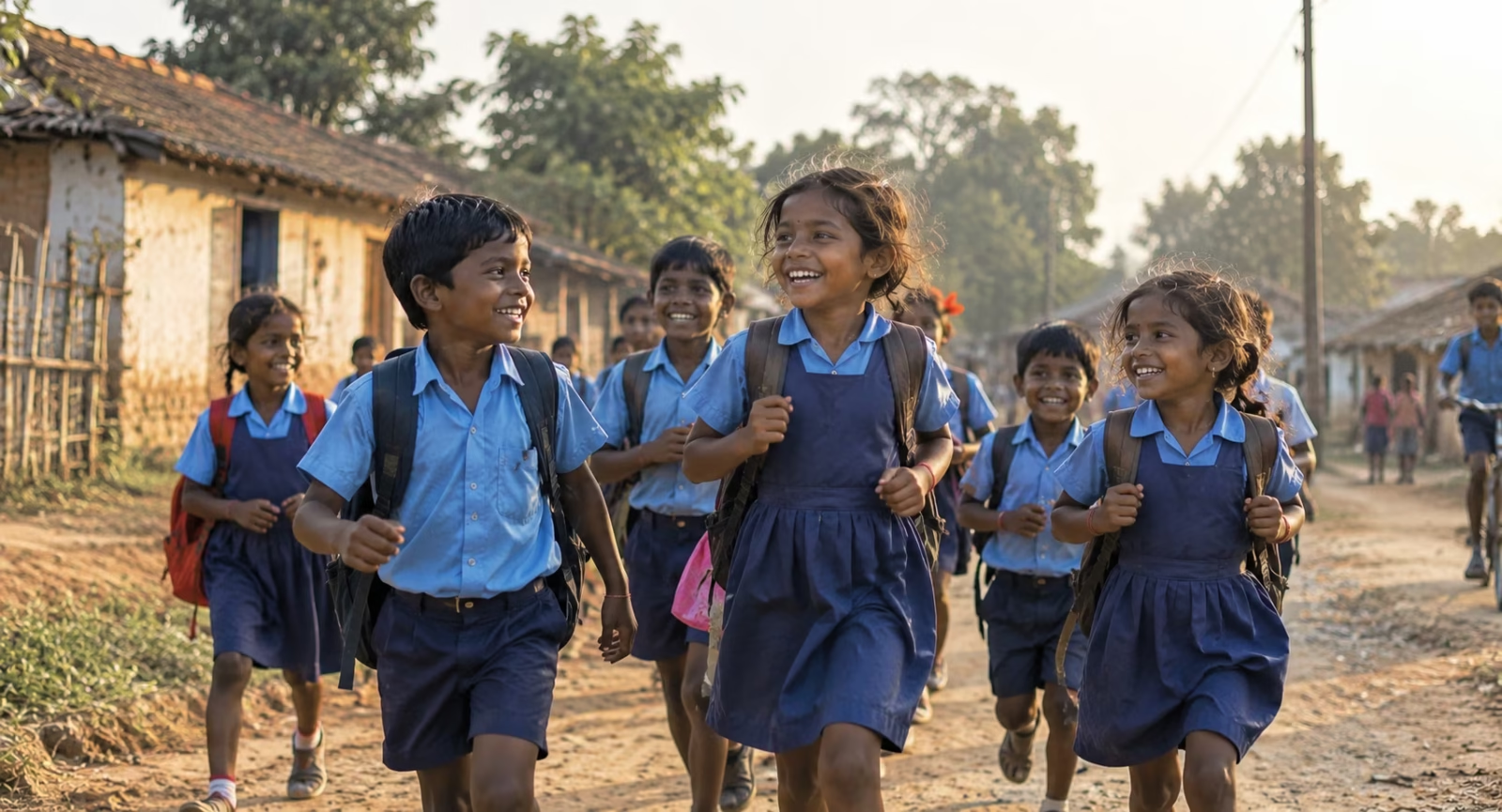
On Gandhi Jayanti, Odisha has started a 44-day campaign to identify children engaged in labour, bring out-of-school children back into education and work towards making every Gram Panchayat child-labour-free.
The campaign began on October 2 and will continue until November 14, Children’s Day. The state has set a larger target of making every Gram Panchayat free of child labour by 2029. Special Gram Sabhas and Palli Sabhas are planned across the state, with elected representatives, School Management Committees, women’s self-help groups, Anganwadi and ASHA workers and local residents expected to participate.
The campaign is being launched at a time when Odisha does not have a new comprehensive statewide figure that can show exactly how many children are currently working. The most widely cited official baseline comes from the 2011 Census.
According to Odisha government records, the state had 3,35,516 child workers in the 5–14 age group in Census 2011. The same records put the population of children aged 5–14 at 84,23,393. That works out to about 4% of children in that age group.
That 4% figure is therefore a historical measure, not the present child-labour rate in Odisha. A child-labour survey conducted in 1997 had identified 2,15,222 working children, while an Odisha State Commission for Protection of Child Rights document noted the lack of a regular systematic survey by the Labour Department to establish a comparable statewide figure.
More recent government figures show that children continue to be rescued from labour, although the numbers differ between official datasets.
In a written reply to the Odisha Assembly in February 2025, Chief Minister Mohan Charan Majhi said the state government had rescued 784 child labourers during 2020–2024. The figure was given in a reply dealing with missing children, trafficking and measures taken by the government to prevent trafficking.
A separate set of government data cited by reports from the Office of the Labour Commissioner gives a lower figure. It says 328 child labourers were rescued between 2019 and February 2025 — 85 in 2019-20, four in 2020-21, 43 in 2021-22, 107 in 2022-23, 44 in 2023-24 and 45 up to February 15 of the 2024-25 financial year.
The available records do not explain clearly why the 784 figure and the 328 figure differ so substantially. They appear in different government reporting contexts, so they should not be treated as interchangeable. The 784 figure is therefore best presented as the number cited by the Chief Minister in his Assembly reply, while the 328 figure is identified separately as Labour Commissioner data.
Another government figure provides a different reference point. In the Odisha government’s 2024 budget speech, the state said that 504 child and adolescent labourers had been rescued during the previous five years under the State Action Plan for Elimination of Child Labour. The plan involves nine government departments and covers awareness, enforcement, rescue, rehabilitation, education and skill development.
New campaign will take the issue into individual Gram Panchayats. Special Gram Sabhas and Palli Sabhas will be used to identify children involved in labour as well as children who have dropped out of school or were never enrolled. School Management Committees, elected representatives, women’s self-help groups, Anganwadi and ASHA workers and villagers will take part in the process.
Labour Department says the campaign will also focus on rehabilitation and bringing children back into education. Schools and local workers will have a role in identifying children who have stopped attending classes and following up with their families so that they can be brought back into education.
The Chief Minister’s message shared by the CMO Odisha account said:
“To make Odisha completely child labor-free, a 44-day ‘Child Labor-Free Gram Panchayat’ awareness campaign is being launched on the occasion of Mahatma Gandhi Jayanti.
Honourable Chief Minister Shri Mohan Charan Majhi has called upon everyone to participate in this important campaign to build a child labor-free and prosperous Odisha.”
In his message on the campaign, Majhi described child labour as a social problem that deprives children of their basic rights and called its elimination a social responsibility. He also appealed to people to join the campaign to build a child-labour-free and prosperous Odisha.
The problem is closely connected with household economic pressure and migration. Odisha’s economic surveys have previously identified low family income, poverty, debt, large family size, illiteracy and migration among factors associated with the persistence of child labour. The 2022-23 Economic Survey also noted that child labour was more prevalent in rural areas and that many working children were victims of migration.
There is already an enforcement mechanism in place. Odisha’s 2022-23 Economic Survey reported 1,701 inspections related to child labour during 2021-22, 115 child labourers rescued and 19 prosecutions filed under the Child and Adolescent Labour law.
The 44-day campaign gives Odisha a fixed period for mobilisation, but the state’s target extends to 2029. For a child-labour-free Odisha, the work will have to continue at the village, school and family levels after the campaign ends. Government officials can act on violations, schools can track children who disappear from classrooms, and local communities can bring cases to the attention of authorities.
The campaign’s results will ultimately be measured by whether children identified during the drive remain in education and whether cases found at workplaces lead to rehabilitation and enforcement.