




Bhubaneswar: Coffee grown by tribal farmers in Odisha’s Koraput district reached the 18th BRICS Summit in New Delhi on September 12 and 13. Branded as Tiger Bright, the 100 per cent Arabica coffee was included in kits distributed to delegates and journalists by the Ministry of External Affairs.
The New Indian Express reported that around 1,500 packets weighing 250 grams each were sent to New Delhi on September 9 after the Ministry of External Affairs asked the Odisha government to provide local products for the summit. The coffee was supplied through the Tribal Development Cooperative Corporation of Odisha Limited (TDCCOL), which manages procurement, processing and marketing support for the growers.
The Koraput Coffee brand was launched on September 11, 2019, to create a structured market for coffee produced by farmers in the region. The crop is mainly grown in areas around Nandapur and Machhkund, where plantations are located at elevations of roughly 920 to 950 metres.
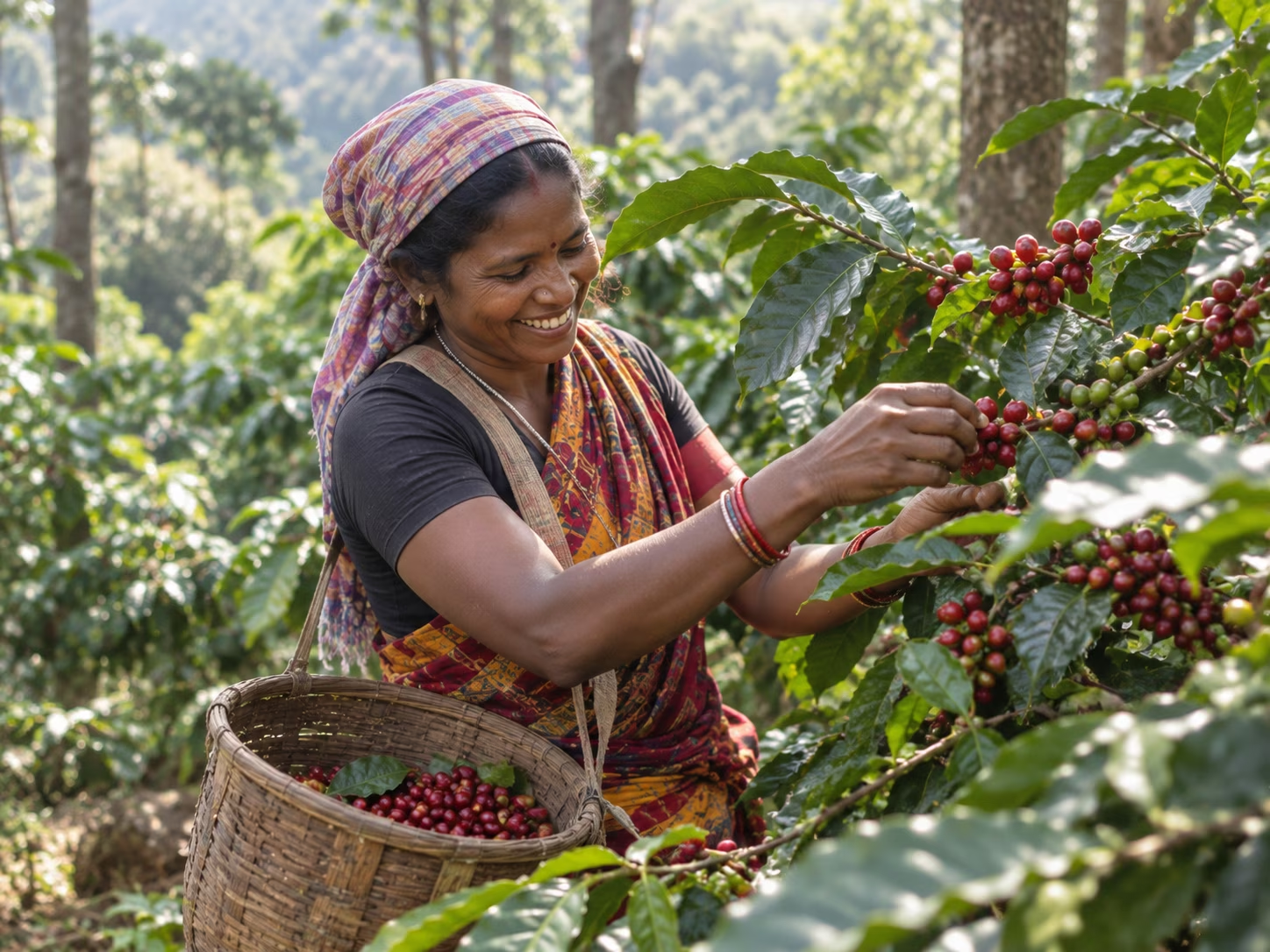
The coffee plants are cultivated under the shade of trees such as mango, jackfruit and citrus. Farmers handpick the cherries before they are dried, graded and processed for sale.
TDCCOL’s procurement figures show a sharp increase in the volume collected in recent years. During the 2025–26 season, the corporation procured 102.54 metric tonnes of coffee fruit, compared with 34.68 tonnes in 2022–23 and 34.41 tonnes in 2024–25.
According to EdexLive, around 360 tribal families directly benefit from the programme. TDCCOL officials also said that the earnings of some growers had nearly doubled within a year after the procurement price increased from ₹60 per kilogram in 2024–25 to ₹105 per kilogram in 2025–26. The report said women carry out 95 per cent of plucking and maintenance activities.
“At least, 71 women are receiving direct payments in their bank accounts. The active involvement of women from tribal villages in drying units and cafe outlets also reflects an increasing gender participation across the value chain,” TDCCOL branch manager Rakesh Ranjan Biswal said, according to EdexLive.
“Coffee has given us a new identity,” Jinu Majhi, a farmer from a village near Dumuriput, told The New Indian Express. “People who once left in search of labour are now working in coffee fields. And, women are the major beneficiaries of this initiative,” he added.
A January 2 report published by OrissaPOST said traders from Andhra Pradesh were allegedly offering around ₹5 more per kilogram than TDCCOL’s ₹105 rate in some areas. The report mentioned purchasing activity in parts of Nandapur, Lamtaput, Semiliguda, Dasmantpur and Koraput.
The report is from January, so the gap may have changed.
Koraput Coffee has received recognition at the national level. TDCCOL’s website says the brand won two Fine Cup Awards in the Arabica Washed and Arabica Naturals categories during the Know Your Kappi (KYK) Drive-2024 in Bengaluru. The corporation also says the coffee secured fourth place in the Flavour of India Fine Cup Award 2024, with the recognition announced during the India International Coffee Festival 2025 on April 26 and 27.
The Press Information Bureau said TDCCOL had established eight Koraput Coffee cafés across Odisha and at Odisha Bhavan in New Delhi.
The question is whether that wider reach will translate into steady income for growers.
My view is that the BRICS presentation can help Koraput Coffee only if the attention leads to regular sales and better bargaining power for farmers. The brand should not become more visible while growers remain uncertain about the price they will receive.
Farmers must see the benefit in their bank accounts.