
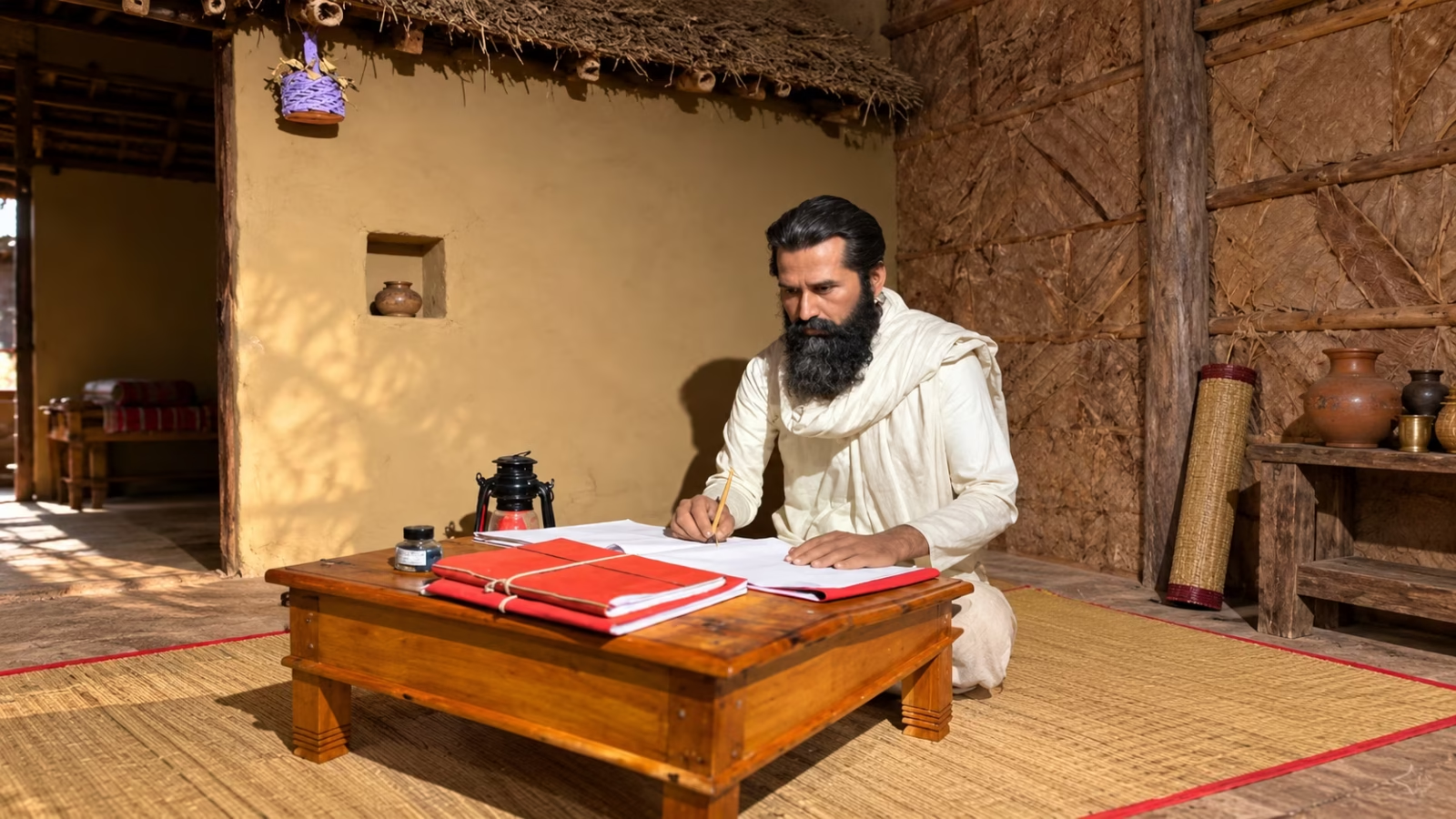
During a cholera outbreak in Puri, Gopabandhu Das brought fellow students together to help those suffering from the disease and arrange cremations for the dead. The voluntary group they formed became known as the Puri Seva Samiti. According to the Ministry of Culture’s biographical account of Gopabandhu Das, the experience became one of his early acts of public service.
Born on October 9, 1877, in Suando village in Puri district, Gopabandhu became a freedom fighter, poet, journalist, educationist and social reformer. He established Satyabadi Bana Bidyalaya, founded the newspaper The Samaja and campaigned for the unification of Odia-speaking areas. He died on June 17, 1928, nearly eight years before Odisha became a separate province.
His story is also one of personal loss. He lost his mother in infancy, later lost his wife and all three sons, and spent time in prison for his political activities. Yet he continued to work on education, journalism and social reform. The institutions and writing he left behind remain important parts of Odisha’s history.
The Ultimate Sacrifice: Choosing Public Duty Over Personal Grief
Gopabandhu’s mother, Swarnamayee Devi, died a few months after his birth. His father, Daitari Das, died while he was studying at Ravenshaw College in Cuttack, according to the Government of Odisha’s official profile.
His family suffered further losses. A biographical account published in the Orissa Review records that his wife died on the day he received news that he had passed his law examination. All three of his sons died during his lifetime. The same account describes how, in 1903, while preparing for his B.A. examination, he received news that his young son was seriously ill.
Then came news of devastating floods in the Dovar area. Gopabandhu went to help the affected people. His son died while he was away.
The Ministry of Culture’s account of his life records his explanation: others could look after his son, while flood victims urgently needed assistance. It is a painful episode, and the loss should not be softened into a simple story of heroism. He left his family at a moment of crisis because he believed people in the flooded areas had no one else to turn to.
His public activities also brought him into conflict with British authorities. In 1921, he faced a defamation case over a report in The Samaja concerning alleged police misconduct. A magistrate acquitted him in November that year, and the Patna High Court dismissed the government’s appeal on March 1, 1922. The judgment concerned the legal basis of the defamation charge; it did not establish that the newspaper’s allegations were true. The published court judgment records the proceedings.
In 1922, Gopabandhu was imprisoned for his participation in the Non-Cooperation Movement. He spent time at Hazaribagh jail and was released on June 26, 1924. The period became significant in his literary life, as he used his confinement to write.
The Satyabadi Experiment: How an Open-Air School Shaped Odisha’s Future
In 1909, Gopabandhu established Satyabadi Bana Bidyalaya near Sakhigopal in Puri district. The school used the natural surroundings of the Bakula grove as a learning environment. Students studied in the open air, while the institution placed importance on character, self-discipline and service to society.
Gopabandhu wanted education to prepare students for life beyond examinations. The school brought together teachers who shared his educational vision, including Nilakantha Das, Godabarish Mishra, Krupasindhu Mishra and Acharya Harihara Das. Along with Gopabandhu, these figures became closely associated with the Satyabadi movement.
The school’s approach went beyond lessons under the trees. Students took part in community service, including helping people affected by hardship and volunteering during public events. The institution also encouraged students to live and learn together, with teachers playing an active role in their daily lives. These practices connected education with the needs of the surrounding community.
The timing mattered. Access to education remained limited for many families, particularly in rural areas. Gopabandhu wanted students to understand the lives of people beyond their own households and use their education to help address social problems. The Satyabadi experiment reflected his belief that education should prepare people to take part in the development of their society.
Students now face different challenges, including competitive examinations, rising education costs and uncertainty about employment. The setting has changed, but Satyabadi’s emphasis on community service raises a practical question for schools and colleges: how much opportunity do students get to understand the places where they live and the people around them?
“ମିଶୁ ମୋର ଦେହ ଏ ଦେଶ ମାଟିରେ”: The Spirit of Patriotism in Gopabandhu Das’ Poetry
Gopabandhu’s writing gave expression to his concerns about freedom, suffering and public duty. His literary works include Abakasha Chinta, Kara Kabita, Dharmapada, Go-Mahatmya, Nachiketa Upakhyana and Bandira Atmakatha.
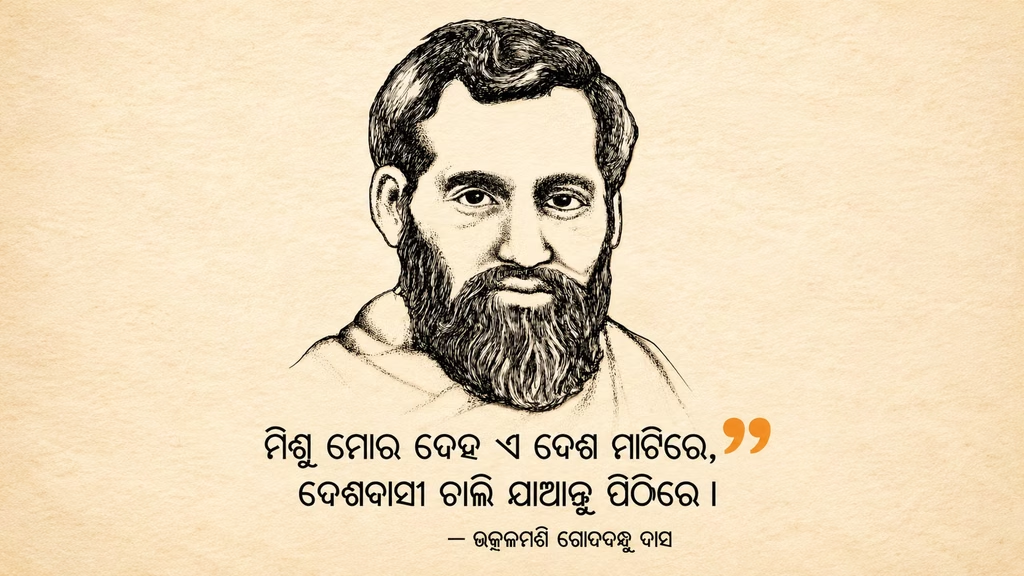
Prison became an important setting for his writing. An article in the Odisha government’s Orissa Review records that Kara Kabita and Bandira Atmakatha were among the works he composed during his stay at Hazaribagh jail. The Ministry of Culture’s public profile of Bandira Atmakatha identifies the work as a poem written in 1923 during his imprisonment.
One patriotic verse associated with Gopabandhu is remembered for its striking image of personal sacrifice:
“ମିଶୁ ମୋର ଦେହ ଏ ଦେଶ ମାଟିରେ,
ଦେଶବାସୀ ଚାଲିଯାନ୍ତୁ ପିଠିରେ।
ଦେଶର ସ୍ୱରାଜ୍ୟ ପଥେ ଯେତେ ଗାଡ଼,
ପୂରି ପଡ଼ୁ ତହିଁ ମୋର ମାଂସ ହାଡ଼।”
The speaker imagines his body becoming part of the road to freedom, allowing his countrymen to move forward. The image is physical and uncompromising: even his flesh and bones should help clear the path to self-rule.
The verse is often quoted on commemorative occasions, but his longer works deserve attention too. Bandira Atmakatha describes the experience of imprisonment and reflects on the condition of ordinary people under colonial rule. Reading the poem in full gives a fuller picture of his thinking than a few familiar lines can provide.
For readers who know Gopabandhu mainly through school lessons, his writing is a way to encounter the period in his own language. It also offers a glimpse of how Odia literature became part of the wider conversation about freedom and social change.
Patriotism in Practice: What It Means for Today’s Generation
Gopabandhu’s commitment to India’s freedom was closely linked to his work for Odisha’s language and identity. He supported the campaign to bring Odia-speaking areas under a common administration, believing that linguistic unity was essential to the region’s future.
He was active in the Utkal Sammilani and became its president in 1919. The organisation campaigned for the unification of Odia-speaking areas. That movement contributed to the political effort that led to Odisha becoming a separate province on April 1, 1936. Gopabandhu did not live to see the achievement.
He also played a leading role in the Indian National Congress in Odisha and supported the Non-Cooperation Movement associated with Mahatma Gandhi. His work linked the regional campaign for linguistic unity with the wider struggle against British rule.
Journalism was another part of his public life. Gopabandhu founded The Samaja as a weekly newspaper in 1919 at Sakhigopal. In June 1928, shortly before his death, he handed it over to the Servants of the People Society, known as Lok Sevak Mandal. The newspaper became a daily on April 6, 1930, according to the Lok Sevak Mandal’s account of its Odisha branch.
His work in journalism and the movement for Odisha’s unification shows how public concerns can be brought into the open and organised into a campaign for change. Today, that can begin with understanding local issues, reading reliable information before sharing it and asking clear questions about decisions that affect communities.
Pride in Odisha’s language and culture can exist alongside respect for other regions and communities. Gopabandhu’s regional work was part of a wider national struggle, and that connection remains central to understanding his politics.
Carrying the Torch: How Young People Can Contribute to Odisha
Start with Bandira Atmakatha. Gopabandhu wrote it in jail, and its account of confinement connects his personal experience with the wider freedom struggle. Abakasha Chinta is another entry point for readers interested in his poetry. Schools, colleges and libraries can make these works easier to access through reading groups and discussions, especially for students who rarely encounter older Odia writing outside their textbooks.
Education can also be put to use close to home. A college student might help a schoolchild who is struggling with lessons. A working professional could volunteer at a local library or support a community learning programme. Such efforts do not require a large organisation; they require people willing to give their time consistently.
There is also work to be done in local communities. Young people can follow decisions made by their panchayats and municipalities, attend public meetings where possible and ask why essential services remain unavailable in particular areas. In flood- and cyclone-prone districts, learning about evacuation plans and taking part in preparedness activities can help communities respond more effectively when disaster strikes.
Gopabandhu’s life unfolded under conditions very different from those facing young people today. His example does not prescribe one path. It does, however, leave a clear question: what are we prepared to do when the needs of others demand our attention?
The newspaper he founded continued after his death, and his writing became part of Odisha’s literary and public life. His work helped connect education, journalism and regional identity with the wider struggle for freedom.
He left a sick child to help flood victims. That decision came at a terrible personal cost. Reading his work and understanding the choices behind it is a better way to remember Utkalmani Gopabandhu Das than repeating his name once a year.