

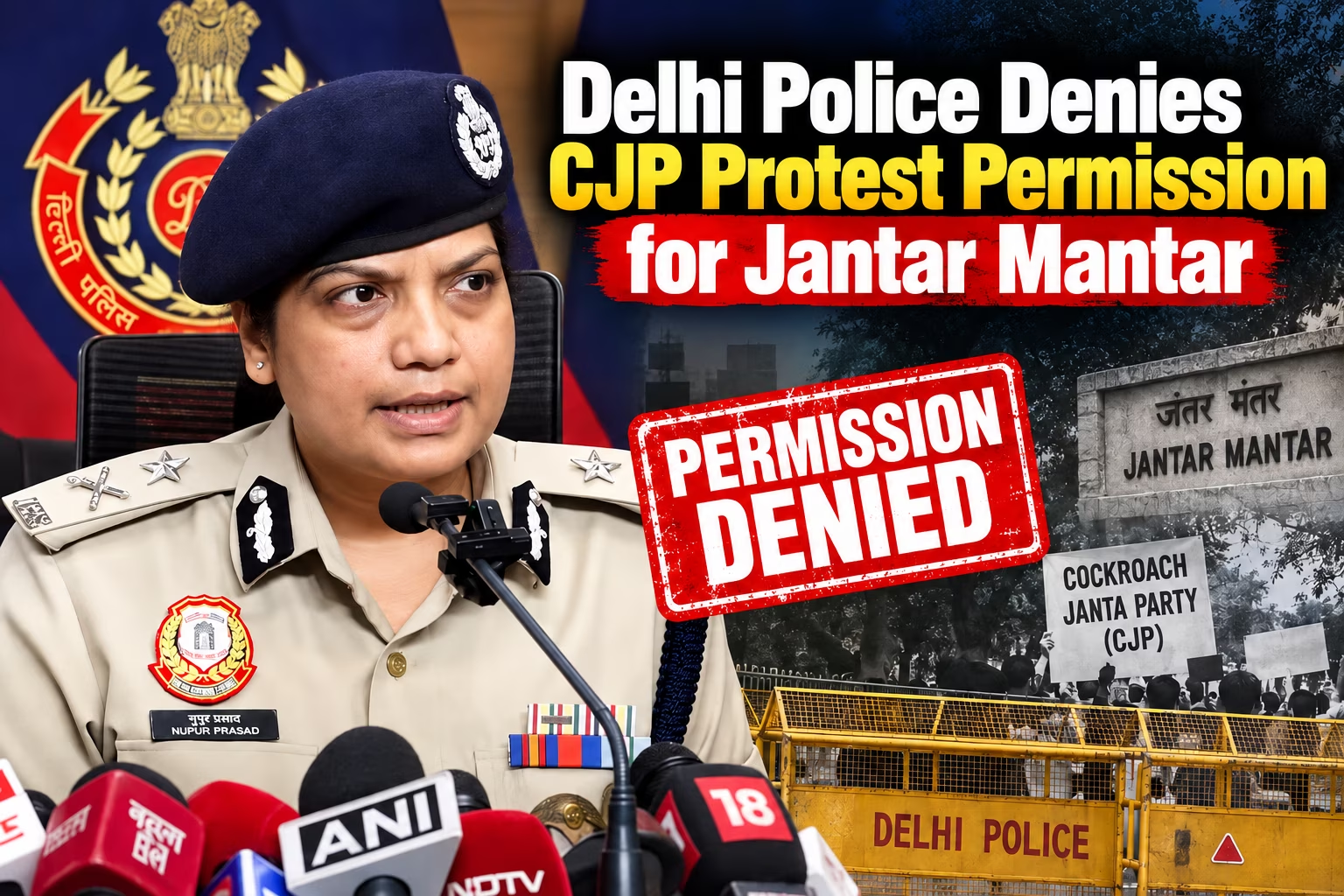
Delhi Police has denied permission to the Cockroach Janta Party (CJP) to hold a protest at Jantar Mantar on October 10, citing a late application, alleged violations during an earlier demonstration and concerns over public safety, law and order, and traffic management.
The proposed protest was aimed at demanding accountability from Chief Election Commissioner Gyanesh Kumar. Announcing the decision on October 9, Joint Commissioner of Police Nupur Prasad said the application had been received on October 7, leaving only three days before the planned demonstration. Police guidelines, she said, require applications to be submitted at least ten days in advance.
Prasad also alleged that the party had previously failed to honour undertakings and follow lawful directions during an earlier protest. Authorities cited these concerns, alongside the prevailing security situation, while refusing permission.
During a press conference, Nupur Prasad, Joint Commissioner of Police, Delhi Police, explained the decision and said:
“On October 7, 2026, an application from Saurav Das, Co-Convenor of the Cockroach Janata Party, was received by the New Delhi District. The application stated that a protest would be held at Jantar Mantar on October 10 regarding the accountability of the Chief Election Commissioner.
“The application was examined, and it was found that the information had been received at very short notice. Under the current guidelines, an application to organise an event at Jantar Mantar must be submitted at least ten days before the scheduled date.
“It is also important to mention that, based on the previous conduct of the Cockroach Janata Party on a separate occasion, the undertakings given by the party and the lawful directions issued to it were not followed.
“Considering the failure to follow the prescribed procedure, the failure to comply with legal directions issued earlier, and the current situation concerning public safety, law and order, and traffic regulation, permission for the proposed demonstration at Jantar Mantar is being denied.
“It is also informed that Section 163 of the BNSS is in force in the New Delhi area, under which reasonable preventive restrictions have been imposed to maintain public order and safety.
“In the event of a violation of Section 163 of the BNSS, or any act of vandalism or destruction of public property, appropriate legal action will be taken in accordance with previous judgments of the competent courts.”
Submitting an application just three days before a large demonstration leaves authorities with limited time to prepare crowd-control arrangements, coordinate security and assess possible traffic disruption. Organisers planning a public event need to account for these practical requirements, particularly in a crowded area of the national capital.
The allegation of earlier non-compliance also warrants attention. Police have cited the party’s past conduct as a reason for refusing permission, but the specific incident and directions allegedly ignored should be examined against available evidence. A clear account of the earlier episode would help the public understand whether the refusal rests on documented violations and how those violations relate to the proposed event.
CJP’s earlier agitation against then Education Minister Dharmendra Pradhan offers some context. The party drew national attention through protests over examination-related concerns, including alleged irregularities affecting students. Pradhan resigned on July 25, 2026, after weeks of demonstrations and mounting pressure. The agitation also involved confrontations with police when protesters attempted to march towards Parliament, a move the police described as unauthorised.
That episode showed how sustained public agitation can put pressure on political leaders. It also highlighted the difficulties authorities face when demonstrations move beyond agreed arrangements. However, the October 10 protest must be assessed on its own circumstances, with the police explaining the grounds for its decision and organisers having the opportunity to challenge them.
For ordinary residents, the consequences of large demonstrations can extend well beyond the protest site. Barricades, road diversions and security deployments can delay commuters, disrupt businesses and complicate journeys for people travelling to hospitals, schools or workplaces. Those affected may have no connection to the political dispute, yet they often bear much of the inconvenience.
Public frustration over repeated disruption is understandable. Political groups have a responsibility to plan demonstrations carefully, follow lawful directions and consider how their actions affect other citizens. A cause may be important to its supporters, but its importance does not remove the need to respect public safety and other people’s daily lives.
At the same time, peaceful protest is a vital democratic right. Citizens must be able to question public officials, challenge government decisions and demand accountability. Authorities should explain restrictions with specific reasons and apply the rules consistently. Public-order concerns deserve serious consideration, but police powers also require scrutiny when they limit peaceful political expression.
Section 163 of the Bharatiya Nagarik Suraksha Sanhita provides for preventive orders in specified circumstances to address potential threats to public order and safety. Organisers must understand the restrictions in force and the consequences of violating them. Police, in turn, must ensure that the provision is applied lawfully and proportionately.
Allegations surrounding the party’s demonstrations also need careful handling. Claims about offensive slogans against political leaders, assaults on police personnel or other misconduct require reliable supporting evidence. Verified footage, formal complaints, investigation findings and court records can help establish what happened. Such claims should be attributed accurately rather than presented as proven facts.
If CJP believes the refusal is unjustified, it can seek clarification from the authorities or approach the courts for relief. Legal challenges allow decisions to be examined, including whether restrictions are supported by the circumstances. Organisers should weigh those options carefully when an order remains in force.
The demand for accountability from the Chief Election Commissioner deserves examination on its merits. The way a protest is organised raises a separate practical and legal question. Both deserve clear answers, based on evidence rather than political assumptions.
A democracy must protect the right to question those in power while ensuring that the pursuit of political demands does not come at an avoidable cost to the wider public.