




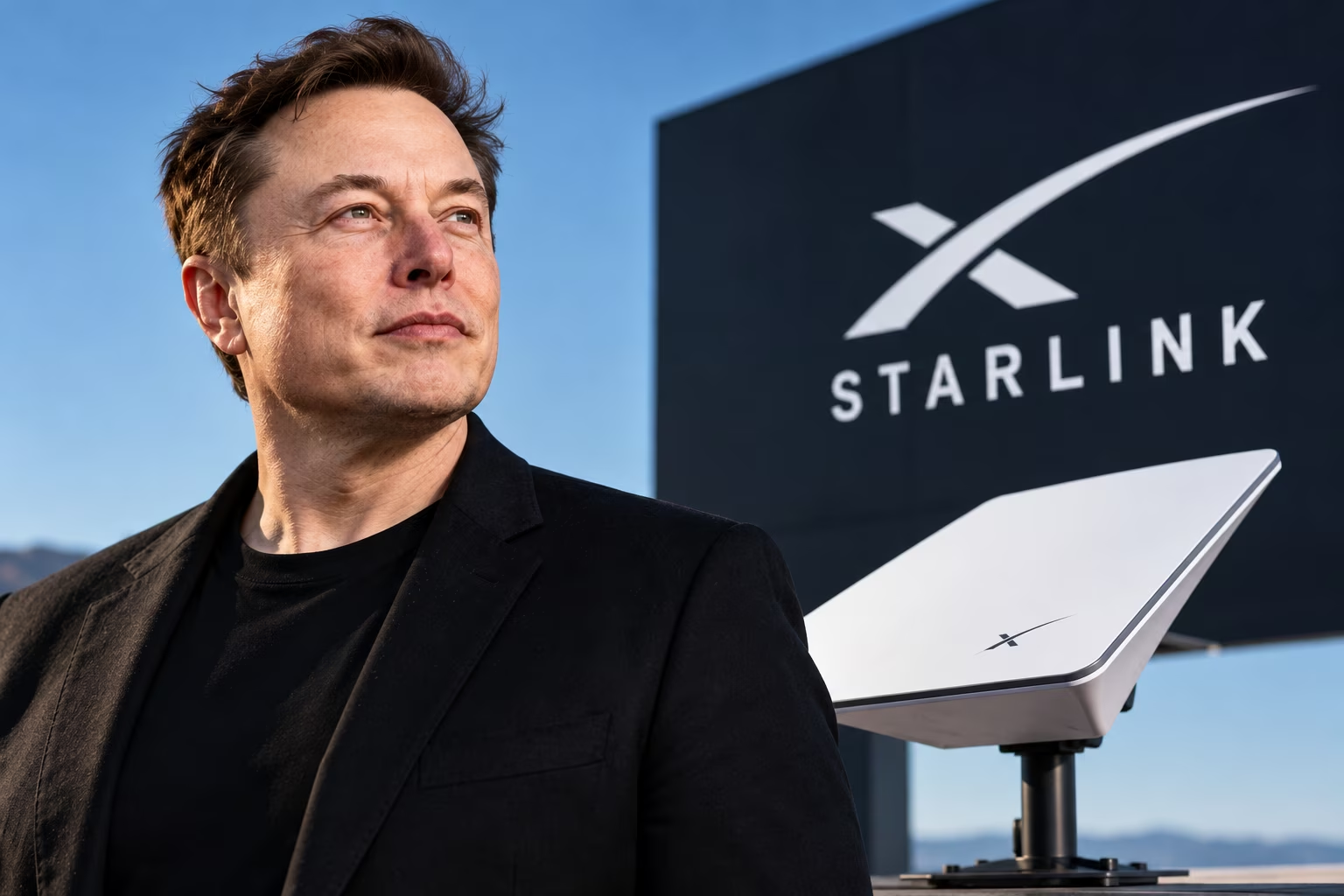
Elon Musk’s ambitions stretch from electric cars to Mars, but bringing his Starlink satellite internet service to India has become a test of regulation, national security and competition in one of the world’s largest telecommunications markets.
The dispute intensified in October 2026 after Musk accused powerful business interests of obstructing Starlink’s entry into India. His comments drew attention to Reliance Industries chairman Mukesh Ambani and Bharti Enterprises chairman Sunil Bharti Mittal, whose businesses are competing in the satellite communications market. The government has rejected allegations of preferential treatment, saying the companies face the same regulatory requirements.
As of October 10, Starlink, Reliance Jio’s satellite communications venture and Bharti-backed Eutelsat OneWeb are still waiting to complete the requirements needed for commercial services. All three have obtained relevant licences, and provisional spectrum assignments have enabled technical and security testing. Final clearances remain the key hurdle.
The dispute raises a larger question: how can India welcome global technology companies while ensuring that critical communications infrastructure remains subject to Indian law and security oversight?
Why Is Starlink Still Waiting in India?
Starlink has spent years pursuing entry into the Indian market. Its satellite-based system could offer internet access in remote villages, mountainous regions and other places where fibre-optic networks and mobile towers are difficult to deploy.
Musk has argued that prolonged regulatory delays are preventing Indian consumers from accessing another internet service. In October, he accused unnamed business interests of protecting established operators from competition and questioned Ambani’s influence on the market.
Minister of State for Communications Chandra Sekhar Pemmasani responded that India does not permit monopolies. He said the security assessment falls within the responsibility of the Ministry of Home Affairs, which must determine whether the companies have satisfied the required conditions.
The regulatory position is more complicated than a licensing dispute alone. Starlink holds the necessary category of telecom authorisation, but commercial operations also depend on security compliance and spectrum arrangements. The provisional spectrum granted for testing does not, by itself, permit a full commercial launch.
For now, the government says the same process applies to Starlink, Jio and OneWeb. Musk’s allegations of unfair obstruction have not been established by publicly available evidence.
What Does National Security Have to Do With Satellite Internet?
Conventional broadband generally depends on terrestrial infrastructure such as fibre-optic cables, exchanges and mobile towers. Satellite internet connects users through satellites and associated ground infrastructure, allowing service in places where conventional networks have limited reach.
That flexibility also creates a different set of security challenges. Satellite operators manage important parts of their networks, including technical systems and the routing of communications. Depending on the network architecture, some infrastructure and corporate decision-making may be located outside the country where the service is used.
India therefore needs enforceable safeguards covering network security, lawful government access, sensitive information and operational continuity. Authorities must also consider how the network would function during a major emergency and what alternatives would be available if service were disrupted.
These questions are especially important when communications support government operations, disaster response or military activity.
The central concern is whether Indian authorities would have sufficient legal and practical control over a foreign-operated network during a crisis. Foreign ownership alone does not establish that another government can direct every connection, but it makes the applicable laws, technical arrangements and emergency safeguards important parts of the assessment.
The Iran Conflict and the Starlink Security Debate
A June 2026 Bloomberg report brought the security question into sharper focus. Citing people familiar with the matter, the report said Indian authorities had effectively frozen Starlink’s remaining approvals over concerns about the use of satellite terminals in the Iran conflict.
The report raised questions about whether India could exercise effective control over a foreign-operated network if its terminals were used in a conflict without the relevant local authorisation.
SpaceX disputed that account. Lauren Dreyer, the company’s vice-president of business operations, said Starlink remained in “active and productive discussions” with the Indian government and described the reports as misleading.
The competing accounts matter. Bloomberg’s report offered a specific explanation for the delay based on unnamed sources, while SpaceX publicly challenged the account. The government’s more recent statements have emphasised the outstanding security assessment and the requirement for all operators to satisfy the applicable conditions.
The Russia-Ukraine war offers another example of the strategic importance of satellite connectivity. Starlink has supported communications in Ukraine while conventional infrastructure has faced disruption. The experience showed how decisions by a private communications provider can carry consequences during a military conflict.
For India, the broader lesson is that access to a privately operated network can become a strategic dependency. The precise role of the Iran conflict in the current approval process, however, remains contested in the public record.
Could Washington Have Influence Over India’s Communications?
Starlink is operated by SpaceX, a US-based company founded by Musk. Its corporate structure makes the legal powers of American authorities and the location of key network infrastructure relevant to India’s security assessment.
The practical question is how India would enforce its own laws if a dispute arose during a national emergency. Would the operator be able to comply with lawful Indian directions? What safeguards would protect sensitive information? Could authorities maintain essential communications if the service became unavailable?
These questions require answers through regulations, licence conditions, technical testing and enforceable agreements.
It would be premature to conclude that Washington would automatically control Starlink’s Indian network. The extent of any foreign government’s influence depends on the applicable legal framework, technical architecture and the operator’s obligations.
India can seek local data protections, security audits, lawful-access arrangements and contingency plans without excluding foreign technology companies altogether. The effectiveness of those safeguards, rather than a company’s nationality alone, should be central to the debate.
Jio and OneWeb Are Also Waiting
Starlink is entering a market where established Indian telecom groups are developing their own satellite communications capabilities.
Reliance Jio has a satellite communications venture, while Eutelsat OneWeb has backing from Bharti interests. Their presence means India’s regulatory decisions will shape competition among several operators, rather than determine the future of Starlink alone.
In August, the government told Parliament that Starlink, Jio and OneWeb had received provisional spectrum assignments to demonstrate compliance with technical and security requirements. Reports in October continued to describe the companies as awaiting the remaining approvals needed for commercial services.
Jio’s satellite ambitions should also be assessed carefully. Plans for a satellite network, agreements to obtain capacity and the deployment of an operational constellation are different stages of development. Claims about the number of satellites launched or the scale of a functioning network require separate verification.
The same principle applies to every operator: a licence or trial arrangement does not establish that a complete commercial service is ready for customers.
Competition could eventually improve internet access in remote communities and give businesses another option for connectivity. The benefits will depend on service prices, equipment costs, coverage and network capacity.
What Happens Next?
The immediate question is whether the three operators can complete security compliance and obtain the final spectrum arrangements needed to launch their services. The government has said the assessment is handled through the applicable regulatory process, while Musk continues to press for faster access to the Indian market.
If Starlink receives the necessary clearances, its arrival could expand connectivity options in underserved areas and put additional competitive pressure on existing providers. The scale of that impact will depend on what the company charges Indian customers and how widely its service can be delivered.
A prolonged delay would leave questions about regulatory transparency and the pace of satellite internet development. It would also keep attention on how India balances the benefits of international technology with its responsibility to protect critical infrastructure.
India’s decision will help establish how foreign satellite operators are expected to work within its communications framework. For Musk, the challenge is to turn Starlink’s existing licence and technical preparations into an operating service. For the government, it is to apply its rules consistently while making sure that security safeguards are practical and enforceable.
Reaching Mars may be a long-term engineering challenge. Reaching India’s internet market requires regulatory approval, security compliance and spectrum access. Starlink’s next step depends on clearing those hurdles.