




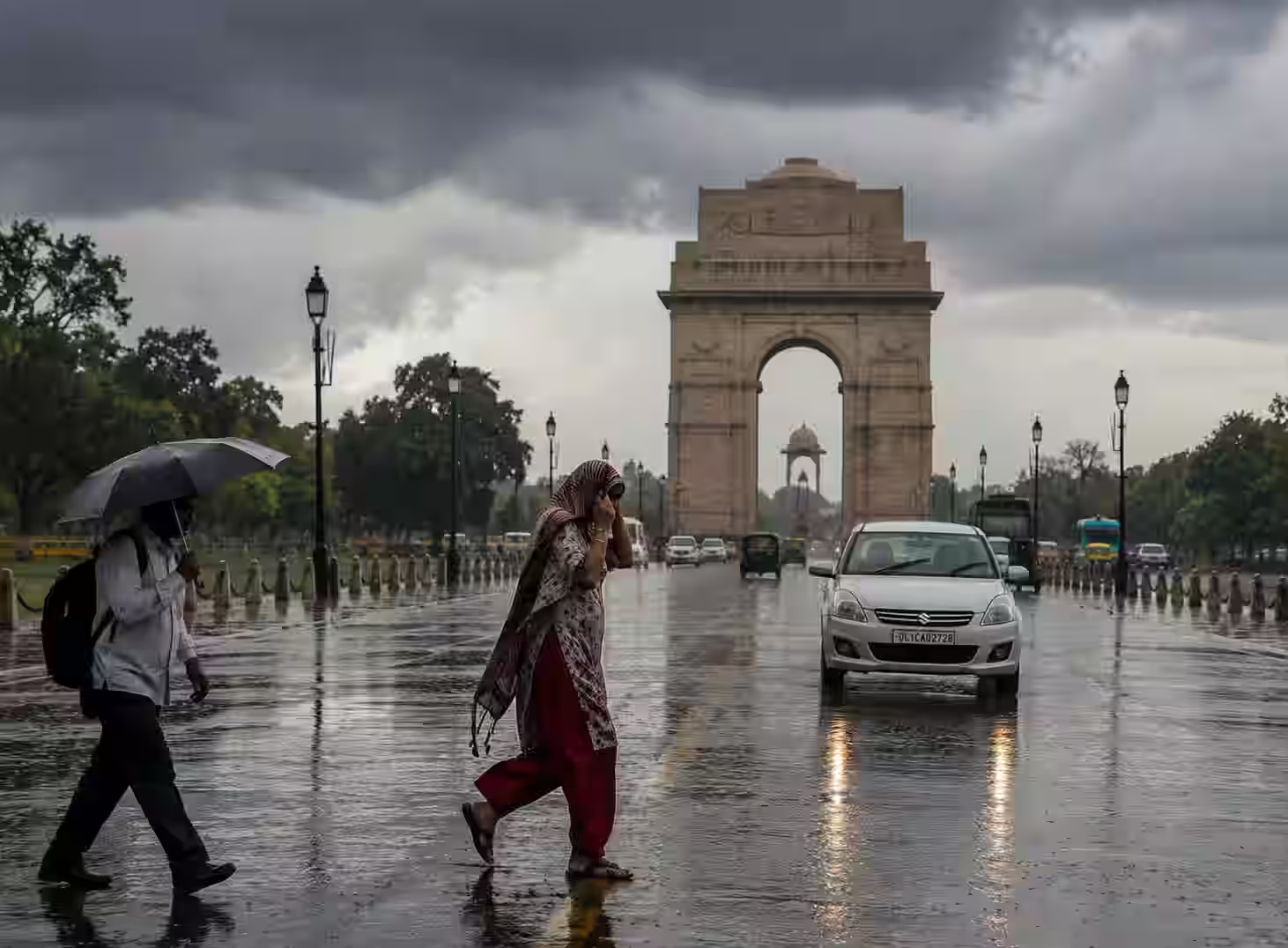
NEW DELHI: India ended August with an unusual combination of heat and a weakening monsoon, as the country recorded its warmest August since 1901 while rainfall remained well below normal.
The India Meteorological Department (IMD) said on Monday that the country’s average temperature in August was 28.01 degrees Celsius, 0.67 degrees above the long-period average. The average minimum temperature, at 24.36 degrees Celsius, was also the highest recorded for August since weather records began in 1901.
Rainfall told a different story. India received 213.3 mm of rain during August, 16.3% below normal, making it the seventh-lowest August rainfall since 2001, according to the IMD.
The shortage has become more noticeable because the rain has not been evenly spread across the country. Some regions have faced heavy downpours and flooding, while others have continued to wait for adequate rain. By the end of August, India’s overall monsoon rainfall deficit since June 1 had reached around 14%.
Now attention is turning to September, normally the final month of the southwest monsoon.
The IMD has forecast September rainfall at below 91% of the long-period average of 167.9 mm. It also expects maximum temperatures to remain above normal across much of the country.
For farmers, the forecast comes at an important point in the agricultural calendar. Many monsoon crops are entering key stages of growth, and prolonged dry conditions could increase pressure on irrigation and soil moisture. Crops including cotton, soybean, maize and pulses could face greater stress if rainfall remains poor.
The effects may not stop at the farm.
The monsoon supplies roughly 70% of India’s annual rainfall and is important for replenishing reservoirs, rivers and groundwater. A prolonged rainfall shortage can eventually affect rural incomes and food prices, particularly if agricultural production comes under pressure.
Southern Peninsular India and East and Northeast India have been among the areas facing significant deficits. According to the IMD’s latest assessment, rainfall in Southern Peninsular India was 24.2% below normal through August, while East and Northeast India recorded a deficit of 25.7%.
At the same time, several parts of the country have experienced intense rainfall. That apparent contradiction is a reminder that a national rainfall figure does not describe conditions everywhere. A few days of very heavy rain can cause flooding in one region while another continues to remain unusually dry.
The IMD has also pointed to El Niño conditions in the equatorial Pacific as one of the factors influencing the current weather pattern. IMD Director General of Meteorology Mrutyunjay Mohapatra said Monday that sea-surface temperatures in the central and eastern Pacific remained above normal and that El Niño conditions were expected to strengthen in the coming months.
For now, the immediate focus is on whether September can bring enough well-distributed rain to ease pressure on agriculture and water resources.
A few strong rainfall spells could improve conditions in some areas, but the IMD’s below-normal forecast means farmers and state authorities will have to prepare for another potentially difficult month.
August has already left its mark in the weather records. September will show whether the monsoon can still provide meaningful relief before it begins its retreat.