




Indian cinema is changing in a way that cannot be measured only through the success of big-budget Hindi films or the popularity of a few major stars. Across the country, regional film industries are finding new confidence in their own languages, stories and filmmaking styles. Audiences are increasingly willing to watch films that emerge from different cultural backgrounds, provided the storytelling gives them a reason to connect.
Odia cinema is also part of this change. The industry continues to face challenges related to budgets, theatre access, promotion and audience reach, but a growing interest in original subjects and different styles of storytelling is creating space for a new generation of filmmakers. Films such as Jidi: The Untold Side of If represent this movement by attempting to offer audiences something beyond the familiar patterns of conventional commercial cinema.
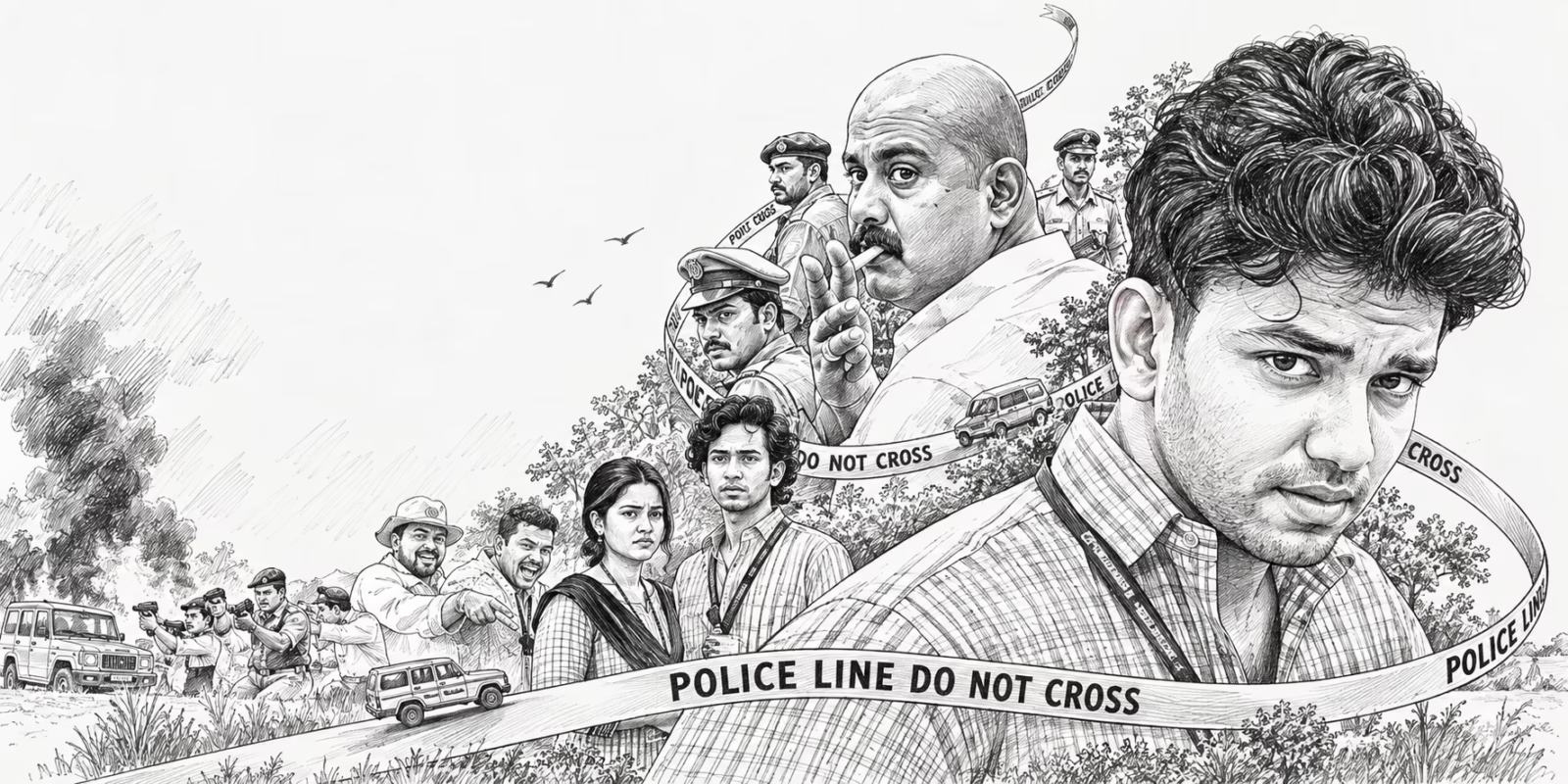
Directed and written by Dibyajyoti Udayasingh, Jidi begins with a youthful and relatively playful atmosphere. Sailendra Samantaray plays a college-going young man, and the relationship between his character and the female lead initially carries the energy of a Tom and Jerry exchange. Their interactions bring humour, friction and an accessible emotional connection to the first part of the film.
The film’s direction changes after the interval. What begins as a lighter relationship-driven story moves towards suspense, emotional conflict and intense drama. The second half seeks a stronger emotional response, with moments that have reportedly left some viewers deeply affected. The shift gives the film a different identity and shows an attempt to combine multiple dramatic elements within one narrative.
The film’s wider value lies in the kind of cinema it represents and the larger question it raises about the future of Odia filmmaking. Can films made in the Odia language develop stories strong enough to compete for the attention of audiences who now have access to cinema from across India?
The answer will not come from one film alone, but the direction is significant. To understand the present moment in Odia cinema, it is important to look at the period before Daman arrived. For a considerable time, the industry faced criticism for relying heavily on remakes, copied storylines and films influenced by formulas from other language industries. This created a feeling among many viewers that Odia cinema was losing its creative identity and struggling to offer stories that felt fresh and connected to their own experiences.
Daman became an important turning point in that conversation. The film reminded audiences and filmmakers that a story rooted in Odisha could attract attention through its subject, emotional honesty and local setting. Instead of depending on a familiar remake formula, it brought forward a narrative connected to a real social issue and showed how an original story could create a strong response among viewers.
Its impact was not limited to the success of one release. Daman helped strengthen an idea that Odia cinema needed to take seriously: original stories could find an audience, local experiences could become the foundation of engaging films, and filmmakers did not have to depend entirely on borrowed plots to create commercial interest. It encouraged a way of thinking that could be expressed simply as think original, make original and move forward with confidence.
The influence of Daman should not be understood as the work of one film changing an entire industry overnight. The development of cinema is shaped by many filmmakers, actors, producers, audiences and changing market conditions. However, the film helped bring greater attention to the need for original writing, meaningful subjects and a more confident creative identity in Odia cinema.
Audiences are also becoming less willing to sit through plots they have already seen in different forms. Viewers want characters who feel believable, situations that carry emotional weight and stories that offer something of their own. Original cinema gives filmmakers the freedom to explore emotions and experiences in their own way, allowing audiences to recognise something familiar while still encountering a fresh story.
The wider growth of regional cinema offers useful context for this development. Industries such as Malayalam and Kannada cinema have shown how films with distinctive local identities can reach audiences beyond their original language markets. Their journeys have not been identical, but they demonstrate the value of investing in writing, developing original subjects and giving filmmakers room to approach familiar human experiences in different ways.
The changing Indian film landscape is creating new expectations. A regional film does not necessarily need to lose its identity to reach a wider audience. In many cases, its strongest advantage comes from the distinctiveness of its language, setting, characters and cultural experience. The success of a film can come from how honestly it presents its own world rather than how closely it follows the style of another industry.
The growing visibility of regional films has also changed the relationship between language and audience. Viewers are more open to watching films with subtitles or dubbed versions, and streaming platforms have made it easier for stories from one part of India to reach audiences in another. Theatrical success still depends on distribution, promotion and local audience support, but the possibilities for discovery are wider than before.
Odia filmmakers can take that opening without needing to copy Malayalam or Kannada cinema’s playbook. The industry’s task is to develop stories rooted in Odisha while maintaining the narrative quality and technical confidence required to hold the attention of contemporary audiences.
Original storytelling is central to that process. A remake may offer a familiar structure, but original stories allow filmmakers to explore subjects, relationships and social realities that emerge from their own surroundings. Odisha has many stories that can become the foundation for cinema, including the changing lives of its towns and villages, migration, family pressures and the experience of a generation trying to balance tradition with modern ambitions.
A story about a family losing its land to a highway project can carry the same emotional weight in Cuttack as it would in Kerala. The setting may be different, but the fear, uncertainty and personal loss can connect with audiences far beyond the place where the story begins. Local stories do not become smaller because they are rooted in one region. Their strength often comes from the honesty with which they present that region’s people and realities.
Jidi attempts to build its narrative around a combination of youthful relationships, suspense and emotional drama. Its early playful exchanges offer an accessible starting point, while its later movement into a more intense story reflects an effort to expand the film’s emotional and dramatic range. The transition may divide viewers, particularly those who find the two halves uneven in tone or pacing, but the ambition to move beyond one predictable genre is worth recognising.
The film’s commercial performance adds another dimension to the discussion. Third-party box-office tracking reports have placed its India net collection at approximately ₹3.07 crore by its 15th day in theatres, while the estimated production budget has been reported at around ₹2 crore. These figures have not been confirmed by an official producer statement, but the reported numbers suggest that original Odia storytelling can draw commercial interest when a film gives audiences a reason to support it.
Box-office numbers alone cannot establish the long-term health of an industry. A film’s earnings are influenced by release scale, theatre availability, promotion, audience response and the number of shows it receives. Commercial attention can nevertheless help create confidence among producers and investors, particularly when a film is built around an original concept rather than a remake or an already familiar formula.
A film’s contribution to an industry should not be measured only by its collection or the excitement surrounding its release. Its real test is whether it pushes writers to take original ideas seriously, creates opportunities for actors and technical teams to explore different roles, and gives audiences a reason to support films made in their own language.
These questions matter for Odia cinema because the industry’s growth requires more than occasional successful releases. It needs a sustained ecosystem in which writers, directors, actors, editors, cinematographers, musicians and producers can develop their skills through varied projects. Audiences also have an important role. When viewers support films that attempt new stories and different approaches, they create greater space for filmmakers to take creative risks.
The responsibility does not belong to filmmakers alone. Production houses need to invest carefully in writing and development, distributors must look for ways to take films beyond a limited group of locations, and promotional campaigns must communicate the identity of a film without making exaggerated promises. Theatres and audiences remain equally important because even a well-made film can struggle when it lacks visibility or sufficient screening opportunities.
The current movement in Indian cinema shows that regional identity and wider ambition can exist together. A film does not have to abandon its language or local character to participate in the national conversation. Instead, it can use those elements as the foundation for a story that feels specific while remaining emotionally accessible.
Jidi is one part of a larger shift—an industry testing whether original stories, told with confidence, can hold an audience in the way remakes once did. The influence of Daman and the arrival of newer films show why Odia cinema must continue investing in fresh writing, stronger production and authentic emotional experiences.
Odisha has no shortage of material. What it needs now is writers, producers and audiences willing to support stories that do not borrow their shape from somewhere else. If that continues, Odia cinema will not need to imitate another industry’s success. It can build its own.