




Bhubaneswar: The political dispute over the Mines and Minerals (Development and Regulation) Amendment Act, 2026, is gaining momentum in Odisha, with the opposition Biju Janata Dal (BJD) intensifying its campaign against provisions it says could weaken the state’s financial rights over mineral resources.
The party has raised concerns about the possible impact of the amended law on Odisha’s ability to impose taxes and levies on mineral rights and mineral-bearing land. It has also questioned whether the state could lose a substantial amount of revenue linked to past dues and future collections. The BJD has demanded greater clarity from the government and sought the withdrawal of the amendments.
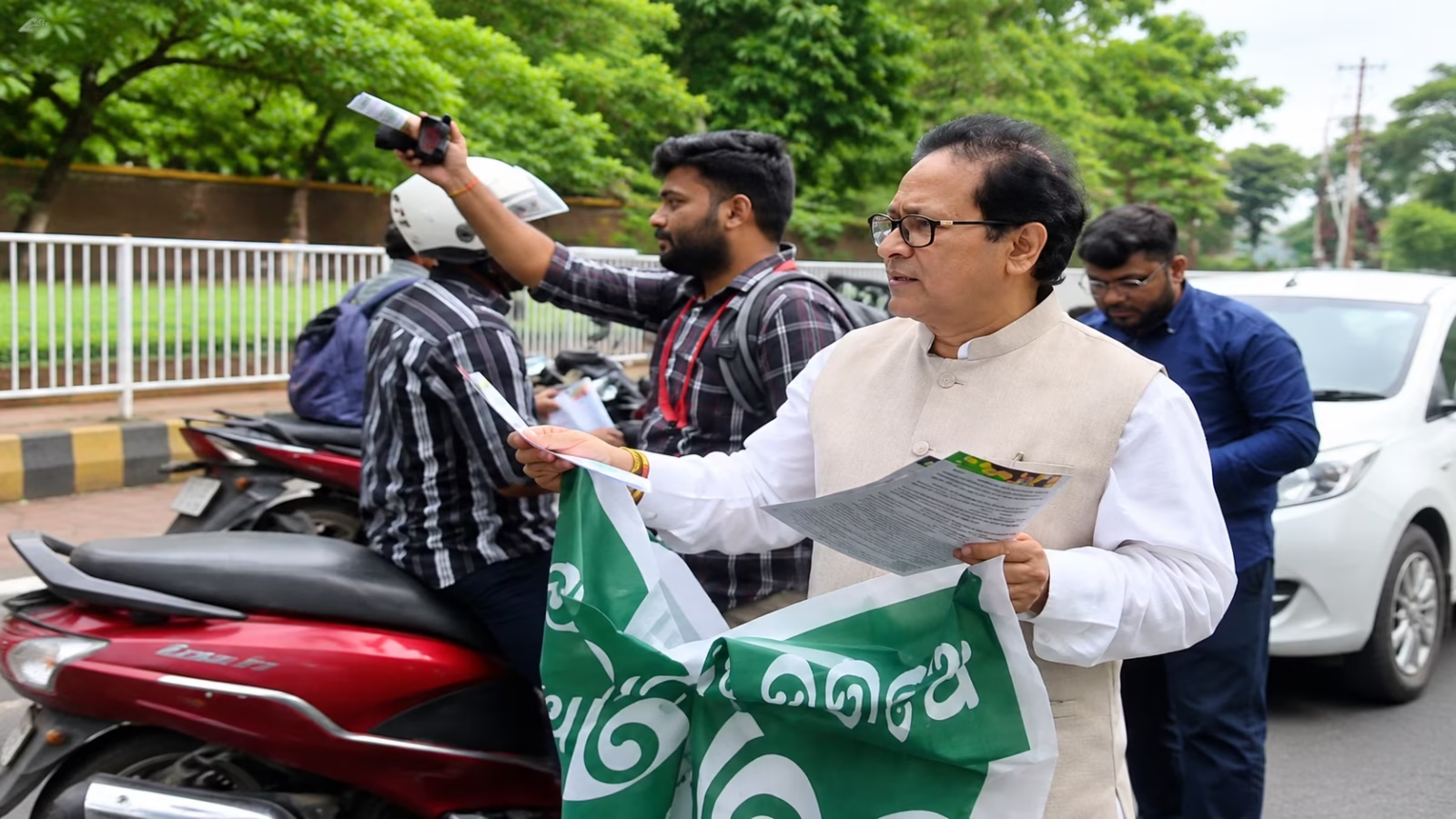
The campaign has moved beyond statements inside the Assembly. The party has organised protests, submitted a memorandum through the Odisha Governor seeking presidential intervention and announced a mass demonstration at Lower PMG in Bhubaneswar on September 28, which is scheduled to be led by BJD president and Leader of Opposition Naveen Patnaik. Senior party leaders have described the legislation as a threat to the financial interests of mineral-rich states and to the federal balance between the Centre and the states.
The state government and the ruling BJP have rejected the opposition’s interpretation. The government’s position is that the amended framework will not harm Odisha and that the changes are intended to provide a more predictable environment for the mining sector and investment. The political disagreement, however, has placed a larger question before the public: what will the amendment mean for Odisha’s future mining revenue, and what evidence is available to establish the actual financial impact?
BJD’s argument is closely linked to the Supreme Court’s 2024 judgment in Mineral Area Development Authority v. Steel Authority of India. In its July 25, 2024 ruling, a nine-judge Constitution Bench recognised the legislative competence of states to impose taxes on mineral rights and mineral-bearing land, subject to constitutional provisions and limitations imposed by Parliament. The judgment also addressed the recovery of past dues, making it an important part of the debate over the financial claims of mineral-producing states.
Following the judgment, the BJD has repeatedly claimed that Odisha could be entitled to more than ₹1 lakh crore in arrears and approximately ₹12,000 crore in additional annual revenue through mining-related taxes and levies. These figures have appeared in the party’s public statements and memoranda. They represent the BJD’s estimates or claims and should not be treated as an independently established final assessment of the amount Odisha will receive.
The distinction is important because the political debate involves several separate questions. One concerns the legal authority of the state government to impose taxes or levies. Another relates to the amount of past dues that can be recovered. A third involves the financial effect of the 2026 amendment on future revenue collection. These issues are connected, but they cannot automatically be treated as one confirmed loss or one guaranteed payment.
The BJD has argued that the amendment could restrict the state’s powers by placing conditions on the imposition of taxes, cesses and other levies on mineral rights and mineral-bearing land. The party has also raised objections to the role of the Central government in prescribing the conditions under which such levies may be imposed.
According to the opposition, these provisions could affect Odisha’s ability to use its mineral resources as a source of public revenue. The party has linked the issue to the state’s wider financial interests, particularly because Odisha is one of India’s major mineral-producing states and its economy has a strong connection with mining, metal industries and related activities.
BJD has described the issue as more than a dispute over a single tax provision. Its leaders have presented the amendment as a question of state rights, fiscal autonomy and the constitutional relationship between the Union and state governments. They argue that states bearing the social, environmental and infrastructural costs of mining should retain sufficient authority to benefit from the resources extracted from their territory.
Odisha’s mineral economy supports industrial activity, transport networks, employment and government revenue. Mining-related operations also place pressure on roads, public infrastructure, local administration and the environment in mineral-producing districts. The distribution of financial benefits and the responsibility for managing these costs therefore remain central to the discussion.
The government’s response is based on a different interpretation of the amendment. The ruling side has argued that the changes are intended to create a more uniform and predictable framework for the mining industry. Supporters of the legislation have said that excessive or inconsistent levies could affect investment decisions and that a common framework may provide greater certainty to businesses operating in the sector.
BJP has also accused the BJD of presenting the issue in a politically motivated manner. The ruling party’s position is that the amendment will not damage Odisha’s interests and could support industrial development by making the regulatory environment more consistent. These claims, however, need to be examined alongside the actual provisions of the law and a transparent assessment of their financial consequences for the state.
At the centre of the dispute is the question of evidence. The BJD has demanded a clear assessment of how the amendment could affect Odisha’s past claims and future revenue. The government has said that the state will not suffer harm, but public debate would be better served by detailed financial information showing how that conclusion has been reached.
A credible assessment would need to distinguish between revenue already collected, dues that may be recoverable under the Supreme Court judgment, potential future revenue and amounts that could be affected by the amended legal framework. It would also need to explain the assumptions behind the figures being discussed by political parties.
Figures of more than ₹1 lakh crore in arrears and around ₹12,000 crore in annual revenue have become major points in the BJD’s campaign. They have helped the party communicate the possible scale of the issue to the public. At the same time, the exact amount that can be recovered or collected would depend on legal interpretation, the relevant assessment process, the status of individual mining-related dues and the operation of the amended law.
Without a publicly available and authoritative assessment, it remains difficult for citizens to determine the precise financial consequences for Odisha. Political claims may draw attention to a legitimate concern, but the final position should be established through official records, legal analysis and clearly explained financial calculations.
The opposition has also connected the campaign to the idea of Odia asmita. In this context, the phrase is being used by the BJD to frame the mining debate around Odisha’s resources, the rights of its people and the responsibility of elected representatives to protect the state’s interests. The government, meanwhile, must explain how its approach will safeguard revenue while maintaining the investment and industrial activity associated with the mining sector.
Issue has already widened beyond Odisha’s immediate political space. The BJD has sought the intervention of President Droupadi Murmu through the Governor and has argued that the amendments affect the constitutional balance between the Union and states. The party’s planned September 28 protest is expected to add further pressure to the ongoing campaign.
The Supreme Court’s 2024 judgment provides an important legal background to the dispute, but the judgment alone does not settle every question concerning the effect of the 2026 amendment. The practical outcome will depend on the wording of the amended law, the limits imposed on state taxation powers, the treatment of past dues and the manner in which the provisions are implemented.
For Odisha, the debate is closely tied to the long-term management of its mineral wealth. The state’s resources have supported industrial growth and generated substantial economic activity, but questions about revenue distribution, environmental costs and the benefits reaching local communities have remained part of public discussion for years.
The current dispute gives the state government an opportunity to place detailed information before the public. A clear explanation of the amendment’s financial implications, the status of Odisha’s claims and the safeguards available to the state would help separate verified facts from political allegations.
The BJD has made the MMDR Amendment Act a major issue in its opposition campaign and is seeking public support by presenting it as a matter of Odisha’s financial and constitutional rights. The government has rejected the allegation that the state will be harmed and has defended the need for changes to the mining framework.
The next stage of the debate will depend on the information placed in the public domain. Odisha’s citizens need to know how much revenue is at stake, which claims are legally enforceable, what limitations the amendment introduces and how the state government intends to protect its financial interests.
The answer must come through documented assessments and transparent explanations rather than political assertions alone.