




For years, Odisha’s industrial story has been told through iron ore, steel plants, coal and power. These industries have helped build the state’s economic base, but a different kind of industrial opportunity is now emerging. It is smaller in physical size, far more technology-intensive and connected to almost every major industry in the modern economy.
Semiconductors.
The tiny components inside smartphones, electric vehicles, medical equipment, defence systems and artificial intelligence infrastructure are becoming central to global economic competition. Countries now view chip manufacturing as a strategic capability because their economies, security systems and digital infrastructure depend on it.
Odisha wants a place in that race. Its recent investment announcements and proposed manufacturing facilities suggest that the state is trying to move beyond its traditional industrial identity and build a presence in advanced electronics, semiconductor packaging and silicon carbide technology.
The opportunity is significant. The real question is whether these projects can create a lasting technology ecosystem that provides skilled employment, strengthens local businesses and helps India develop greater control over important parts of the semiconductor supply chain.
From Investment Announcements to Industrial Reality
At SEMICON India 2026, Odisha announced investment proposals worth approximately ₹23,600 crore, with the potential to create around 6,100 employment opportunities, according to the Press Information Bureau. The state also announced the proposed Odisha Silicon Valley, an 870-acre development planned at Naraj near Cuttack for semiconductor, electronics and IT projects.
These announcements show that Odisha wants to enter industries that require specialised engineering, research and advanced production systems. They also create expectations among young people, businesses and communities looking for new economic opportunities.
Those expectations need to be matched by implementation. A proposed factory and an operating factory represent two different stages of industrial development. The same applies to projected employment figures and jobs that have actually been created.
The state should therefore provide regular updates on project approvals, land allocation, construction, production and recruitment. Clear reporting would help people understand which projects have moved forward and which remain at the proposal stage.
The semiconductor industry is capital-intensive and technically demanding. Delays can arise from equipment procurement, infrastructure requirements, financing or changes in global market conditions. Odisha’s credibility will depend on how effectively it manages these challenges.
Why Semiconductors Matter to Make in India
India has become one of the world’s major markets for electronic products, but many of the components used in those products are sourced through international supply chains. The Make in India programme will gain greater depth as Indian companies develop the technologies behind finished electronic devices.
Semiconductors are central to that effort. They are used in vehicles, communication systems, industrial machinery, defence equipment and data infrastructure. As artificial intelligence and digital services expand, demand for advanced chips and packaging technologies is expected to increase.
India’s semiconductor mission is intended to strengthen domestic capabilities in chip design, manufacturing, testing, packaging and related materials. Building the entire global semiconductor chain inside one country would be extremely difficult, but India can gradually establish expertise in strategically important areas.
Odisha’s emerging projects fit into this opportunity. The state is focusing on advanced packaging, silicon carbide technology and supporting industries. These areas could help it develop specialised strengths while India’s broader semiconductor ecosystem continues to grow.
The national benefit would extend beyond individual factories. Stronger domestic capabilities can support electronics manufacturing, improve supply-chain resilience and create opportunities for Indian companies to participate in global production networks.
The Projects Behind Odisha’s Ambition
One of the major developments is the planned advanced glass-substrate semiconductor packaging facility by 3D Glass Solutions. According to the Union government, the project has an estimated outlay of around ₹1,943 crore and is expected to create approximately 2,500 direct and indirect jobs. Its planned annual production capacity is 50 million assembled units, with applications in aerospace, defence, artificial intelligence, 5G and data centres.
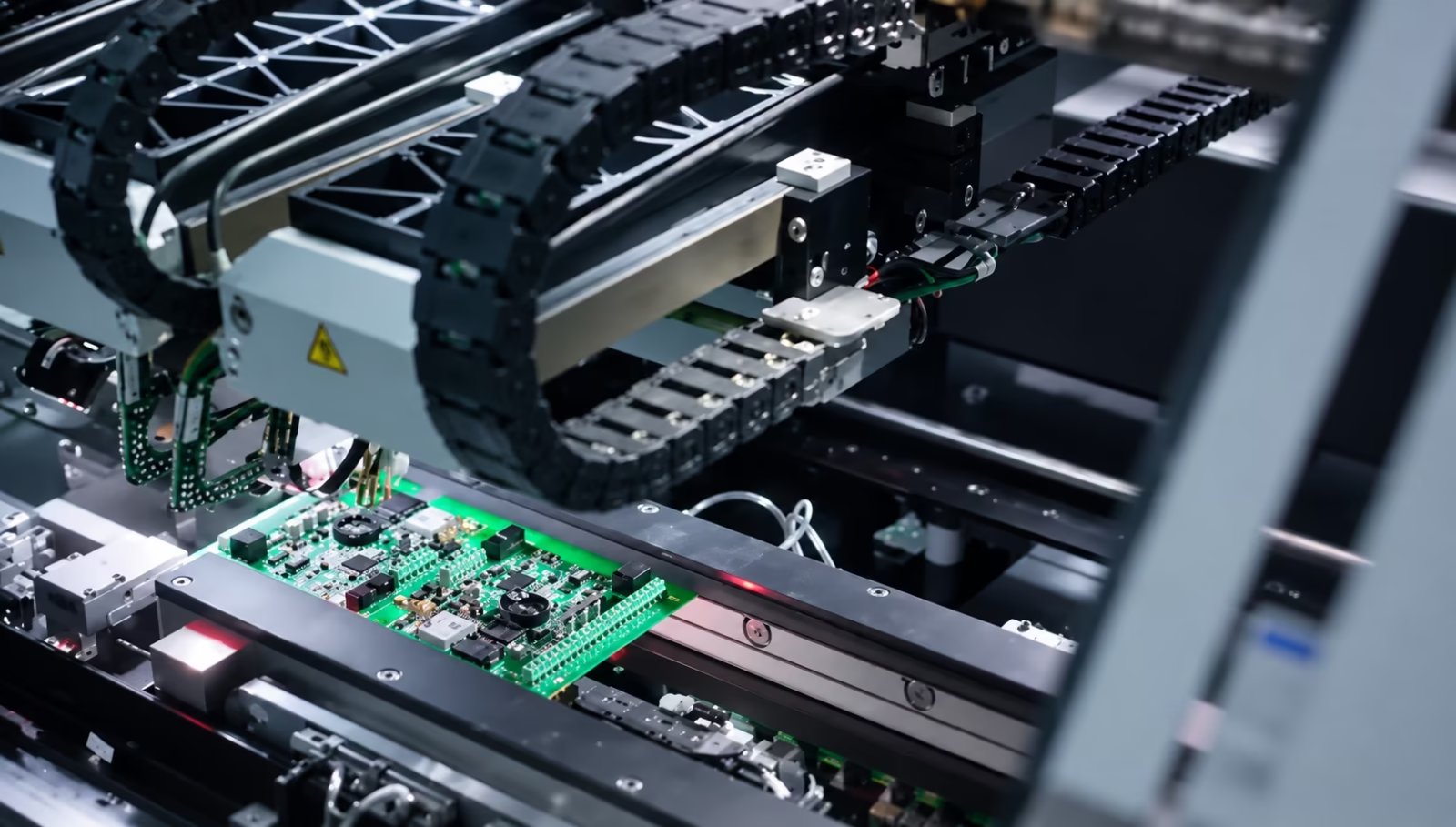
Advanced packaging has become an important part of the semiconductor industry. After a chip is produced, it must be assembled, connected, protected and tested before it can be integrated into an electronic system. As chip designs become more complex, packaging technology has a growing role in improving performance and efficiency.
Odisha’s focus on this field could give the state a position in a specialised section of the global semiconductor value chain.
Silicon carbide is another promising area. SiC devices are used in power electronics and have applications in electric vehicles, renewable energy systems and industrial equipment. Their ability to operate under demanding conditions makes them useful in sectors that require efficient power management.
The SiCSem project approved at IDCO Infovalley-II in Khordha has a reported project cost of approximately ₹3,406 crore. The facility is planned to manufacture silicon carbide semiconductor devices, including SiC diodes and SiC MOSFETs. Its stated employment potential is 1,270 positions.
Odisha has also signed a Letter of Intent with QuadQuantum for a silicon carbide substrate wafer manufacturing facility. Engagements with companies such as Applied Materials, Lam Research and other industry participants indicate that the state is seeking connections across different parts of the semiconductor ecosystem.
The next challenge is to convert those engagements into functioning facilities and long-term industrial partnerships.
The Real Test Will Be Employment
Investment figures attract attention, but employment will determine how people experience Odisha’s semiconductor development.
A modern semiconductor facility requires engineers, technicians and specialised production workers. It can also create opportunities in equipment maintenance, logistics, industrial services and technical support. Local businesses may benefit if they can meet the quality and reliability standards required by semiconductor companies.
For Odisha’s young population, this could create career paths in an industry that has traditionally been concentrated in a limited number of global locations.
Those opportunities will require preparation. Students studying electronics, electrical engineering, physics, chemistry and computer science may need practical training that goes beyond conventional classroom learning. Universities and technical institutions should work with companies on laboratory facilities, internships and industry-focused courses.
I believe this is one of the most important questions surrounding Odisha’s semiconductor plans: will local students be prepared to enter these jobs, or will the state mainly provide land and infrastructure while specialised talent comes from elsewhere?
Outside expertise will be necessary during the early stages. Semiconductor manufacturing requires experienced professionals, and Odisha will need to attract talent from across India and abroad. At the same time, local skill development must begin early so that students and workers can gradually take on more technical responsibilities.
The employment impact should also be judged by job quality. Training programmes and recruitment figures matter, but so do career progression, research opportunities and the ability of workers to build long-term professional lives in the state.
Building More Than a Factory
The proposed Odisha Silicon Valley near Naraj is an attempt to create a larger technology cluster. Its success will depend on the conditions available to companies after they establish operations.
Reliable electricity, industrial water, transport, connectivity and efficient administration are basic requirements. Semiconductor-related industries also need access to research institutions, technical workers and suppliers that can respond to specialised demands.
Odisha’s experience with large industrial projects provides a foundation, but semiconductor production requires precision and close coordination. The state will have to maintain infrastructure standards and reduce delays in approvals and industrial services.
A successful cluster should also create space for smaller businesses. Companies providing equipment maintenance, industrial automation, software, testing services and specialised materials could become part of the wider supply chain. This would help distribute the economic benefits beyond the main facilities.
Financial incentives may attract companies, but reliable infrastructure and business confidence will influence whether they remain and expand. Odisha’s additional fiscal support for certain India Semiconductor Mission-approved projects could help the state compete with other regions. Its long-term value will depend on implementation and measurable results.
The state should focus on projects that reach production, develop local suppliers and create sustained employment. The number of agreements signed at investment events offers an indication of interest, while construction and commercial operations provide stronger evidence of progress.
The Larger Economic Opportunity
Odisha’s semiconductor strategy could support a gradual diversification of its industrial economy. Mining, metals and heavy manufacturing will continue to remain important, but technology-driven production can add new capabilities in engineering, electronics and research.
This transition will take time. Odisha is competing with other Indian states and established technology centres around the world. Companies will assess infrastructure, talent, operating costs, logistics and policy stability before making long-term decisions.
The state also needs to maintain environmental safeguards. Semiconductor-related production can involve substantial requirements for water, energy and specialised chemical handling. Industrial expansion should include responsible resource management, waste treatment and transparent monitoring.
Economic development becomes more durable when investment creates value for local communities. That means looking at employment, supplier growth, research partnerships and the quality of infrastructure alongside the total value of announced projects.
Odisha’s semiconductor opportunity should therefore be measured over several years. A facility that begins production, trains local workers and develops a network of suppliers will contribute more to the economy than a proposal that remains unfinished.
The state has an opportunity to connect its existing industrial experience with emerging areas such as advanced packaging, silicon carbide, chip design and electronics manufacturing. It can also build stronger relationships with global companies and research institutions.
But progress will depend on consistent execution. Government agencies must maintain policy clarity, companies must meet their commitments and educational institutions must prepare people for the jobs being created.
The semiconductor industry offers Odisha a chance to change the way its economic future is discussed. The state’s industrial identity has long been linked to its natural resources. The next phase could be shaped by knowledge, engineering and technological production.
That shift will not happen through announcements alone. It will require working infrastructure, credible institutions and a sustained effort to connect investment with local talent.
The most meaningful result would be visible in the everyday economy: a technical graduate finding a skilled job in Khordha, a local supplier securing a contract with a semiconductor company, or a research student working on a product that moves from an Odisha laboratory into commercial production.
Those developments would show that the semiconductor strategy is creating roots.
Odisha has opened the door to a new industrial possibility. Its next responsibility is to ensure that the projects move forward, that can get help local people receive a fair opportunity to participate and that also the state develops capabilities that remain valuable long after the initial investment announcements have faded from public attention.