





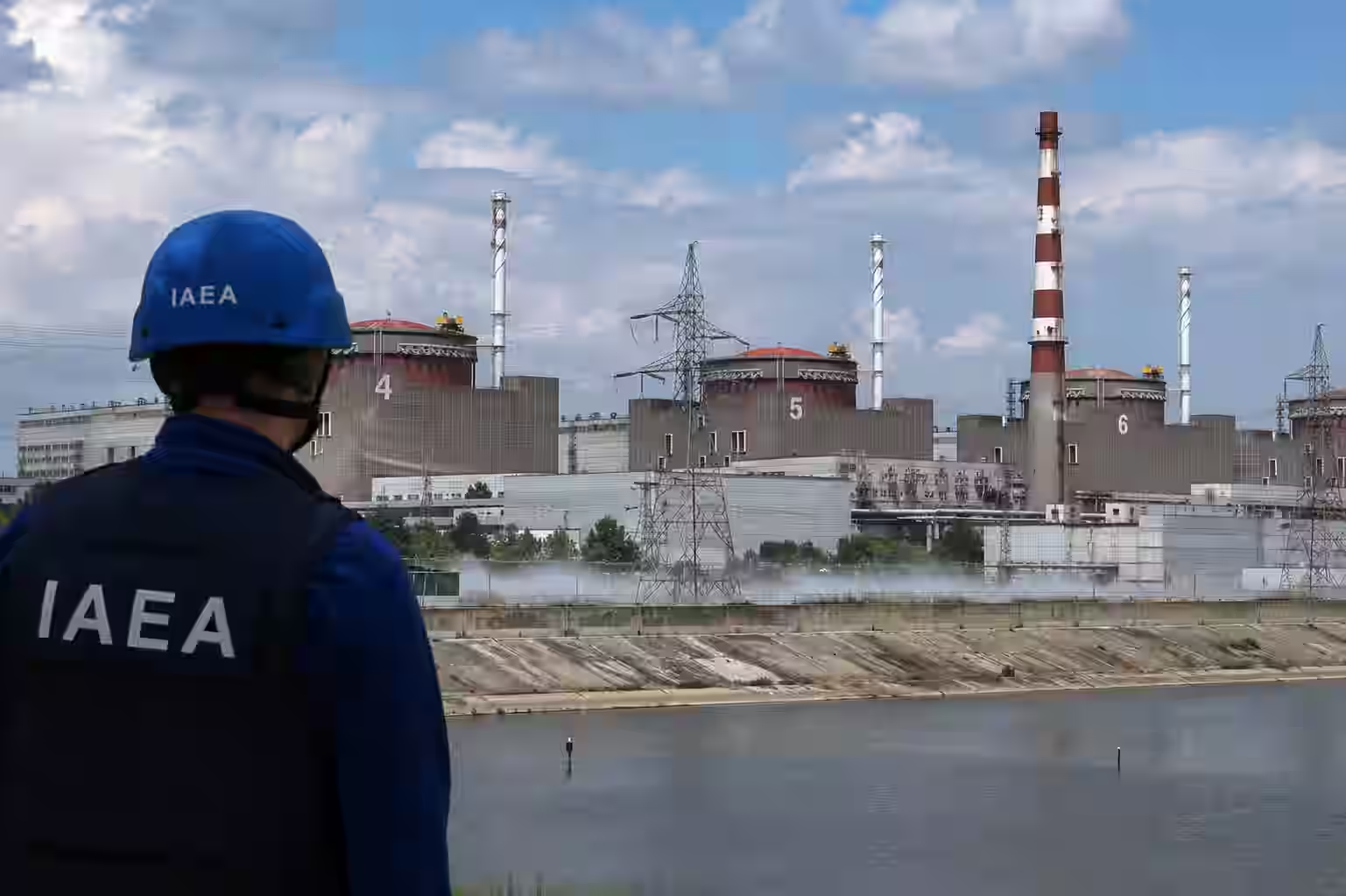
Europe’s largest nuclear power plant is running on emergency diesel generators after losing its last remaining external power connection more than a week ago, putting renewed focus on the fragile safety situation around the Russian-occupied facility.
The International Atomic Energy Agency (IAEA) said on August 29 that the Zaporizhzhia Nuclear Power Plant in southeastern Ukraine was continuing to rely on emergency diesel generators to provide electricity for essential safety systems.
The plant currently has about 10 days of diesel fuel available on site, according to the IAEA. The agency has warned that if external power is not restored or additional diesel supplies are not secured, the plant could face a station blackout in roughly that period.
That does not mean the plant is about to experience a nuclear accident.
The concern is that the six reactors at Zaporizhzhia, although shut down since 2022, still need continuous cooling. Electricity is required to operate the pumps and other systems that keep the reactors and spent nuclear fuel pools safe.
The plant lost its connection to its only remaining external power line, the 330-kilovolt Ferosplavna-1 line, on August 20 following military activity on the northern side of the Dnipro River, according to the IAEA.
Before the war, the plant had access to 10 external power lines. With the wider electricity network damaged by the conflict, that connection has gradually become more fragile.
The loss of the Ferosplavna-1 line means the plant has been depending on its emergency diesel generators for an extended period.
The IAEA said its experts at the plant inspected most of the site’s 20 emergency diesel generators earlier this week to assess fuel levels and determine how long the available supplies could support the facility.
The agency was told on Friday that the plant had around 10 days of diesel fuel remaining, which is the minimum regulatory requirement.
Some fuel has also been delivered.
IAEA personnel observed the transfer of several dozen tonnes of diesel from two nearby off-site locations to the plant on Thursday and Friday. The agency said these transfers helped replenish supplies, but the longer-term fuel situation remains a concern because regular access and delivery routes are affected by the fighting.
The last major delivery to the plant’s off-site fuel storage facility took place in March. Another delivery planned for May was delayed because of military activity in the area.
IAEA experts have also been unable to access that fuel storage facility since March 2025 because the plant administration has cited security concerns.
IAEA Director General Rafael Mariano Grossi said the situation demonstrated why reliable external electricity and secure supply routes are essential for nuclear safety.
The agency is now trying to negotiate another local ceasefire to allow technicians to repair the damaged power line.
The proposed arrangement would be the seventh localised ceasefire negotiated by the IAEA since late last year for nuclear safety purposes.
Repairing the external connection would be important because relying on diesel generators indefinitely is not considered a sustainable arrangement for a nuclear facility.
The situation has become more concerning because of continued military activity around the plant.
The IAEA said its experts have continued to hear explosions several times a day, sometimes at distances that appeared to be close to the site.
The agency was also informed of three drone incidents at the plant during the week.
One incident on August 25 reportedly occurred near the cooling pond and injured two plant employees. On August 26, another drone reportedly detonated near the dry spent nuclear fuel storage facility, while a third reportedly struck a sprinkler system serving the plant’s power units.
The IAEA said radiation levels at the site remain normal.
That point is important because the plant’s current situation should not be confused with a radiation release or reactor accident.
All six reactors have been shut down since 2022, but shutting down a reactor does not eliminate the need for cooling. Fuel inside the reactors and spent fuel stored at the site continues to produce heat and requires safety systems to operate.
The Zaporizhzhia plant has been under Russian control since March 2022, shortly after Russia launched its full-scale invasion of Ukraine.
The facility has remained at the centre of concerns over nuclear safety during the war because of its location near the front line and the repeated damage to the electrical infrastructure that supplies it.
Russia and Ukraine have repeatedly accused each other of attacks around the plant. The IAEA has generally avoided assigning responsibility for individual military incidents unless it has sufficient information to do so.
The agency has maintained a permanent presence at Zaporizhzhia since September 2022. Its experts have been monitoring the plant’s safety systems, power supply, fuel situation and military activity in and around the facility.
For people living in the surrounding region, the continuing uncertainty is another consequence of a war that has already disrupted electricity supplies, homes and basic services.
A prolonged loss of external power would not automatically mean a nuclear release. The plant has multiple emergency diesel generators and fuel has recently been brought in.
But the longer the facility remains dependent on emergency systems, the more important reliable fuel supplies and access to repair damaged power infrastructure become.
That is why the IAEA is pushing for a local ceasefire to create a safe window for repairs.
The agency has repeatedly said that nuclear facilities must be protected from military activity and that plant staff must be able to carry out essential safety work without being placed at risk.
The immediate situation at Zaporizhzhia is therefore being watched closely.
The plant still has emergency power, diesel has been delivered and radiation levels remain normal. At the same time, its only remaining external power line has been unavailable for more than a week, and the current diesel reserve is limited.
For the IAEA, the priority is straightforward: restore a reliable external electricity connection and maintain secure fuel supplies before the emergency reserve becomes critical.
Whether that can happen will depend not only on the technical condition of the damaged power line but also on whether the fighting around the facility allows repair crews to work safely.
For now, the plant remains operational from a nuclear-safety perspective, but under unusually difficult conditions.
The coming days will be important as the IAEA continues efforts to secure a local ceasefire, repair the external power connection and ensure that the plant has enough fuel to keep its essential cooling systems running.