




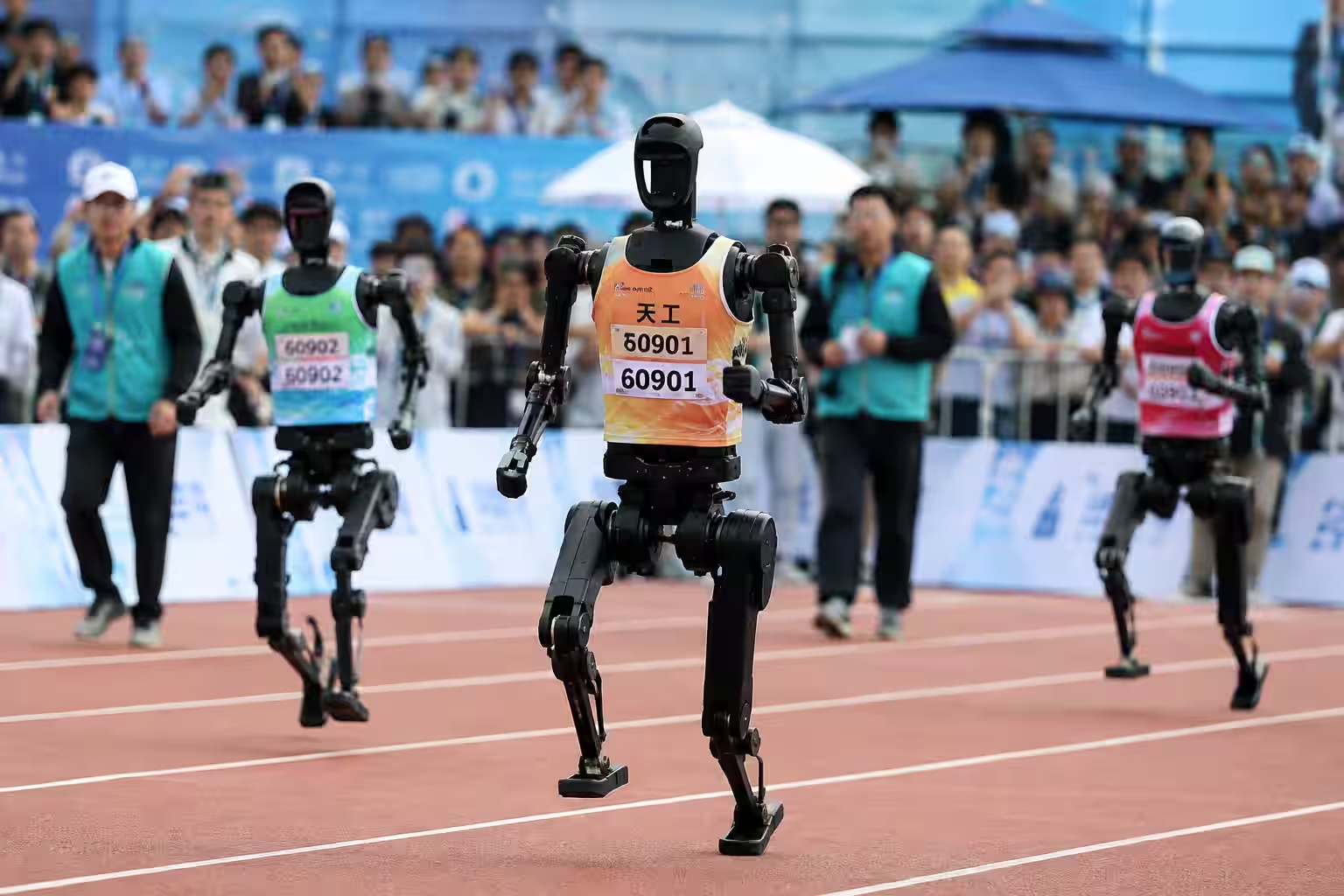
For a moment in Beijing, the finish line looked less like a robotics demonstration and more like an athletics track.
A Chinese humanoid robot ran 100 metres in 9.39 seconds at the World Humanoid Robot Games, beating Usain Bolt’s 9.58-second human world record set in 2009. Another humanoid also went under Bolt’s mark. The result was impressive enough to grab headlines around the world.
But the sprint is only part of the story.
The second edition of the games, being held in Beijing, has brought together more than 2,000 humanoid robots from 16 countries. They are competing in running, football, table tennis and other events, but some of the most revealing contests have little to do with sport.
Robots are being asked to perform tasks that look much closer to ordinary work: plugging cables, picking up small objects, recognising items, handling precision movements and completing tasks in settings designed to resemble factories, restaurants, offices and emergency situations. More than 40% of the scenario-based challenges require the robots to work autonomously.
That is where things get much more interesting.
Running fast is one problem. Getting a machine to understand what is around it, decide what to do next and then use its hands accurately is another.
The difference was visible at the games themselves. Some of the robots that managed remarkable sprint times still struggled with something humans normally take for granted: stopping. Several machines have crashed into padded barriers after crossing the finish line, while others have needed help from people nearby.
It is an oddly revealing picture of where the technology stands.
The machines are becoming remarkably capable, but they are not yet the all-purpose workers that some of the industry’s biggest promises suggest.
China has been investing heavily in humanoid robotics, backed by a huge manufacturing base and growing government support for the sector. The country is already a major force in industrial robotics, and companies are now trying to push humanoid machines beyond demonstrations and into practical applications.
The robot games are part showcase, part laboratory.
A sprint can demonstrate balance, motors and movement. A football match can test coordination. But a robot that can pick up the right object from a crowded table, connect a cable correctly and recover when something goes wrong is demonstrating something far more valuable.
That is why the quieter events in Beijing may eventually matter more than the records.
A machine does not need to beat Usain Bolt to be useful in a factory. It needs to perform the same task accurately, again and again, without someone standing beside it to correct every mistake.
That remains a difficult challenge.
For now, the images coming out of Beijing offer a strange combination of progress and limitation. Humanoid robots can sprint at speeds that would have seemed extraordinary only a few years ago. At the same time, some still need a helping hand when the race is over.
The technology is moving quickly. Whether it can make the much harder jump from impressive demonstration to dependable everyday worker is the question that will decide what comes next.