




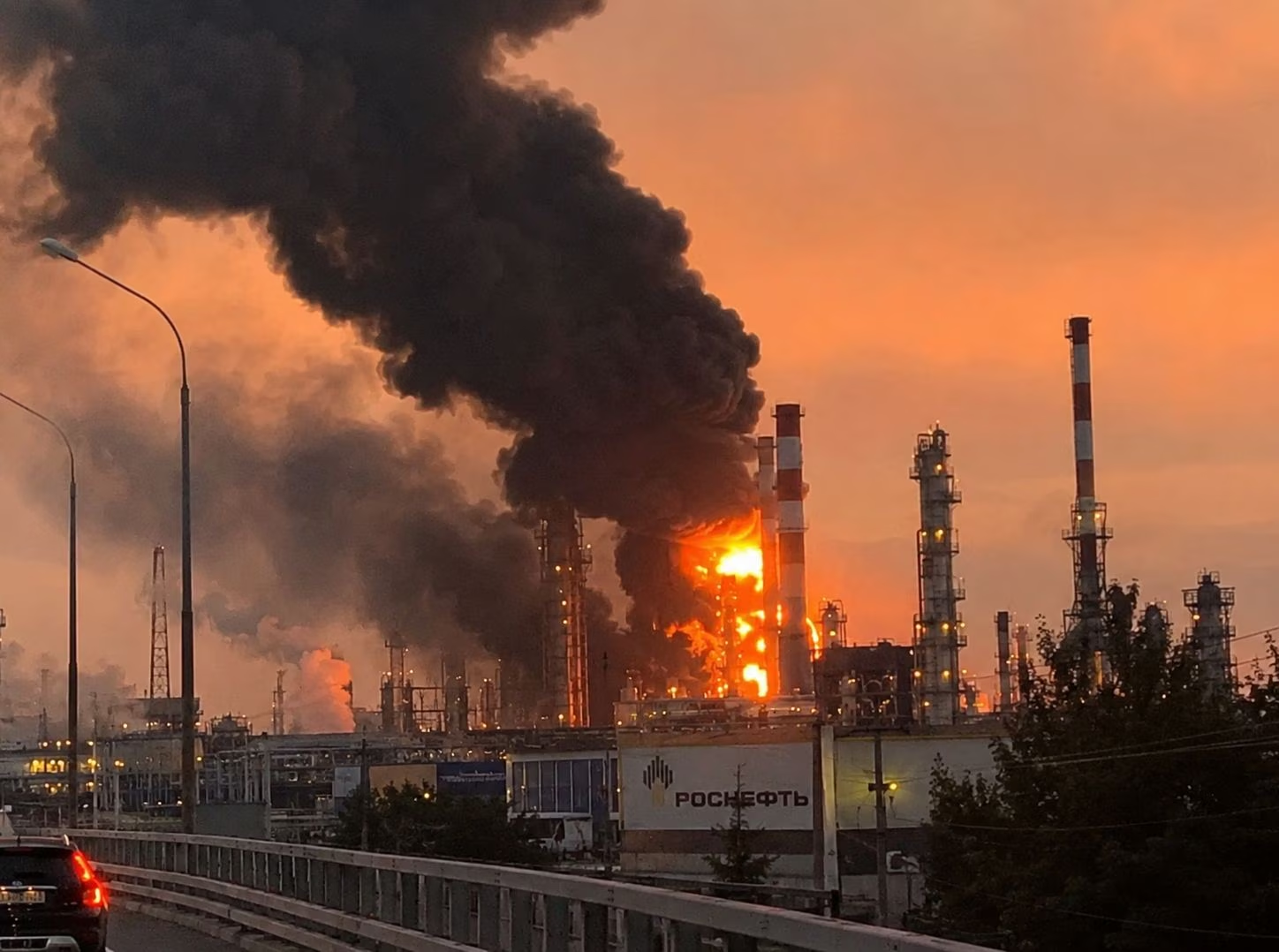
The Russia-Ukraine war is entering another dangerous phase. Between September 20 and 22, 2026, Ukrainian drone strikes targeted Russian energy and industrial infrastructure, including the Moscow oil refinery and facilities in the Samara and Bashkortostan regions. Russian attacks have also continued across Ukrainian cities and critical facilities, while European governments are strengthening defence planning, discussing civil preparedness and warning about possible Russian pressure on NATO countries.
These developments have created a question that reaches beyond the battlefield: Is Russia preparing for a nuclear confrontation, or are governments across Europe preparing for the worst because they cannot predict how far the war may expand?
The concern deserves serious attention. Nuclear weapons remain part of Russia’s military strategy, NATO continues to rely on nuclear deterrence and the war has already produced repeated warnings about escalation. At the same time, there is no verified public evidence that Moscow has decided to launch a nuclear attack on Ukraine or another country.
The real danger lies in the chain of decisions that could push a conventional war towards a much wider crisis. A strike on an oil refinery, a drone crossing a border, a military warning or a political statement can create pressure for retaliation. When governments respond to each other’s actions through increasingly severe measures, the space for restraint can become smaller.
Recent attacks on Russian energy infrastructure between September 20 and 22 illustrate this problem. On September 20, Ukrainian drones damaged the Moscow oil refinery, disrupting crude-processing operations. On September 22, Russian authorities reported a Ukrainian drone attack in the Samara region that killed one person and injured four others. Reports also identified strikes affecting facilities in Bashkortostan.
These attacks matter because refineries support transport, industry and military operations. Damage can disrupt fuel production, increase costs and force governments to redirect resources. Moscow may interpret attacks on its territory as evidence of a broader campaign supported by Western countries, while European governments continue supporting Ukraine without wanting a direct war between NATO and Russia.
That creates a difficult strategic balance. Ukraine wants greater freedom to strike military and economic targets inside Russia. Russia wants to discourage Western governments from expanding military assistance. NATO members want to help Ukraine while keeping the conflict from turning into a direct confrontation between nuclear-armed powers.
A strike that Ukraine describes as a defensive military operation may be viewed in Moscow as an attack supported by the West. A Russian warning intended to deter NATO involvement may be interpreted in Europe as a threat of further aggression. The gap between intention and interpretation is where miscalculation can begin.
Russia’s nuclear doctrine is central to this discussion. In November 2024, President Vladimir Putin approved an updated nuclear policy that broadened the circumstances described as possible grounds for nuclear use. The document included language concerning conventional attacks supported by nuclear-armed states, threats to Russia’s sovereignty and territorial integrity and situations that could undermine its ability to retaliate.
A nuclear doctrine communicates the circumstances a government wants its opponents to consider before taking action. However, the existence of a broader doctrine does not mean that every attack on Russian territory will produce a nuclear response. Nuclear policy, military readiness, public threats and an actual decision to use a weapon are separate matters.
Russia has repeatedly used nuclear rhetoric during the war. Such statements may discourage Western governments from providing particular weapons, influence public opinion or warn that further involvement could produce severe consequences. Nuclear signalling should be taken seriously, but a public threat is not the same as verified evidence of an imminent nuclear strike.
The history of the nuclear age shows why the present situation creates anxiety. After the atomic bombings of Hiroshima and Nagasaki in August 1945, the United States and Soviet Union developed increasingly powerful weapons, creating a balance based on the threat of mutual destruction. The Cuban Missile Crisis in 1962 demonstrated how quickly a confrontation between nuclear powers could approach catastrophe. Its lasting lesson was the importance of communication, negotiation and restraint during moments of extreme pressure.
The Russia-Ukraine war has a different structure, but some of the same risks remain. NATO countries are supporting Ukraine with weapons, intelligence and financial assistance, while Russia sees Western involvement as a major strategic challenge. The situation becomes more complicated when the war reaches areas close to NATO territory.
A Russian drone incident near Poland’s border, attacks affecting transport routes and reports of hybrid operations have increased concern among European governments. Poland’s Prime Minister Donald Tusk has warned about possible Russian drone or rocket attacks designed to test NATO’s unity. Such warnings should be presented as political and intelligence assessments rather than established predictions.
NATO continues to strengthen its eastern defences and coordinate its members. European governments are also reviewing emergency shelters, warning systems, hospital readiness, backup power and the protection of essential services. These preparations can address several threats, including conventional missile attacks, drone strikes, industrial accidents and radiological emergencies.
A repaired bunker or emergency shelter does not automatically indicate that a government expects an imminent nuclear strike. Governments prepare for low-probability events when the consequences of being unprepared could be severe. These measures show that officials are taking risks seriously, while the exact level of expected danger remains uncertain.
The economic consequences of the war are already visible. Energy infrastructure has become a target, governments are increasing defence spending and businesses face uncertainty over trade, transport and investment. Energy prices, fertiliser supplies, shipping routes and agricultural exports are connected to the wider global economy, meaning a larger conflict could increase pressure on food prices and household budgets.
India has reasons to watch the conflict carefully. The country depends on energy imports, seeks stable food prices and is pursuing long-term economic growth. A wider confrontation among major military powers could influence oil markets, shipping costs, currency pressures and investment decisions.
From the perspective of someone living in Odisha, international military decisions may appear distant until their economic consequences reach ordinary households. Fuel prices affect transport. Food prices affect family budgets. Global uncertainty affects businesses, employment and investment. A conflict thousands of kilometres away can therefore influence daily life without a single missile reaching Indian territory.
Russia’s economic and diplomatic interests also shape its strategic choices. Energy revenues, industrial capacity and trade relationships remain important, while India, China, Gulf countries and other states seek stability, access to energy and continued economic cooperation. These interests do not guarantee peace, but nuclear use could provoke severe international condemnation, disrupt trade and create pressure from countries that have attempted to maintain working relationships with Moscow.
The greatest danger may come from escalation rather than a publicly declared plan for nuclear war. A conventional strike could lead to retaliation, which could produce another response. Political leaders might then feel compelled to demonstrate strength because they fear that restraint would be interpreted as weakness.
The Russia-Ukraine war involves several overlapping conflicts, including the battle for territory, the economic struggle, the information campaign, the contest over military technology and the wider confrontation between Russia and Western countries. An attack on an oil refinery may be intended to reduce fuel supplies, but a retaliatory strike can increase economic pressure and public anger, creating stronger demands for further military action. Escalation is not inevitable, but the connections between these decisions make the situation difficult to manage.
As of September 2026, the available evidence shows a serious and continuing escalation risk in the Russia-NATO confrontation. It does not establish that Russia has decided to launch a nuclear attack on Ukraine or another country. Analysts should continue monitoring changes in Russia’s nuclear posture, military readiness, official doctrine and public statements while distinguishing nuclear signalling from actual preparation for use.
Ignoring nuclear threats would be irresponsible, but presenting every military development as proof of an approaching nuclear strike would create fear without improving public understanding. The public deserves clear reporting that separates verified developments from intelligence assessments, political warnings and speculation.
My concern is that the public conversation often moves too quickly from a serious warning to a dramatic prediction. People in India, including those of us watching from Odisha, need to understand the risks without being pushed into panic. A nuclear war would be a catastrophe, but responsible analysis must examine the evidence and the decisions that could increase or reduce the danger.
The world may be preparing for the worst because the consequences of being unprepared are enormous. Civil-defence planning, stronger security systems and military readiness can reduce vulnerability, but preventing a wider crisis will require restraint, clear communication, military-to-military contact and the preservation of diplomatic options. Whether Russia is preparing to use nuclear weapons or using nuclear signalling to influence its opponents remains uncertain.
What is clear is that the war has created a dangerous environment in which miscalculation could carry consequences far beyond the battlefield. Sustained attention, careful reporting and diplomatic engagement remain essential to prevent the conflict from reaching a point of irreversible destruction.