




Water is one of the most basic requirements for life, yet its availability is becoming increasingly uncertain across India. Cities face shortages during summer, rivers and ponds shrink, and many villages depend heavily on groundwater to meet household and agricultural needs.
The crisis is visible in different ways, but its impact is closely connected to one common problem: the country is using water faster than many natural sources can recover.
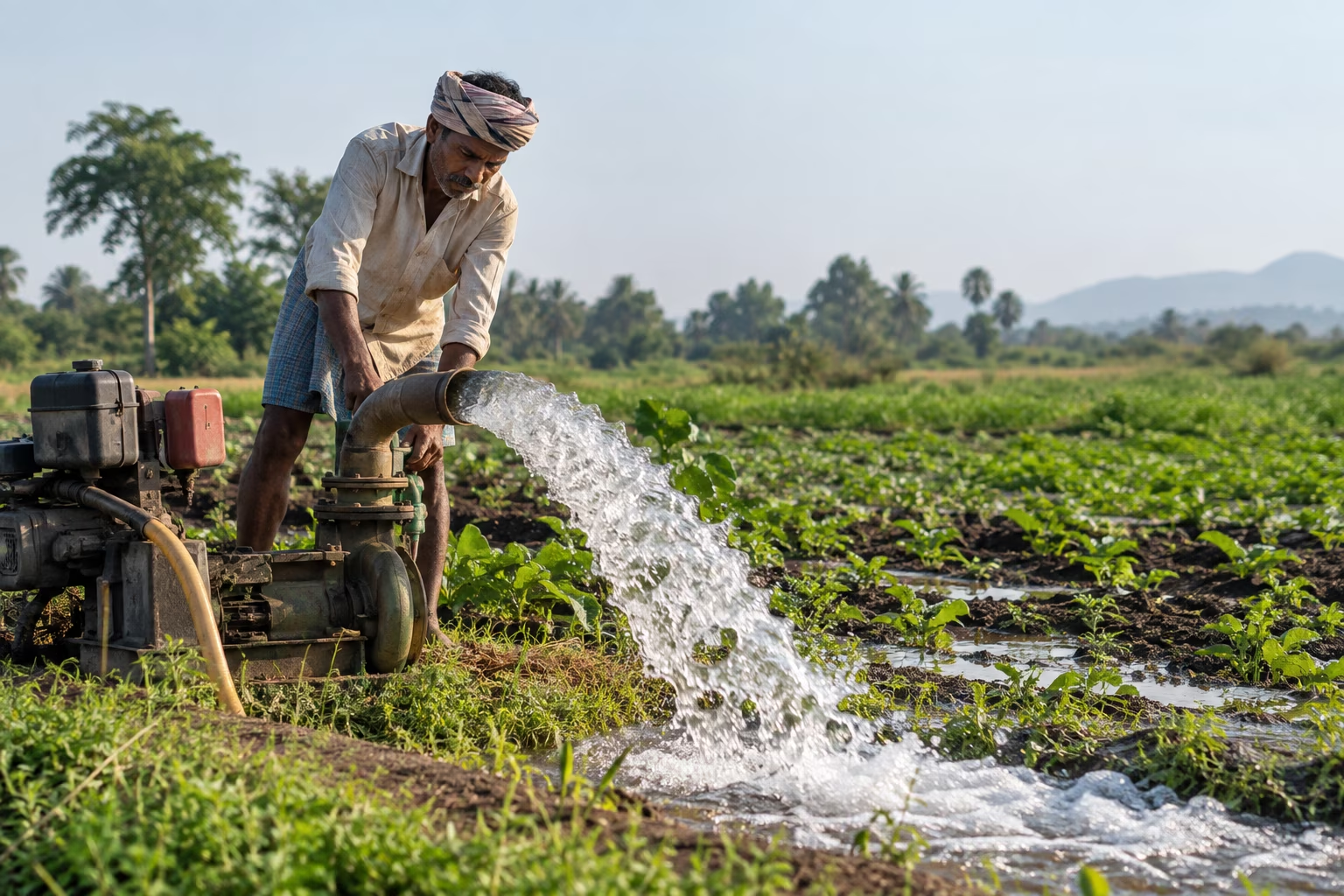
Coming from Odisha and belonging to a farming family, I have seen how difficult agriculture can become during the summer. Rainfall is often insufficient for vegetables and other crops, while ponds and local water sources gradually dry up. In such situations, groundwater through borewells and pumps becomes one of the few available options. Many farming families across India face similar circumstances.
Farmers need water to grow crops and support their families. When surface water becomes unavailable, groundwater becomes the practical alternative. However, groundwater is not an unlimited resource. It takes time for rainwater to move through the soil and recharge underground reserves, and the process varies according to rainfall, soil conditions, land use and local geography.
The growing pressure on water raises an important question about India’s future. How can the country protect its water resources while continuing to support agriculture, economic activity and the daily needs of its population?
The answer requires more than asking people to use less water. It requires better planning, stronger local systems and coordinated action from governments, communities and individuals.
Understanding India’s Water Crisis
India’s water crisis is connected to several factors, including population growth, urbanisation, changing rainfall patterns, groundwater extraction, pollution and inefficient water use. In several regions, water demand rises during summer just as natural supplies begin to decline.
Agriculture remains one of the largest users of groundwater. Irrigation has helped farmers increase production and reduce their dependence on uncertain rainfall, but intensive extraction can create long-term problems when recharge does not match consumption.
Groundwater is difficult to see, which often makes it easy to underestimate its importance and its limits. A borewell may continue supplying water for years, but that does not mean the underground reserve is being replenished at the same rate. When several wells draw from the same aquifer, the water table can fall and pumping can become more expensive.
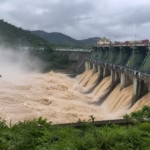
The situation differs across India. Some areas receive heavy rainfall but struggle with storage, drainage or distribution. Other regions receive less rainfall and depend on groundwater for much of the year. A national solution therefore cannot rely on one uniform approach. Water planning must reflect local geography, climate, farming patterns and community needs.
The crisis also affects households. When wells, ponds and local water sources dry up, families may have to travel farther for water or spend more on pumping and transportation. The burden often falls more heavily on rural communities and people whose income depends directly on agriculture.
Why Farmers Have No Easy Alternative
Farmers are frequently asked to reduce groundwater use, adopt water-saving irrigation and protect natural resources. These goals are important, but the discussion becomes incomplete when the realities of farming are ignored.
A farmer cannot simply stop irrigating a crop because groundwater levels are declining. Seeds, labour, fertilisers and other inputs require investment. A failed crop can affect the family’s income for an entire season. When rainfall is irregular and surface water is unavailable, groundwater becomes a form of economic security.
In my own farming experience, summer conditions show how dependent cultivation can become on borewells and pumps. Vegetables require regular water, and natural sources may not provide enough. Farmers often use the resources available to them because they have limited alternatives, not because they are unaware of environmental concerns.
Farmers’ choices are shaped by irrigation infrastructure, electricity access, crop prices, government support, local rainfall and the availability of alternative water sources. Their responsibility must be recognised alongside the larger systems that influence how water is used across India.
At the same time, the pressure on groundwater cannot be ignored. If extraction continues without proper recharge and planning, farmers themselves will face greater difficulties in the future. Falling water levels can increase pumping costs, reduce access to water and make cultivation less reliable.
The objective should be to help farmers protect water without putting their livelihoods at risk. Water-saving irrigation methods, suitable crop choices, local storage systems and reliable agricultural guidance can make conservation more practical.
Farmers need solutions that work in the field, not only instructions that appear in policy documents.
What India Can Learn From Its Past
India has a long history of managing water through ponds, tanks, stepwells, canals, village reservoirs and traditional harvesting systems. Many communities developed local methods to collect monsoon rainfall and use it during dry periods. These systems were closely connected to local geography and community participation.
Over time, several traditional water structures weakened because of neglect, land-use changes, urban expansion and growing dependence on large infrastructure and groundwater extraction. Traditional systems cannot solve every modern water problem, but their underlying principle remains relevant: rainfall must be captured, stored and managed before it runs away or becomes difficult to access.
The expansion of irrigation and agricultural production after the Green Revolution helped India improve food security. Improved seeds, fertilisers, irrigation and technology increased farm output, especially in regions with better access to water. However, intensive cultivation and groundwater use also created long-term pressure in some agricultural areas.
India can continue to support agricultural development while making water management more sustainable. Productivity and conservation should be planned together rather than treated as competing goals.
Rainfall is seasonal, but water demand continues throughout the year. Monsoon water that is not stored or allowed to recharge the ground may provide limited benefit during the following summer. This makes rainwater harvesting and groundwater recharge important parts of long-term planning.
A village with functioning ponds, restored water bodies, recharge structures and responsible extraction practices may be better prepared for dry months than a village that depends only on individual borewells.
Practical Solutions for Farmers and Communities
Rainwater storage should become a central part of water planning, particularly in areas that experience seasonal rainfall. Water can be collected through farm ponds, village tanks, rooftop harvesting systems and check dams suited to local conditions. The purpose is to preserve water during the rainy season and improve availability during dry periods.
Groundwater recharge also needs greater attention. Recharge pits, percolation tanks, restored ponds and protected drainage channels can help rainwater move into the ground where conditions allow. These methods must be designed according to local soil, slope and groundwater characteristics rather than applied without assessment.
Farmers can benefit from water-efficient irrigation. Drip irrigation, sprinkler systems, soil-moisture monitoring and improved irrigation scheduling can reduce unnecessary water loss in suitable crops. However, these methods may require financial support, technical guidance and maintenance. Government programmes should focus on making such options accessible to small and marginal farmers.
Crop planning is another important area. Farmers should receive reliable information about crops that suit local water availability, soil conditions and market demand. Crop diversification may reduce pressure in some regions, but it must be introduced carefully because farmers also need dependable income and access to buyers.
Communities have a role in protecting shared water resources. A pond cannot remain useful if it is filled with waste, encroached upon or disconnected from its natural drainage system. Village-level water committees can help monitor local sources, plan seasonal use and encourage collective responsibility.
Government agencies must support these efforts through funding, technical assistance, transparent groundwater assessments and better coordination between departments. Water management involves agriculture, rural development, urban planning and public health. Separate actions without coordination may produce limited results.
People living in cities also have responsibilities. Rainwater harvesting, wastewater treatment, reducing unnecessary consumption and protecting urban lakes can help improve local water security. Urban development should not permanently destroy natural drainage channels and water bodies in the name of expansion.
Protecting Water for the Next Generation
India’s water crisis cannot be solved through one scheme, one department or one season of public attention. It requires a long-term approach that connects rainfall, agriculture, groundwater, urban planning and community participation.
The first step is to recognise that water availability differs from place to place. A region receiving heavy rainfall may still experience shortages if it lacks storage and distribution systems. A farming area with limited rainfall may face severe pressure if groundwater extraction continues without recharge.
The second step is to make conservation practical. Farmers need affordable alternatives, communities need functioning local institutions, and governments need reliable data and consistent implementation. Responsibility must be shared rather than placed entirely on people who are already struggling to earn a living.
My experience in a farming family has shown me that water is not an abstract environmental issue. It determines whether a crop survives, whether a family earns an income and whether rural life remains sustainable. The same concern exists in many parts of India, although the circumstances may differ.
The country can continue agricultural growth and groundwater use, but these resources must be managed with greater care and a clearer understanding of their limits. Every monsoon should be treated as an opportunity to store water, recharge the ground and prepare for the next dry season.
If India invests in local water systems today, future generations may inherit stronger and more reliable sources. If water continues to be extracted without adequate planning, the cost will be paid by farmers, households, cities and the wider economy.
Protecting water means protecting food security, livelihoods, public health and the country’s future. Its management must therefore become a shared national responsibility.