



Babeijoda in Mayurbhanj has given Odisha a story worth carrying far beyond its own village.
For around 15 years, the village has remained known for its clean surroundings, litter-free streets and efforts to keep plastic away. The story reached a much wider audience on October 3, 2026, when industrialist Harsh Goenka shared a video highlighting Babeijoda’s cleanliness and community spirit.
The achievement belongs to the people who have maintained the village long before it attracted attention outside Odisha. Their effort has continued year after year, becoming part of daily life rather than a short-term cleanliness campaign.
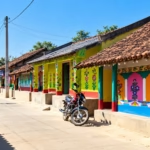
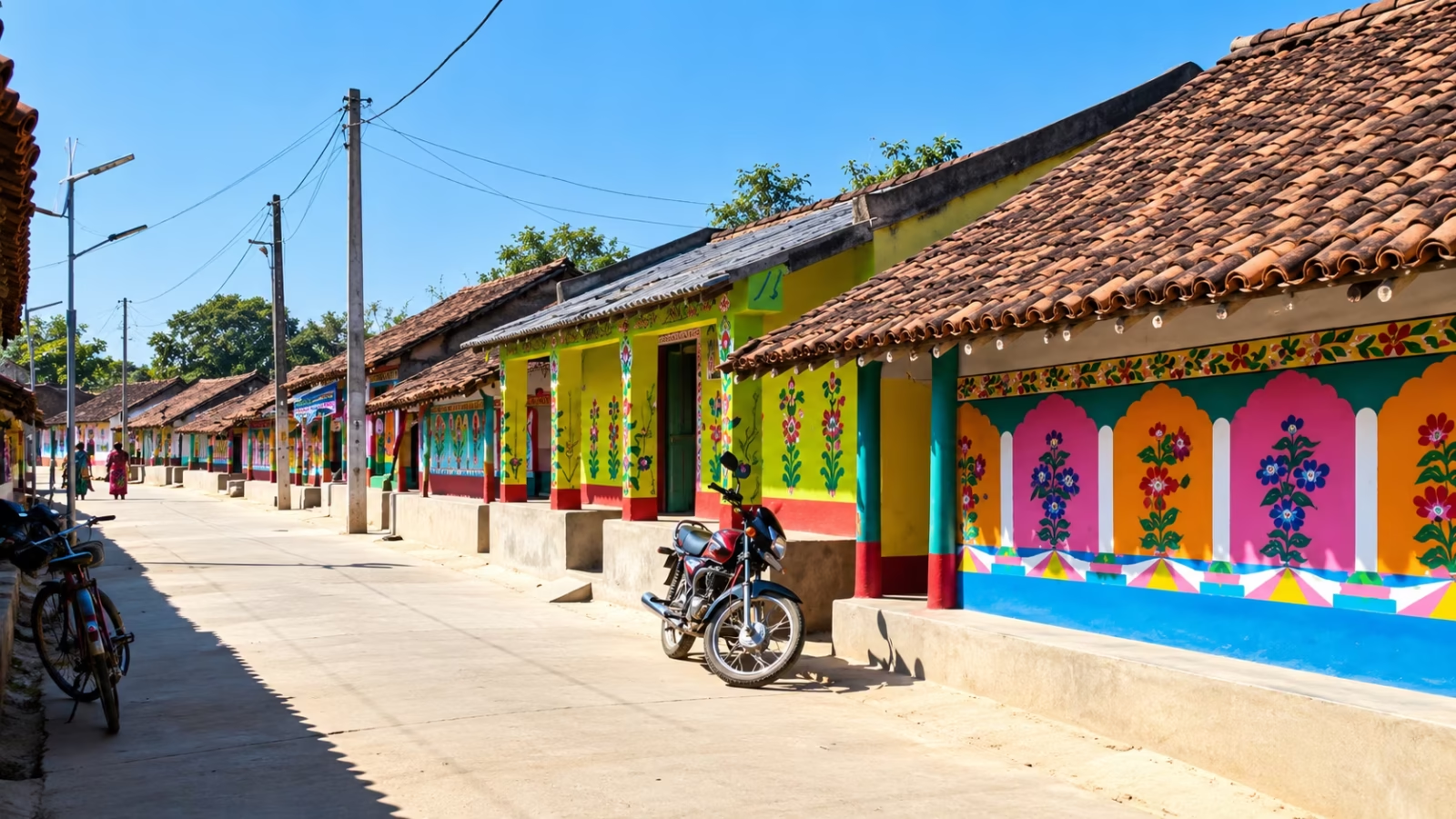
Babeijoda, also reported as Babojola or Bobeijoda, is a small village in the Bisoi area of Mayurbhanj, home to a Santal community and known for its traditional mud houses and Bhit Potaw wall paintings. Women decorate the walls with colourful designs using natural materials, giving the village a distinctive cultural character alongside its reputation for cleanliness.
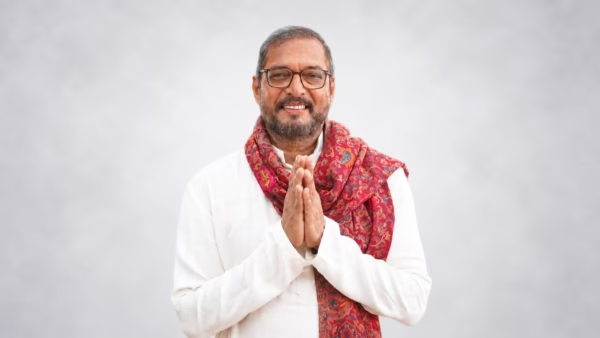
The cleanliness movement began around 15 years ago with Madhusudan Marandi, a local school teacher and Santali writer who wanted to turn his village into a model village. His idea gradually became a collective effort. Villagers formed a club to oversee the cleanliness drive, with Sundar Besra among those involved in the community effort.
The system they built is remarkably practical. Women sweep the village streets three times a day and collect waste in bins. Local youths help clear the collected waste. Plastic use is strongly discouraged, while littering can lead to a person being asked to clean the area or pay a fine. The community has also contributed funds towards dustbins, CCTV cameras and solar panels.
These details explain why Babeijoda has remained clean for so long. The work is spread across the community. Residents, women, young people and local organisers all have a role, while the village’s own rules reinforce the habits.
The story becomes even more meaningful when placed alongside other Indian communities that have built their identities around cleanliness and environmental responsibility.
Mawlynnong in Meghalaya is one of the country’s best-known examples. The village gained recognition as Asia’s cleanest village in 2003 and India’s cleanest village in 2005. Its model has long been associated with community participation, including waste collection, bamboo dustbins and composting.
Khonoma in Nagaland offers a different example. The village was declared Asia’s first Green Village in 2005 and developed a strong community-led approach to forest conservation and environmental protection. Local institutions and residents have played an important role in preserving the area’s natural resources.
These examples show that communities can develop their own systems around the conditions they face. A village in Meghalaya may have a different landscape and tradition from one in Nagaland or Odisha, but the idea of residents taking responsibility for their surroundings can travel.
Odisha now has another example with formal national recognition.
Under the National Panchayat Awards 2025, the Ministry of Panchayati Raj recognised panchayats across India under the Clean & Green Panchayat category. Kawrthah North in Mizoram secured first place with ₹1 crore. Jumarmur in Assam and Hatibandha in Odisha shared second place, with each receiving ₹37.5 lakh. Sardih in Chhattisgarh and Lohardi in Himachal Pradesh shared third place, with ₹25 lakh each.
For Odisha, Hatibandha Gram Panchayat in Lathikata block of Sundargarh district deserves particular attention. Its official award profile records ODF Plus status, door-to-door waste collection, waste segregation, composting, measures to reduce plastic waste and extensive plantation work. The profile also records more than 12,000 trees planted and a nursery containing around 62,000 saplings of 168 varieties.
The National Panchayat Awards were formally conferred in New Delhi on June 3, 2026, with 42 panchayats from across the country receiving recognition.
Hatibandha’s achievement adds an important dimension to the Babeijoda story. One is a village that has built a long-running cleanliness culture through residents themselves. The other is an Odisha panchayat whose organised work in sanitation, waste management and environmental protection has received national recognition.
Both point towards the same possibility: local communities can produce visible results when people remain involved over time.
Government support remains important. Waste collection requires workers and vehicles. Waste segregation needs systems for storage and processing. Recycling requires proper facilities, while drainage and sewage need investment. Panchayats and municipalities also need resources to maintain these services.
But the work becomes stronger when residents participate.
Babeijoda provides a simple example. The village’s own residents sweep the streets, collect waste and contribute towards the facilities needed to maintain the system. The community has also created rules around littering and plastic use.
Hatibandha shows another side of the equation. Its national award profile records systems such as door-to-door waste collection, segregation, composting and plantation work. These are organised measures that connect community participation with formal local governance.
This is where the lesson becomes relevant for the rest of Odisha.
A village does not need to copy Babeijoda exactly. A city cannot operate in the same way as a small tribal village. Urban areas have larger populations, heavier waste generation and more complex infrastructure requirements. But the principle of taking responsibility for shared spaces can work at every scale.
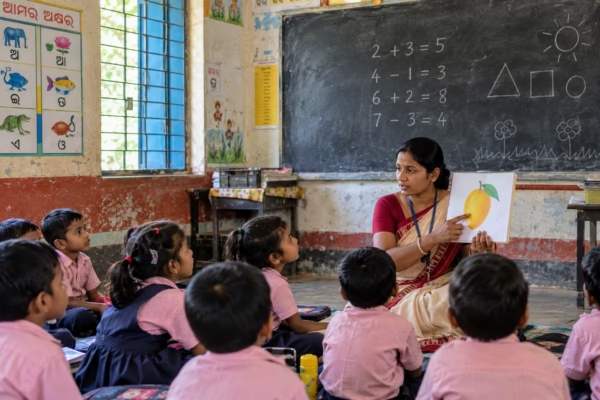
A school can teach children to separate waste and protect the space around them. A market association can work with the municipality to reduce litter. A youth group can help protect a village pond or organise waste collection. A panchayat can strengthen segregation and composting while residents make sure those systems are actually used.
The important part is continuity.
A cleanliness drive can make a place look better for a day. A habit maintained for years changes the character of a community.
That is what makes Babeijoda’s story so valuable.
The village’s cleanliness also exists alongside its cultural identity. Its Bhit Potaw paintings, created by local women using traditional materials, add colour to the mud houses and preserve an element of local heritage. The surroundings are part of the setting in which that culture continues to live.
For Odisha, this connection matters.
Our villages carry traditions, forests, ponds, crafts, languages, festivals and memories passed from one generation to another. Protecting those surroundings is also a way of protecting the everyday spaces in which local culture survives.
Babeijoda shows what can happen when that sense of belonging is connected with civic responsibility.
Madhusudan Marandi started with an idea. Other villagers joined him. Over time, the effort became part of the community’s routine. Sundar Besra and other residents helped organise the work, while women and young people became part of the daily system.
That is a powerful story for any village.
It also gives Odisha something to take to the rest of India.
The country already has celebrated examples such as Mawlynnong and Khonoma. National awards are recognising panchayats such as Kawrthah North, Jumarmur, Hatibandha, Sardih and Lohardi for their work. Odisha now has both a grassroots village story and a nationally recognised panchayat example to place alongside them.
The opportunity is to turn these examples into inspiration rather than isolated success stories.
Every community has its own challenges. Some need better waste collection. Others need stronger plastic control, cleaner water bodies or improved public sanitation. The answer will differ from place to place.
What can remain common is the attitude that public spaces deserve care.
Babeijoda has shown that a small community can sustain that attitude for years. Hatibandha has shown that organised local action can earn national recognition. Together, they give Odisha a reason to look at its villages and neighbourhoods with greater confidence.
The story deserves to travel from Mayurbhanj to every district of Odisha and from Odisha to communities across India.
The people of Babeijoda have already done their part. Their village has become a living example of what community spirit can achieve.
Now the best way to honour that example is to let the idea grow.
This is the Odisha we should be proud to show India.