

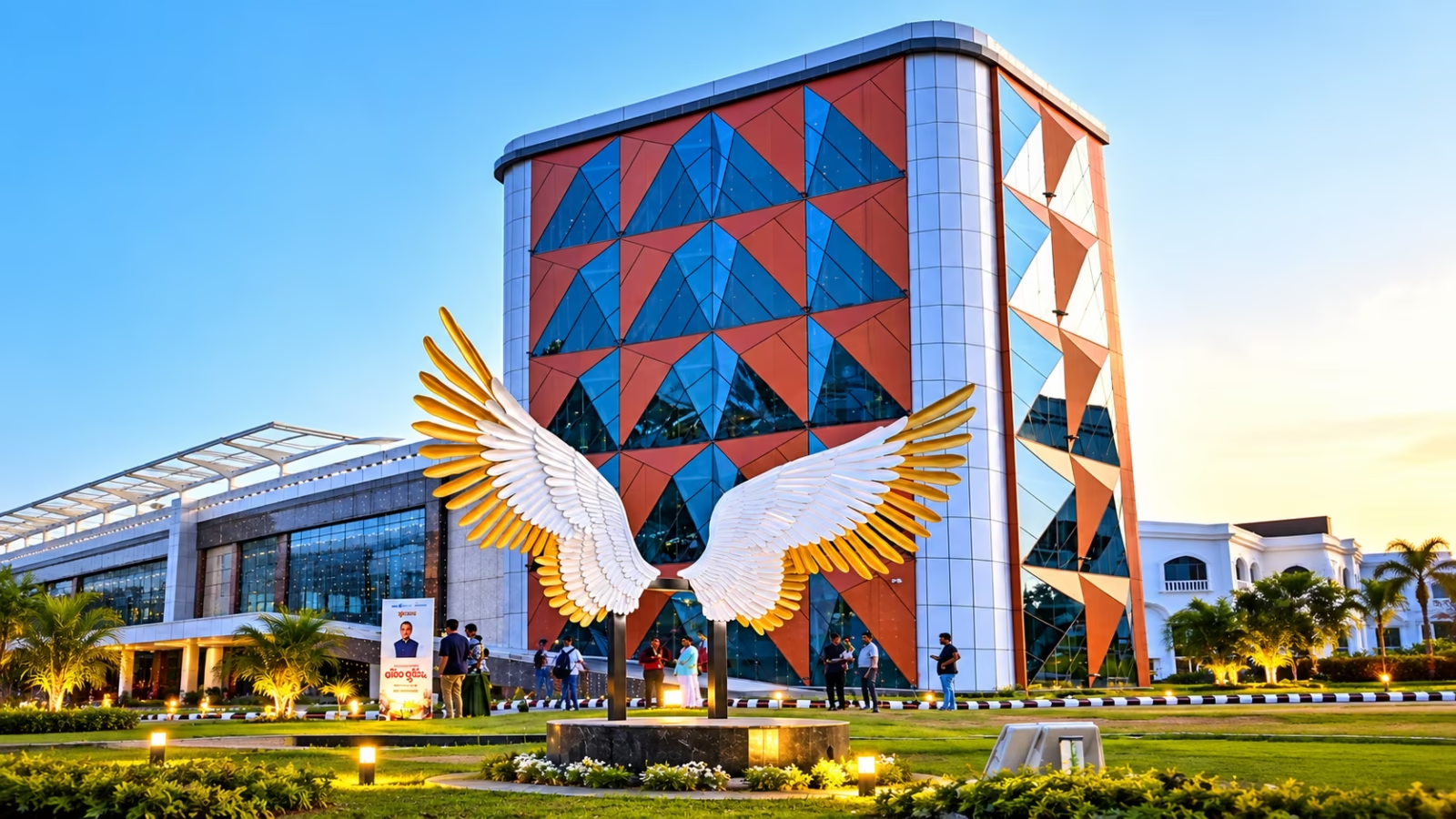
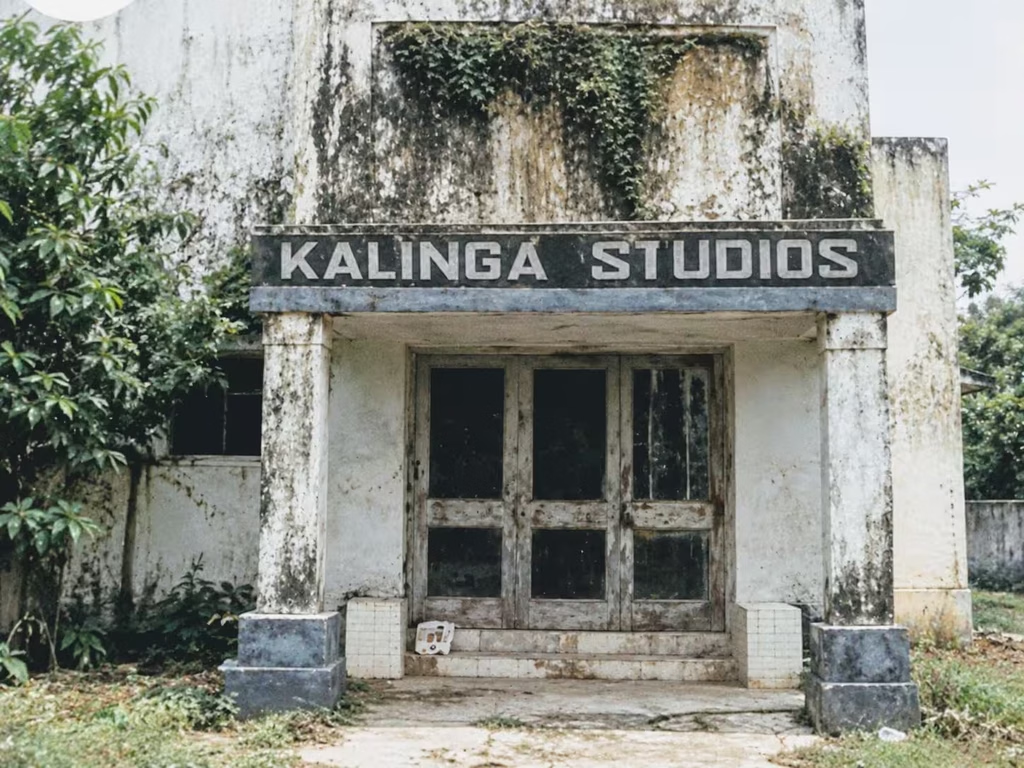
Bhubaneswar: For an older generation of Odia film lovers, Kalinga Studio is more than a production facility in Bhubaneswar. It is part of the memory of a time when Odia cinema had a strong relationship with its audience and filmmakers had a major production base within the state.
The studio was set up in 1982 with support from Prasad Studios, Chennai, and became an important part of Odisha’s film industry, attracting filmmakers from different parts of eastern India. Several popular Odia films, including Jaga Hatare Pagha, Thakura Achanti Chau Baha Ku, Kotie Manisa Gotie Jaga and Pathara Khasuchi Bada Deulu, were shot there, according to veteran film producer Dilip Kumar Mishra.
For a period, Kalinga Studio had facilities and equipment that made it a preferred destination for filmmakers. Former employees and industry members have recalled a time when major artistes, directors and technicians regularly worked there. Filmmakers from Odisha as well as neighbouring states came to the studio, while its large campus provided space for sets and production work. An earlier report described it as one of the better studios in eastern India and noted that the facility played an important role in the development of Odia cinema during the 1990s.
The story changed after that. The 1999 Super Cyclone caused extensive damage to the studio, but the cyclone was not the only reason for its decline. Filmmaking technology was advancing rapidly, while Kalinga Studio struggled to upgrade its equipment and post-production facilities. By the 1990s, filmmakers were increasingly choosing private editing and recording facilities, and the studio gradually lost much of its earlier importance. It was formally closed in 2007 and remained largely unused for years.
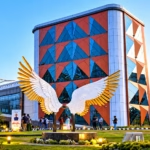
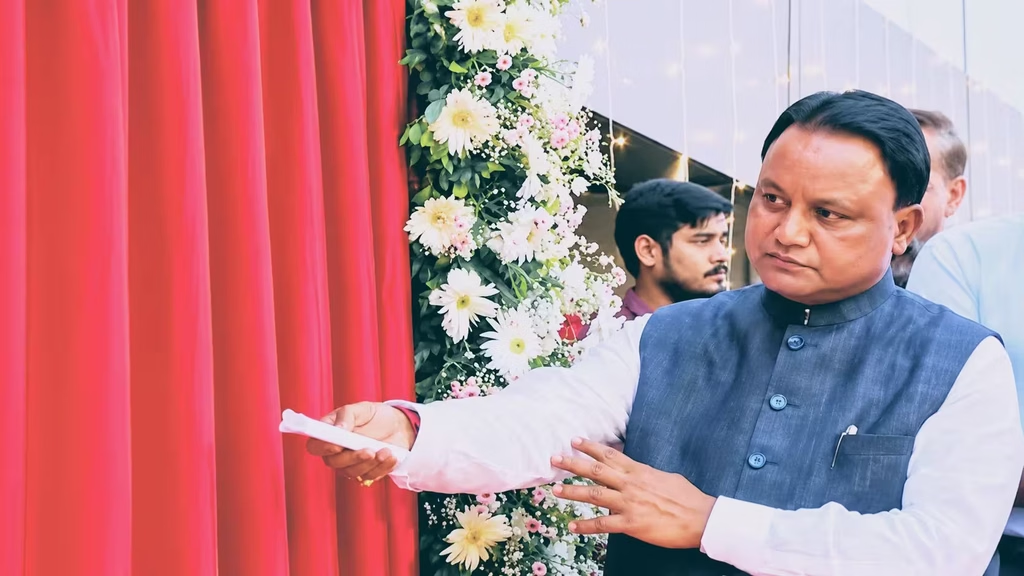
Now the studio has opened a new chapter. Odisha Chief Minister Mohan Charan Majhi inaugurated the redeveloped Kalinga Studio in Bhubaneswar on October 5, 2026, along with a dedicated cinema archive and museum. The government says the renovated facility has been designed to meet the changing requirements of modern filmmaking and reduce the dependence of Odia filmmakers on facilities in other states.
The money involved has also changed from the project’s original proposal. When the redevelopment plan was announced in 2021, the state government had sanctioned a ₹200-crore package for transforming Kalinga Studio into a modern film and entertainment hub. At that stage, the project was projected to create around 2,000 direct jobs and more than 10,000 indirect and induced employment opportunities across the film, media and entertainment ecosystem.
Government records from the following year showed that IDCO had prepared a ₹150-crore project report and floated a global tender of ₹120 crore for rebuilding work within the studio complex. The latest redevelopment, however, is being reported at around ₹164 crore, while the current government has said ₹165 crore was earmarked for the project and ₹147 crore had been utilised. For clarity, the ₹200 crore figure refers to the earlier sanctioned package, while the ₹164–165 crore figures relate to the redevelopment now being presented to the public.
What has emerged from that investment is substantially different from the ageing facility that filmmakers once knew. The redeveloped studio has indoor shooting floors, a snow house, chroma floor, tech zone, sound recording facilities, dubbing, editing and post-production infrastructure. It also has specialised spaces and sets representing locations such as an airport, railway station, palace, village, shopping mall, forest, snow-covered mountains and other environments.
That matters because production costs do not end with hiring actors and cameras. A film needs sound recording, editing, dubbing, colour work, animation, visual effects, set construction and dozens of technicians. When those services are unavailable locally, producers have to move productions or individual stages of filmmaking to cities such as Hyderabad, Chennai or Mumbai. Filmmakers in Odisha have previously pointed to those additional costs, particularly for editing, dubbing and mixing.
The new facility brings many of those requirements into one location. For smaller Odia productions, that is an important change. A director working with a limited budget can use an indoor floor, record sound, complete dubbing and undertake editing and other technical work without moving the production from one city to another. The financial benefit will ultimately depend on the studio’s pricing and management, but the infrastructure itself addresses a problem the industry has been discussing for years.
The employment question is equally important. The earlier redevelopment plan estimated 2,000 direct jobs and more than 10,000 indirect and induced opportunities. Those numbers should be treated as the project’s employment target rather than as jobs already created. The real test will be how many technicians, editors, sound engineers, camera operators, set workers, animators, VFX artists, costume professionals and production workers eventually find regular work around the facility.
For young people in Odisha, that may be one of the most valuable parts of the redevelopment. The state already has people trying to build careers in acting, direction, cinematography, animation, sound design and digital storytelling. At the inauguration, Majhi highlighted these areas and urged young filmmakers to use Odisha’s history, folklore, culture and original stories in their work. The studio gives that talent a physical production base within the state.
There is also an opportunity to bring outside productions to Odisha. Kalinga Studio attracted filmmakers from outside the state in its earlier years, and industry voices have previously argued that modern infrastructure should once again make the studio useful for films in different languages. A production coming to Odisha brings more than actors and directors. It requires accommodation, transport, food, equipment, local technicians and other services, spreading the economic activity beyond the studio gates.
Odisha’s locations strengthen that proposition. Beaches, forests, temples, historic sites, villages and tribal landscapes give filmmakers a wide range of outdoor settings. The studio can handle controlled indoor production while the state itself provides locations for outdoor sequences. The combination gives Odisha a more complete proposition than simply offering a studio building.
The new cinema archive and museum also gives the redevelopment a cultural purpose. Old films, posters, photographs and historical documents connected with Odisha’s cinema will be preserved and displayed there. The government has also highlighted the relationship between Odia literature and cinema and recalled important films from the industry’s earlier decades. For a regional film industry trying to build a future, preserving that history is more than an exercise in nostalgia. It gives younger filmmakers access to the work and ideas of those who came before them.
But the biggest test for Kalinga Studio starts after the inauguration ceremony. A modern studio can provide the tools for filmmaking, but it cannot write a good screenplay, build an audience or guarantee a successful film. Odia cinema still needs original stories, professional production, financing, marketing, distribution and stronger connections with audiences.
The way Kalinga Studio is managed will therefore matter as much as the infrastructure itself. Smaller producers and independent filmmakers need realistic access to the facilities, while technical services have to remain professional and equipment must be regularly updated as filmmaking technology changes. Training programmes could also help young technicians understand modern equipment and develop skills that can be used in professional productions. If the studio becomes expensive or difficult for smaller filmmakers to use, much of its potential benefit could remain unrealised.
There is also a wider issue of exhibition. The government has discussed expanding cinema infrastructure across Odisha, including a proposal for film halls at the block level. If more modern production facilities are developed at the same time as more opportunities for people to watch films locally, the effect could be much greater. A filmmaker needs a place to make a film, while the audience needs a place to watch it. Between those two points is an entire network of producers, technicians, distributors, theatre workers and other professionals whose livelihoods depend on the industry.
That is why the return of Kalinga Studio could become important beyond the walls of the complex. Its earlier history shows that a strong production facility can become part of the identity of a regional film industry. Its new infrastructure gives Odisha another chance to build that kind of ecosystem, but the results will depend on what filmmakers, producers, technicians and the government do with the opportunity.
The real measure of the ₹164–165 crore investment will not be the size of the building or the scale of the inauguration. It will be visible in the films that are produced there, the young professionals who find opportunities, the productions that come to Odisha, the technical work that stays within the state and the quality of stories that eventually reach audiences.
For an older generation, the studio brings back memories of Odia cinema’s stronger years. For a younger generation, it offers modern infrastructure and a chance to build a career without automatically leaving Odisha. The building has returned. The real story will now be written inside it, one film at a time.